
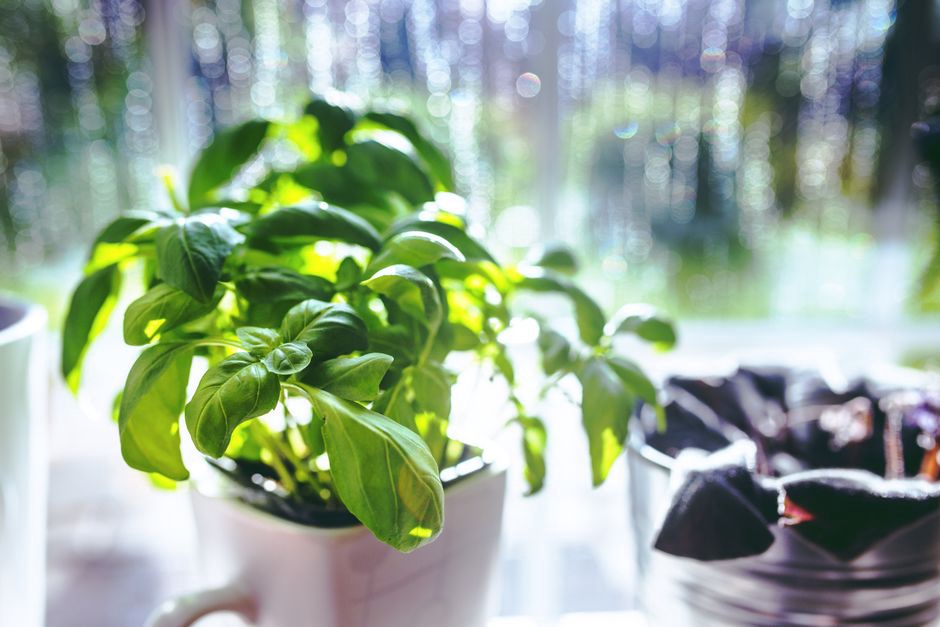
If your basil leans toward the window and grows long stretches of bare stem between leaf pairs, check the light before reaching for fertilizer. Compare the newest growth with the older growth: the spacing between leaves tells you more than the plant’s height alone. A weekly photo taken from the same angle makes gradual changes easier to see, especially when you look at the plant every day.
Choose herbs that fit the growing spot
A room can look bright even if direct sun never reaches the spot where you plan to put a pot. Check that spot in the morning, at midday, and again in the afternoon. An overhang, a neighboring building, or a deep window recess can cast shade even on a sunny side of the house. In winter, keep leaves clear of cold glass and set pots away from heating vents.
- Basil: Give it a warm spot with several hours of direct sun or a grow light. A nursery seedling will give you leaves to pick sooner than if you start from seed.
- Mint: Mint tolerates less direct sun than basil and prefers soil that stays lightly moist. Give it its own pot so its spreading stems don’t crowd other herbs.
- Chives: Start with a small clump from a nursery. In a bright spot, it will put up upright leaves you can snip a few at a time.
- Thyme: Give it a sunny spot and let the potting mix dry out more between waterings than you would for mint. Keep them in separate pots so you can water each when it needs it.
If none of your windows gets enough sun for the herbs you want to grow, put a grow light on a timer. For common kitchen herbs, start with 12 to 16 hours of light a day. Follow the manufacturer’s guidance on how far to hang the lamp above the plants: two lamps can run for the same number of hours and still deliver very different amounts of light to the leaves. If the fixture calls for a set clearance, raise it as the plants grow.
Set up pots you can water properly
Choose a pot just a little wider than the root ball, with holes in the bottom and a saucer underneath. A pot that’s too big leaves a lot of damp mix around a small root system. Use a lightweight potting mix rather than garden soil, which can compact in a container. Gravel at the bottom won’t make up for a lack of drainage holes.
Set the transplant at about the same depth it grew in its nursery pot. If a supermarket basil pot is crammed with seedlings, gently divide the root ball into a few clusters and pot them separately. You don’t need to tease every stem apart. Water after transplanting, let the pots drain, then empty the saucers.
Check the soil before watering
Rather than water on a fixed schedule, feel the potting mix with your finger and lift the pot to judge its weight. Water basil or mint when the surface starts to dry but the mix just below still feels slightly moist. For thyme, let the top layer dry more thoroughly. Pour slowly over the surface until a little water runs out of the drainage holes. Empty the saucer and check for pooled water inside any decorative outer pot.
Drooping doesn’t always mean an herb is thirsty. If the pot feels heavy and the mix is still wet, more water can make things worse. Check that the drainage holes aren’t blocked and the pot isn’t sitting in runoff. If the mix is dry and the pot feels unusually light, water it and see whether the leaves firm up.
Use consistent photographs to track growth
In mid-2000s computer-vision research, a recurring problem was telling whether an object had changed or whether it just looked different because of the camera angle or the lighting. The same problem crops up on a windowsill. Seen from above, a leaning stem can look shorter than it does from the side. Switch from daylight to a warm kitchen bulb and healthy leaves can look yellow.
Take a side-view photo once a week. Keep the pot in the same place, hold the camera at roughly the same height, and try to match the lighting. Set a ruler beside the stem if you want to compare the gaps between new leaf pairs. Instead of judging growth by how much green fills the frame, follow one stem and see whether its newest leaves are smaller or farther apart. Make a note if you prune the plant or move the lamp so you know what changed between photos. If a picture shows something unexpected, check the plant itself before deciding what to do.
Harvest from the parts that regrow
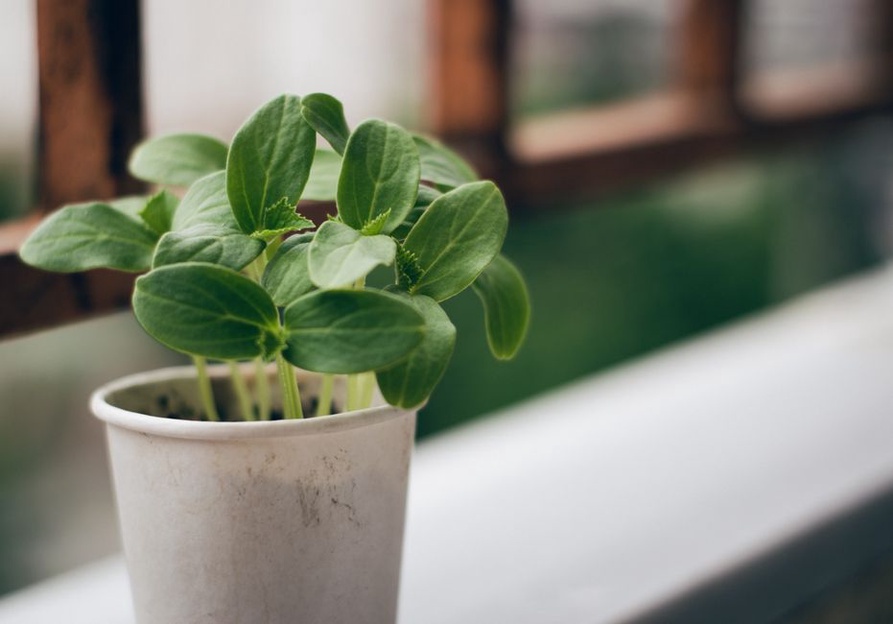
Wait until a transplant starts growing again before taking more than a few leaves. Use clean scissors and leave most of the foliage on a small plant. For basil or mint, cut a shoot just above a pair of leaves, where buds can grow into side shoots. For chives, snip a few outer leaves near the base and leave the younger leaves in the center.
When a basil shoot has several healthy leaf pairs, trace it down from the tip to a pair you want to keep. Snip just above that pair rather than pulling off the two leaves. Leave them on the plant and use the tender tip in dinner.