
Back in the mid-2000s, “registration” in computer vision and pattern research meant one thing: geometrically aligning multiple datasets into a common coordinate system so you could compare, fuse, or reconstruct them. No end-to-end deep learning pipelines—you had to rely on handcrafted features, iterative optimization, and careful modeling of transformation spaces. The problem touched every subfield: stereo vision needed rectification of left and right images; medical imaging demanded alignment of CT and MRI scans; speech systems required temporal alignment of acoustic frames to phonetic states; biometric enrollment forced faces or fingerprints into a canonical pose.
Taxonomy of Registration Problems
Researchers in the mid-2000s typically classified registration by the type of transformation and the nature of the data. The table below summarises the most common categories encountered in academic papers of the era.
| Transformation type | Typical use case | Common algorithm |
|---|---|---|
| Rigid (6 DOF) | CT-to-CT alignment, stereo rectification | Iterative Closest Point (ICP), correlation |
| Affine | 2D face alignment, document image skew correction | Least-squares fitting of corresponding points |
| Non-rigid (elastic) | Multimodal medical (CT-MRI), speech articulatory tracking | B-spline free-form deformation, thin-plate splines |
| Temporal (1D warping) | Speech recognition, language identification | Dynamic Time Warping (DTW), HMM Viterbi alignment |
Each category demanded its own similarity metric and optimisation strategy. For rigid and affine problems, sum of squared differences or normalised cross‑correlation were standard when the data came from the same modality. For multimodal registration, mutual information—introduced by Viola and Wells (1997) and Maes et al. (1997)—became the default because it made few assumptions about the relationship between intensity values.
Feature-Based Registration and the Rise of SIFT
By the mid-2000s, feature-based methods had overtaken intensity-based ones for many vision tasks, thanks largely to David Lowe’s SIFT (Scale-Invariant Feature Transform), published in 1999 but widely adopted after its 2004 journal extension. SIFT provided robust keypoints that could be matched across wide baselines, enabling automatic registration of photo collections, satellite imagery, and 3D reconstructions. Researchers at conferences such as CVPR and ICCV routinely used SIFT to compute homographies for panoramic stitching or to initialise ICP for 3D point cloud alignment.
SIFT was computationally expensive—a single image could yield thousands of 128‑dimensional descriptors. A typical mid-2000s desktop PC could match two images in seconds, but real-time registration for video required approximations (e.g., PCA-SIFT or SURF, which appeared in 2006). The trade-off between speed and robustness was a recurring theme in the literature.

Registration in Under-Resourced Speech and Language Research
Speech researchers had a different registration problem: temporal alignment of acoustic signals to linguistic units. For language identification and speaker diarisation, accurate frame-to-state alignment was critical, especially for under-resourced languages where annotated data was scarce. The Pattern Recognition Association of South Africa (PRASA) symposia of the early 2010s, which built on mid-2000s foundations, regularly addressed these challenges. For instance, a 2012 PRASA paper on under-resourced language research highlighted the importance of robust temporal registration in HMM-based speech recognition, where a single pass of Viterbi alignment could be the difference between a functional system and a failed one. Decoding a 2012 PRASA PDF: What Eight Pages Say About Under-Resourced Language Research documents exactly such efforts.
Temporal registration also underpinned cross-lingual acoustic model adaptation. A system trained on English might be warped to fit an African language via a non-linear time transformation—effectively a 1D elastic registration. The PRASA 2013 proceedings contain a paper that explored this idea for isiXhosa, using a combination of DTW and speaker-adaptive training. Inside a Forgotten PDF: PRASA 2013 Paper 16 and African Language Speech Research describes the alignment strategies employed in that work.
Medical Image Registration: A Driving Application
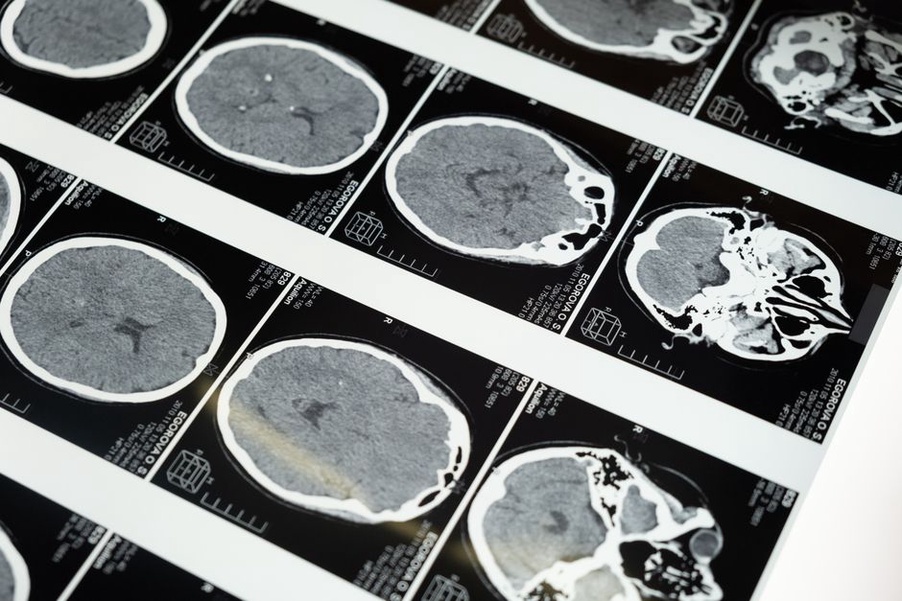
Medical imaging was arguably the most demanding registration domain in the mid-2000s. Neurosurgeons needed to fuse preoperative MRI with intraoperative ultrasound; radiation oncologists required daily alignment of CT scans to a planning scan. The challenges were enormous: deformable organs, missing correspondences, and multi-modality intensity disparities. Researchers at MICCAI (Medical Image Computing and Computer-Assisted Intervention) pushed non-rigid registration forward with B-spline free-form deformation models, mutual information, and regularisation terms that penalised unrealistic warps.
One landmark contribution from 2004 was the “demons” algorithm, which treated registration as a diffusion process—efficient, but prone to folding. By 2007, diffeomorphic registration (e.g., the LDDMM framework) had emerged to guarantee invertible transformations. These methods, while mathematically elegant, were computationally heavy; a single 3D registration could take hours on a workstation. The field therefore invested heavily in GPU acceleration and multi-resolution strategies.
Biometric Enrollment: The First Step in Recognition
In biometric systems, registration (often called “enrolment”) meant capturing a reference template—but before that, the raw image had to be geometrically normalised. Fingerprint scanners used minutiae-based registration after ridge orientation estimation; face recognition systems relied on eye detection and affine warping to a standard size. The mid-2000s saw the “face alignment” problem gain traction as a standalone research topic, with methods like Active Appearance Models (AAMs) and Constrained Local Models (CLMs) providing iterative registration that could handle expression and pose variation.
These techniques were critical for the first large-scale face databases (e.g., FRGC, LFW) and for the evaluation campaigns run by NIST. Without robust registration, even the best feature extractor would fail because distances between faces would be dominated by misalignment rather than identity.
Stereo Reconstruction and 3D Registration
Stereo vision, a classic computer vision problem, required two registrations: first, rectification (a projective warp to align epipolar lines horizontally), then disparity computation (a per-pixel 1D search). In the mid-2000s, the Middlebury stereo benchmark drove algorithm development, and the best methods (e.g., belief propagation, graph cuts) treated disparity estimation as a labelling problem. But the initial rectification—a rigid registration of the two cameras—was often taken for granted. Real-world stereo rigs needed periodic recalibration; papers from that era frequently described how to recover the fundamental matrix from point correspondences using RANSAC.
For 3D point cloud registration, ICP remained the workhorse. Researchers at SIGGRAPH and 3DPVT (the International Symposium on 3D Data Processing, Visualization and Transmission) introduced variants that handled outliers, partial overlaps, and large initial misalignment. The “point-to-plane” metric (Rusinkiewicz & Levoy, 2001) gained traction because it converged faster than point-to-point. By 2006, real-time ICP on GPU hardware was demonstrated, paving the way for KinectFusion a few years later.
The Unspoken Challenge: Registration for Under-Resourced Modalities
One of the most persistent—and often overlooked—registration problems in the mid-2000s was the alignment of multimodal data for which no off-the-shelf feature detector existed. For example, aligning a speech waveform with a video of lip movements required a temporal registration that bridged asynchronous streams. Similarly, registering historical documents (scanned at different resolutions) for OCR was a nuisance that many researchers solved with ad-hoc manual intervention. The PRASA community, working with under-resourced African languages, frequently faced such data-starved scenarios: a single microphone recording and a low-resolution webcam, with no ground-truth timestamps. Their solutions—often based on mutual information or cross-correlation of envelope signals—deserve a place in the history of registration as much as any high-profile CVPR paper.
That legacy is preserved in the PRASA proceedings from 2011 to 2013, which contain dozens of papers where registration appears as a hidden prerequisite rather than a headline contribution. A careful read of What prasa2012_16.pdf Reveals About the 2012 PRASA Symposium shows how a paper on language identification quietly depends on Viterbi alignment—a temporal registration step that, if performed poorly, would derail the entire system.
Registration never got the spotlight that deep learning later commanded. Yet every stereo map, every fused MRI, every correctly identified language—they all depended on someone getting alignment right with limited data and compute. The solutions—mutual information, RANSAC, DTW, ICP—were the resourceful engineering that defined the era, and the PRASA proceedings capture exactly that unsung work for under-resourced languages.