
In 2002, researchers gathered in Denver for the International Conference on Spoken Language Processing. A quiet problem followed them through the hallways. The world held roughly 6,000 languages. Speech recognition worked reliably in maybe twenty. The bottleneck wasn't algorithmic sophistication — it was data. For languages without digitized corpora, pronunciation dictionaries, or even a settled writing system, the standard supervised machine learning pipeline fell apart on contact. Building speech recognition for under-resourced languages meant figuring out how to do more with radically less, and often rethinking what counted as training material in the first place.
The Data Bottleneck and the Acoustic Discovery Problem
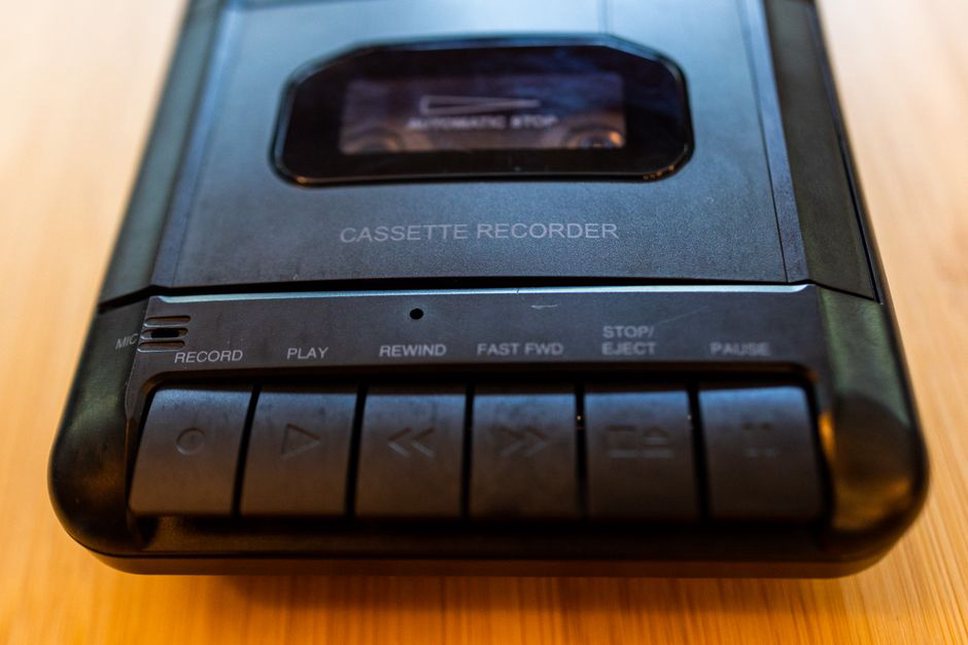
Standard large-vocabulary continuous speech recognizers of the early 2000s rested on three things: transcribed audio recordings, phonetic pronunciation lexicons, and text corpora for language modeling. For isiXhosa, Sesotho, Welsh, or Quechua, none of these existed at scale. A typical English-language system might train on hundreds of hours of transcribed speech. An under-resourced project often started with fewer than ten hours — sometimes recorded on portable cassette decks in community centers. The hard part wasn't just collecting audio. It was building the linguistic infrastructure that made acoustic data usable: phone sets, word segmentation conventions, and in some cases, the first machine-readable dictionaries.
Researchers at the African Speech Technology (AST) project, launched in the late 1990s and active through the mid-2000s, confronted this head-on. The consortium set out to create speech databases for five South African languages, including isiZulu and Sepedi. Their work surfaced a reality that defined the period: before anyone could train a recognizer, serious effort went into acoustic discovery — figuring out which phonetic contrasts mattered, how tone patterns interacted with lexical meaning, and how to annotate data consistently when native-speaker linguists were scarce.
Bootstrapping with Limited Annotated Data
Manual transcription was prohibitively expensive, so researchers found workarounds. One was unsupervised acoustic model training. Algorithms attempted to discover phone-like units directly from raw audio, with no transcriptions. These methods — typically maximum-likelihood estimation followed by iterative realignment — produced models far less accurate than supervised ones, but they could serve as a starting point for semi-automated labeling. A human annotator corrected machine-generated phone boundaries instead of labeling from scratch. That workflow cut the hours required per minute of audio dramatically.
Another bootstrapping technique that gained ground in the mid-2000s was cross-language transfer. When a well-resourced language shared phonetic overlap with an under-resourced target, researchers borrowed acoustic models trained on the source language and adapted them with small amounts of target-language data. A Dutch acoustic model could provide initial phone models for Afrikaans. A Swahili system could seed work on related Bantu languages. The recognizer's quality depended heavily on how close the phonological inventories were, but even imperfect models compressed development timelines from years to months. These approaches appeared regularly in pattern recognition venues of the period, where proceedings captured the practical markup challenges of sharing such data; the way authors structured their contributions reveals much about the research culture, as explored in Who Wrote That? Authorship Culture in Mid-2000s Pattern Recognition Research.
Lexical and Language Modeling Under Scarcity
Even with acoustic models working, a speech recognizer still needed a lexicon mapping words to pronunciations and a language model estimating word sequence probabilities. For languages with rich morphology — where a single verb stem generates dozens of surface forms through agglutination — the standard word-based language model was brittle. A Sesotho verb like keahela (I build for) might appear exactly once in a small corpus. N-gram statistics become meaningless with that kind of sparsity.
Early solutions included morpheme-based language modeling. Words got decomposed into sub-word units that occurred more frequently. The approach was pioneered for languages like Turkish and Finnish and later adapted for Bantu languages. It let the language model capture regularities that word-level models missed. Pronunciation lexicons benefited from a similar shortcut: rule-based grapheme-to-phoneme conversion rather than fully handcrafted dictionaries. For languages with relatively transparent orthographies — where spelling reliably indicates pronunciation — a set of context-dependent letter-to-sound rules could generate plausible pronunciations for thousands of words from a few hundred hand-checked examples. The PRASA community in South Africa became a particularly active forum for this work, and the digital proceedings from that era document the evolution of these techniques; the structure of those proceedings is itself a window into how the field organized its knowledge, as detailed in How Mid-2000s Researchers Structured Digital Proceedings.

Rapid Adaptation and the Role of Community Recording
A distinctive feature of early under-resourced speech work was how the line between researcher and community blurred. For major commercial languages, data collection could be outsourced to professional agencies. Under-resourced projects depended on university students, local radio volunteers, and diaspora communities. Recording sessions happened in borrowed classrooms and community halls. Prompts were designed to elicit phonetically diverse material — not just read newspaper sentences but spontaneous narratives, traditional stories, and domain-specific vocabulary from agriculture or healthcare. The resulting corpora were acoustically messy but linguistically rich, capturing code-switching and dialect variation that laboratory speech never touched.
The GlobalPhone corpus effort, initiated at Karlsruhe University in the late 1990s and expanding through the 2000s, exemplified this distributed model. By coordinating with partner institutions worldwide, GlobalPhone assembled read-speech corpora for over fifteen languages, including Croatian, Tamil, and Vietnamese, following a consistent recording protocol that made cross-language comparisons feasible. These were national languages with literate populations — not fully under-resourced in the strictest sense — but the project proved that standardized, modest-scale corpora could open up speech technology for languages the commercial market had ignored entirely.
The Evaluation Dilemma
A persistent difficulty was evaluation. Standard word error rate metrics assumed a well-defined reference transcription. For languages without standardized orthographies, even the "correct" transcription could be contested. Dialectal variation, tone marking conventions, and morphological segmentation choices all shifted the error count. Some projects adopted phone error rate as a more stable metric. Others reported task-specific measures like keyword spotting accuracy for spoken term detection. Without shared benchmarks, comparing systems across languages and sites remained fraught — a problem the field would grapple with well into the next decade.
The act of defining evaluation protocols, though, forced researchers to make their assumptions about linguistic structure explicit. That clarifying exercise often proved as valuable as the recognition results themselves. The early efforts to build speech recognizers for under-resourced languages were never simply about replicating English-language systems with smaller datasets. They demanded a different kind of research — one where linguistic fieldwork, algorithmic creativity, and community partnership carried equal weight. The systems that emerged were modest by commercial standards. But they showed that the speech technology gap was not a technical inevitability. It was a question of where researchers chose to point their microphones.