
A page scanner could turn paper into pixels long before it could turn those pixels into useful information. That distinction shaped the early history of document processing. Capturing a clean image was only the first step; software still had to locate text, separate lines and characters, cope with skew and stains, recognize symbols, and retain enough structure for people or databases to use the result.
For much of the twentieth century, organizations treated documents as physical objects. Forms moved through mail rooms, clerks transcribed fields, and archives kept paper or microfilm. Early document-processing systems appeared where manual handling was slow, repetitive, and expensive: banking, postal sorting, census work, publishing, and government records. Their history is largely a history of constrained problems. Engineers often succeeded by redesigning documents, controlling capture conditions, and limiting the range of marks a machine needed to interpret rather than by building a universal reader.
From machine-readable marks to document images
The first successful systems did not begin with free-form handwriting or richly designed pages. They relied on marks deliberately made legible to machines. Optical mark recognition (OMR), used for examination sheets and surveys, detected whether a predefined bubble or box had been filled. Magnetic-ink character recognition (MICR), adopted for bank cheques, used special ink and specified character shapes so automated equipment could read account and routing information even when printing was imperfect.
These systems worked because they reduced perception to a limited decision: is an expected location marked, and which symbol from a small set appears there? They established a lesson that still applies: document automation depends as much on document design and workflow discipline as on recognition algorithms.
Optical character recognition (OCR) expanded the goal. Instead of inspecting one known position for one expected type of mark, OCR attempted to identify printed letters and digits in an image. Early commercial OCR worked best with machine-printed text in restricted fonts, fixed spacing, and high-quality originals. A typed page looked simple, but paper texture, faded ribbons, broken strokes, ink spread, uneven lighting, page rotation, and scanner noise could all alter the pixels representing a character.
The document-analysis pipeline took shape
By the 1980s and 1990s, document processing increasingly referred to a pipeline rather than a single recognition step. A raw scan had to be converted into units suitable for interpretation. Implementations differed, but the main stages became familiar across research systems and commercial products.
- Acquisition: capture the page with a scanner or camera, often at a resolution chosen for the smallest expected characters.
- Preprocessing: reduce noise, correct uneven backgrounds, binarize the image, and estimate page skew.
- Layout analysis: identify columns, paragraphs, headings, tables, illustrations, marginal notes, and other regions.
- Segmentation: divide text into lines, words, and sometimes individual characters.
- Recognition: assign characters or words to visual patterns.
- Post-processing: use dictionaries, language models, format rules, or human review to correct and validate results.
- Export and indexing: store text, image coordinates, and structural metadata for retrieval or later processing.
Errors at one stage could determine the quality of everything that followed. A one-degree skew may barely register to a human reader, yet it can cause a line-finding method based on horizontal projections to merge neighboring lines or split one line in two. Aggressive thresholding can erase faint punctuation and thin serif strokes; conservative thresholding can leave background speckles that resemble periods, commas, or diacritics.
Why binarization mattered so much
Many early algorithms operated on binary images, treating foreground ink as black and paper as white. This reduced storage requirements and made connected-component analysis efficient. Deciding which gray pixels belonged to ink, however, was difficult on degraded material. A global threshold might work on a clean office page but fail on an old book with yellowed paper, dark edges, bleed-through from the reverse side, or shadows near a binding.
Researchers developed adaptive thresholding methods that selected local thresholds from nearby pixel statistics. Others combined smoothing, morphology, and connected components to suppress small noise while retaining character strokes. These were not glamorous improvements, but they made real collections manageable. Historical newspapers and manuscripts remain difficult partly because they contain exactly the visual defects that controlled office workflows had avoided.
Layout was an interpretation problem, not just geometry
A page is more than a rectangle filled with letters. A newspaper may run a headline across several columns, interrupt articles with photographs, print captions in small type, and continue a story elsewhere. A scientific paper combines prose, equations, tables, footnotes, figures, and references. A form uses labels, values, boxes, and rules. Treating every connected ink region as ordinary text quickly produces disorder.
Early layout-analysis methods combined several ideas. Projection profiles counted dark pixels horizontally or vertically and could reveal gaps between lines or columns. Run-length techniques measured consecutive foreground and background pixels to estimate text density. Connected-component methods grouped nearby ink components by size and proximity. Top-down approaches recursively divided large whitespace regions, while bottom-up methods assembled characters into words, words into lines, and lines into blocks.
No single approach suited every document class. Fixed forms favored template matching: when a document was known in advance, software could find expected fields relative to printed anchors. Books and reports benefited from page-segmentation methods that detected rectangular text blocks. Newspapers often required more flexible inference of reading order. The problem was semantic as well as spatial: two columns may sit close together on a page while being far apart in the intended reading sequence.
| Document class | Early processing advantage | Persistent difficulty |
|---|---|---|
| Standardized forms | Known field locations and constrained answers | Misalignment, handwritten entries, changed templates |
| Typed business pages | Regular baselines and limited fonts | Carbon copies, stamps, faxes, mixed layouts |
| Books and journals | Repeated page conventions | Footnotes, illustrations, hyphenation, page curvature |
| Newspapers | Large digitization value | Complex columns, damaged originals, changing typography |
| Handwritten records | Rich archival content | Writer variation and unreliable character segmentation |
Recognition before large-scale learning
Classic OCR often described characters through hand-engineered features: stroke directions, endpoints, loops, crossings, projection histograms, zoning counts, contour descriptors, or moments. A classifier then compared those features with prototypes or decision rules. Template matching was intuitive and effective in controlled conditions, but it was sensitive to changes in font, scale, rotation, and print quality.
Statistical pattern recognition gradually provided more flexible alternatives. Systems could model variation in feature vectors with nearest-neighbor methods, discriminant functions, hidden Markov models, or neural networks available at the time. For word recognition, particularly where character boundaries were unclear, sequential models became attractive. Rather than commit too early to one segmentation, a recognizer could evaluate candidate paths through a word image and use lexical constraints to rank them.
Language knowledge mattered. If visual evidence could plausibly indicate either “modern” or “modem,” a dictionary, surrounding context, or expected field type might resolve the ambiguity. That help came with risks: a language model can replace an unusual proper name, technical term, or minority-language word with a more common but wrong alternative. Archives make this especially consequential, since historical spelling, multilingual pages, and names are often exactly what users need to recover.
The transition from hand-engineered features to learned models is examined more directly in Machine Learning's Role in Early Document Analysis. The historical point is that machine learning entered an established system of image cleanup, segmentation, document rules, lexicons, and human verification; those concerns did not disappear.

Handwriting exposed the limits of segmentation
Handwritten text had long been an important goal, but it resisted methods designed for print. Printed characters tend to have repeatable shapes and separable spaces. Handwriting varies across writers and even within a single page; cursive strokes join letters, pen pressure changes line thickness, and forms may be completed hurriedly or only in part.
Researchers distinguished offline handwriting recognition, which begins with a static image of ink, from online recognition, which receives pen trajectories, timing, and sometimes pressure from a digitizing device. Online data offers clues about stroke order and direction. Offline recognition must infer them from the final trace. That difference helps explain why early pen-based interfaces could perform usefully in narrow settings while archival handwriting remained much harder.
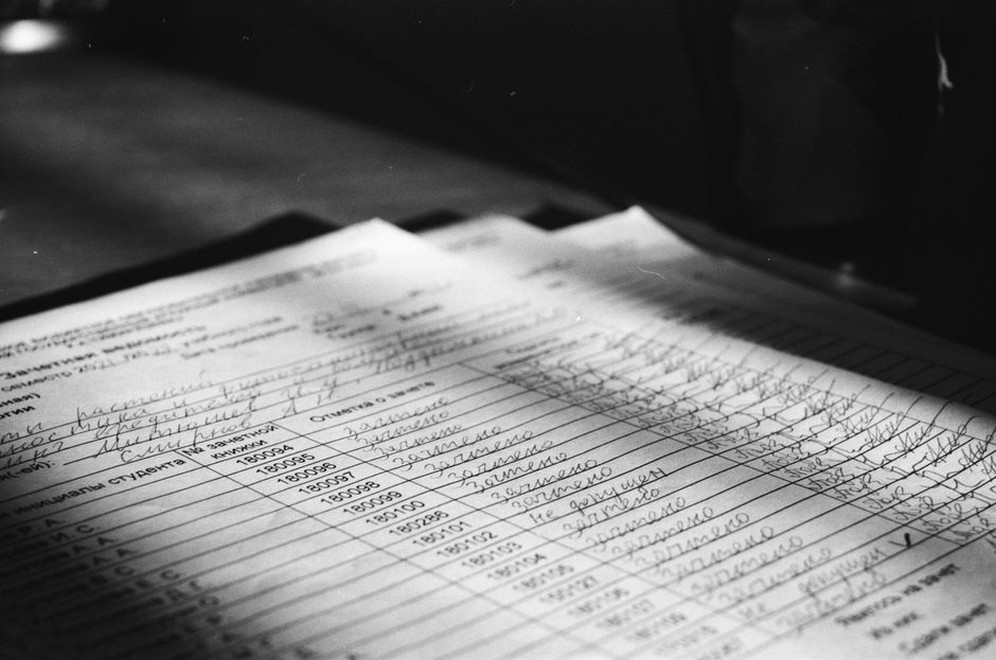
Practical systems usually narrowed the task. A postal code, account number, or date has a limited syntax and alphabet. A boxed form can guide the writer as well as the recognizer. Verification rules can flag an impossible date or an invalid check digit. These constraints did not amount to general handwriting understanding, but they made automated capture workable in selected operational settings.
Quality was measured at more than one level
Recognition accuracy alone could be misleading. A system might perform well on isolated, clean characters yet produce unusable text on complete pages. Document-processing evaluation therefore needed measures tied to the actual task:
- Character error rate records insertions, deletions, and substitutions at the character level.
- Word error rate better reflects searchable text and transcription workloads.
- Field accuracy matters for forms, where one wrong digit can invalidate a record.
- Layout accuracy measures whether regions and reading order are preserved.
- Throughput and exception rate show how much human intervention a production workflow still requires.
Human review was not a sign of failure. In high-volume operations, a useful measure was how confidently a system could accept easy cases, route uncertain ones to an operator, and retain a link to the original image for audit. Confidence scores and rejection options were central to responsible deployment. A recognizer that guessed at every uncertain character could create costlier errors than one that explicitly deferred difficult cases.
Standards, collections, and the rise of retrieval
As institutions digitized larger collections, the goal shifted beyond replacing keystrokes toward providing access. Searchable OCR made it possible to find a phrase across thousands of pages, while image-text alignment allowed users to inspect the scan behind a result. Libraries and archives had to preserve recognized text alongside page images, structural descriptions, identifiers, and provenance. A corrected transcription without its source image can be difficult to audit; an image without searchable text can be difficult to discover.
Shared evaluations helped define these needs. The U.S. National Institute of Standards and Technology supported influential document-analysis assessments, while international research communities developed benchmarks for page segmentation, handwriting, and multilingual recognition. Benchmarks never captured all the disorder of operational collections, but they made methods easier to compare and revealed the difference between a good demonstration and a dependable workflow.
The overlooked problem of language and script
Document processing was often built around Latin-script business documents, English dictionaries, and well-resourced fonts. Extending it to other scripts required more than translating interface labels. Character inventories could be much larger; word boundaries might be less explicit; diacritics could be small and easily lost during binarization; and print conventions could differ substantially. Language identification on a page could also matter when documents mixed headings, names, quotations, and multiple scripts.
This wider linguistic context parallels the issues described in The Evolution of Language Identification: From Statistical Methods to Deep Learning: reliable classification depends on representative data, appropriate features, and attention to languages that standard benchmarks often overlook. In document collections, those questions affect indexing, OCR correction, and whether a search system makes a community’s records visible at all.
What the early era established
The early history of document processing established a lasting engineering pattern: improve the image, use its structure, recognize uncertain evidence, validate it against context, and preserve the source. Newer systems may learn representations across several of these stages, but a document remains a compound object with visual, linguistic, and administrative meaning.
A useful archival workflow records the scan identifier, capture settings, OCR engine version, recognition confidence, and later human corrections alongside exported text. When a researcher encounters a misread surname or missing diacritic, those details make it possible to trace the error back to the page instead of treating machine output as an unquestionable transcription.