
Press the same finger against a sensor twice and the images will rarely match exactly. Pressure can change the apparent ridge spacing; a slight rotation exposes a different area; dry skin may leave gaps in the ridges. A mid-2000s biometric system had to decide whether two imperfect observations came from the same person—and do so with an error rate and processing time suited to its intended use.
That distinction matters when reading research from the period. Automated fingerprint systems were already established by the 2000s, while face, iris, voice, and multimodal recognition drew sustained academic and commercial interest. Each had its own capture problems, quality measures, and failure modes. Results from carefully collected images might tell us little about a noisy enrollment station or a camera at an uncontrolled entrance.
Capture quality came before classification
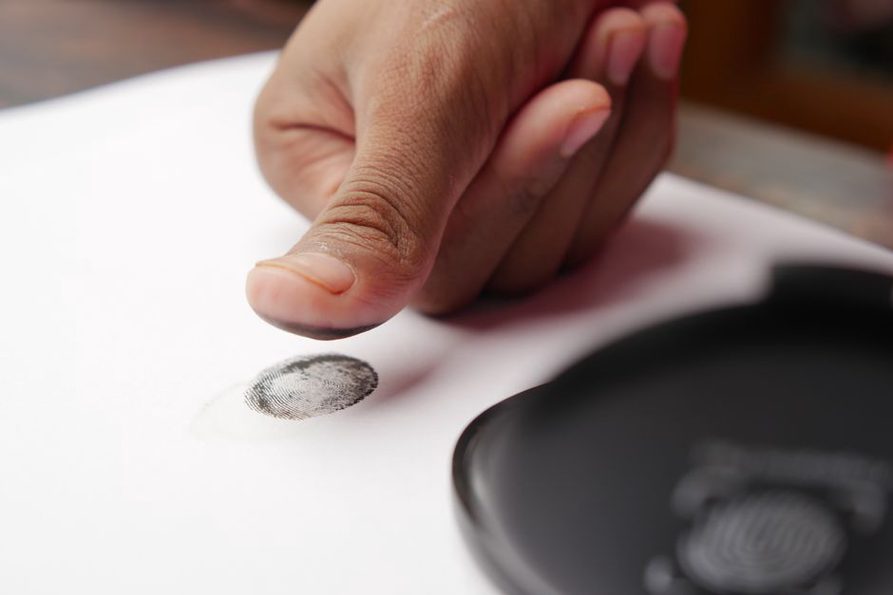
Every biometric pipeline began with a physical measurement: light reflected from a face or iris, friction-ridge contact at a fingerprint sensor, or sound reaching a microphone. Algorithms could compensate for some defects, but they could not reliably recover information that was never captured. An out-of-focus iris image might lack visible texture; clipped speech could lose acoustic cues; a partial fingerprint might show too few useful ridge endings and bifurcations.
Researchers treated quality assessment as a problem in its own right. Rather than force a comparison, a system might reject a sample and ask for another. That shifted some of the burden from matching to acquisition. It also introduced a measure distinct from recognition error: failure to acquire, when the sensor could not obtain a usable sample. Enrollment could fail too, if a person could not provide a template that met the system's requirements. Accuracy figures based only on successful captures left both problems out of view.
From raw measurements to comparable templates
Most systems did not compare raw sensor output directly. They located the region of interest, normalized it where appropriate, extracted features, and stored a representation often called a template. Decisions at each stage affected what the matcher could use. Fingerprint enhancement might make ridges easier to follow, but poor segmentation could mistake background noise for ridge detail. In face recognition, inaccurate eye localization could spoil alignment before the classifier saw the image. Iris systems had to find the pupil and iris boundaries despite eyelids, eyelashes, and reflections.
Voice biometrics made it especially hard to separate the signal from the speaker's identity. A recording carried traces of the microphone, room, language, speaking style, and health, as well as the speaker. Short utterances offered less evidence than long ones; a model trained on one channel might behave differently over a telephone line. Speech also changed substantially over time, so the system had to compare variable sequences or statistical summaries rather than two fixed pictures.
Alignment was not a harmless preliminary step
Normalization tried to reduce differences unrelated to identity, such as image rotation, scale, illumination, or the timing of a spoken phrase. But it relied on assumptions. Rotate a partial fingerprint the wrong way and the comparison may look tidy while being misleading. Correcting face illumination might reduce shadows without fixing a large change in pose. Researchers had to tell manageable variation apart from missing or distorted evidence that called for a new capture.
- Acquisition: obtain a sample with enough relevant detail.
- Quality control: decide whether comparison is justified.
- Localization and normalization: identify the useful region and reduce manageable variation.
- Feature extraction: encode characteristics intended to remain informative across captures.
- Matching: produce a similarity or distance score, then apply a decision rule.
On paper, the stages form a neat sequence. In practice, an early mistake carried through: the matcher could not tell whether a weak score meant different people or a badly located eye, fingertip, or iris boundary.
Variation within a person competed with similarity between people
The central statistical difficulty was overlap. Repeated samples from one person did not always score highly, and samples from different people did not always score poorly. A threshold divided scores into accept and reject decisions, trading false matches against false non-matches. Tightening it could reduce mistaken acceptance while rejecting more legitimate attempts. The right balance depended on whether the system served low-friction access or a high-stakes identity check, for example.
The task itself changed what a result meant. In verification, a person claimed an identity and the system compared the sample with that person's stored template: one-to-one matching. In identification, it searched a gallery for a possible identity: one-to-many matching. False candidates could become more consequential as the gallery grew, and processing time mattered more. An excellent one-to-one score did not establish that the method would work well in a large search.
Population and collection practices shaped the scores too. Enrollment and test samples taken in the same session could be more alike than samples taken months apart. A face dataset with little variation in age, lighting, or camera placement might understate the difficulty of deployment. Evaluations needed to report who was sampled, when, how many attempts were allowed, and whether rejected low-quality captures were counted. Those details mattered independently of the classifier.
Storage and interoperability were processing problems too
A biometric template was more than a smaller image. It reflected choices about which features to keep, how to encode them, and how to compare them. Two vendors could capture the same finger yet produce incompatible templates. Sensor resolution, compression, feature conventions, and template formats all affected whether data collected in one setting could be used in another. Standardization efforts addressed interchange, but a shared format did not guarantee equal capture quality or matching performance across devices.
Templates raised a security concern unlike that of ordinary passwords. A password can be changed after exposure; a person's fingerprint or face cannot be replaced in the same way. Protecting stored records and restricting access were therefore part of responsible system design. Researchers explored ways to protect templates, but a protected representation still had to tolerate differences between captures. Choosing not to store a full-resolution photograph did not, by itself, resolve that tension.
A successful match also proved less than a transaction might require. It showed that a captured sample resembled an enrolled reference under a specified decision rule. On its own, it did not show that the enrollment record was correct, that the presentation was genuine, or that the person meant to authorize a particular action. Those were separate claims requiring separate evidence.
Multiple modalities offered options, not automatic fixes
Pairing face with fingerprint, or voice with face, could provide evidence when one modality was weak. Researchers studied fusion at several levels: combining raw or extracted features, matcher scores, or accept/reject decisions. Score-level fusion let existing matchers remain separate, but their scores often used different scales. Combining them required calibration or normalization using suitable development data.
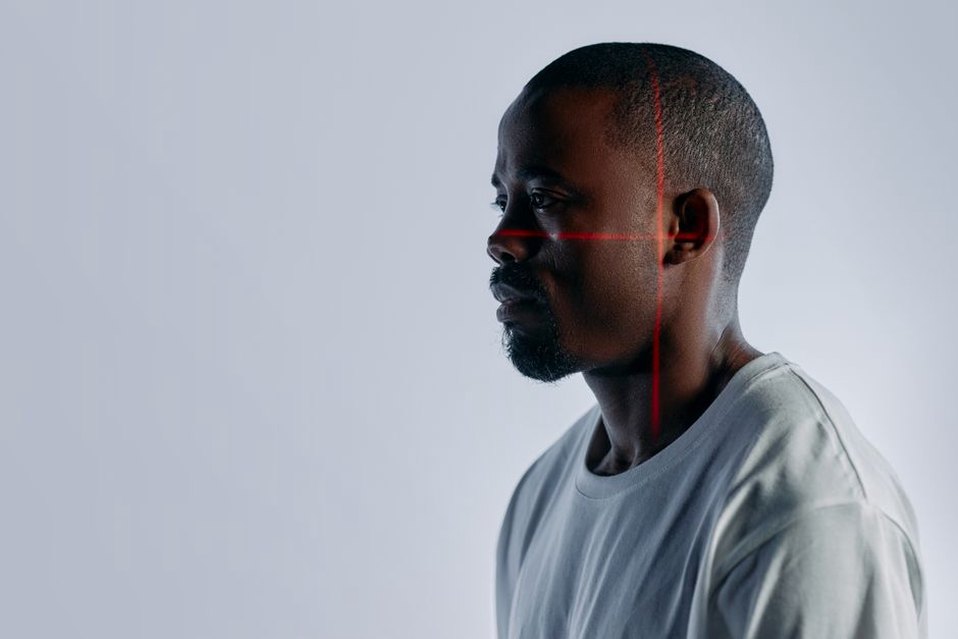
Fusion brought practical burdens as well. Two sensors cost more to install and maintain; two capture steps could slow a queue; and people unable to provide one modality needed an alternative. Errors were not necessarily independent, either. Poor lighting could affect both face capture and camera-based iris capture. To make a multi-sensor experiment interpretable, researchers needed to report missing samples, explain how they handled them, and keep data used to tune fusion weights separate from the final test.
What mid-2000s results could—and could not—establish
Academic work of the period used controlled datasets, public evaluations, and prototype systems to compare methods. That infrastructure encouraged explicit protocols and gave researchers common problems to study. A single headline accuracy figure still hid too much. Error rates changed with capture conditions and thresholds; processing costs depended on hardware, gallery size, and whether quality checks or manual review were included.
To read a historical result, follow a sample through the experiment. Was a low-quality capture retried, rejected, or silently excluded? Was the enrolled template built from one sample or several? Did the test sample come from another day or device? Was it compared with one claimed identity or searched against a gallery? The answers define what the reported number measures; accuracy is not an intrinsic property of the biometric trait.
Suppose a fingerprint evaluation reports errors only for usable images. Its match rates should be read alongside the share of attempted captures rejected by the quality check and the policy on retries. If discarding difficult samples lowers the reported false non-match rate, the difficulty has not gone away. It has moved to the capture desk.