
A fingerprint scanner could produce a clear image in 2005 and still leave its user waiting at the door. The software had to extract features, locate an enrollment record, compare the samples, apply a decision threshold, and return a result. Much of the decade’s biometric work went into making those steps function together, rather than finding a wholly new way to recognize a face or finger.
Biometrics uses measurable human characteristics to support recognition. Fingerprints, faces, irises, hand geometry, voice, and signatures were all studied or deployed in the 2000s, though each placed different demands on sensors and users. As biometrics entered access control, travel documents, border processing, and other identity-management settings, a familiar laboratory question became harder to avoid: could a method that worked on collected samples cope with inconsistent capture, large databases, and ordinary human behavior?
From a recognition experiment to an operating system
A research experiment might begin with images already captured and labeled. An operational system had to obtain those images, often under less controlled conditions. The usual sequence included enrollment, capture at a later encounter, quality checks, feature extraction, comparison, and a decision or referral. Enrollment was especially consequential: a blurred reference image or a record attached to the wrong identity could undermine every later comparison, no matter how good the matcher was.
Developers also had to distinguish verification from identification. In verification, a person claims an identity—perhaps by presenting a card—and the system compares a fresh sample with that person’s stored record. In identification, it searches records to suggest who the person might be. As a database grows, a one-to-many search can turn up plausible candidates by chance. That calls for different thresholds and search strategies, often with human review. A match score indicates similarity; it does not independently establish a name.
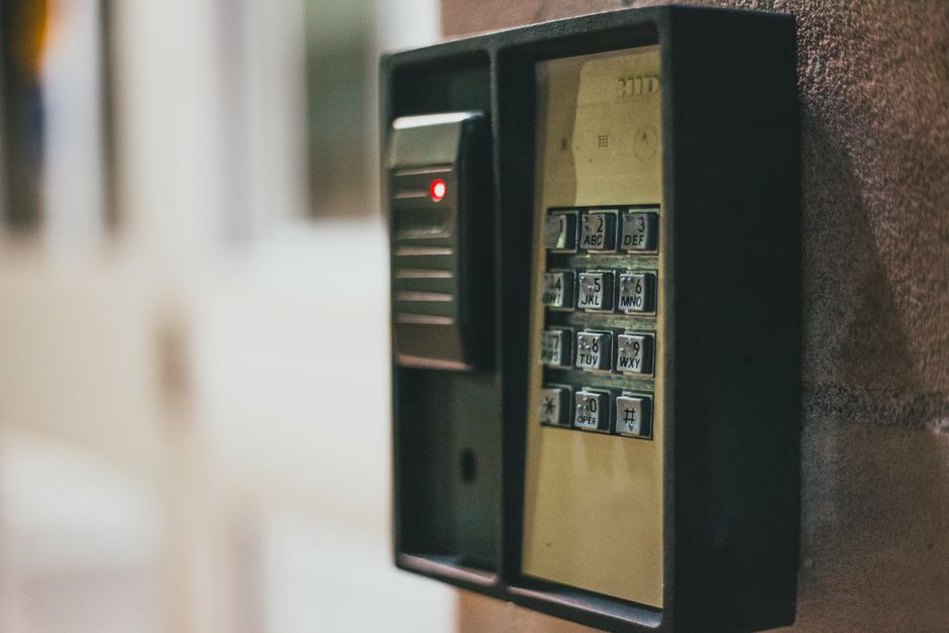
Integration brought practical constraints. At a doorway, the sensor had to work with a credential database, an access policy, and the gate mechanism. At a border desk, it had to fit document readers and inspection procedures. Recognition rates measured on a fixed dataset could say little about a subject who wore glasses, moved during capture, or had never enrolled successfully.
Why each modality developed differently
Fingerprints: mature patterns, difficult capture
Fingerprint recognition drew on a long history in forensics and automated identification. Many systems compared minutiae—ridge endings and bifurcations, for example—rather than every pixel of an image. Smaller electronic readers made fingerprints attractive for access control and device login in the 2000s. Large identification systems, meanwhile, kept pressure on researchers to speed up searches and improve data exchange.
Getting a usable print was still a problem. Dry skin, worn ridges, pressure against the sensor, or a partial impression could change which features were visible. A quick scan on a compact reader was not equivalent to a carefully collected set of prints. Quality checks and enrollment procedures determined whether the matcher had enough reliable information to use.
Faces: easy to acquire, hard to standardize
A face photograph required no contact with a device, and photographs were already part of many identity-document workflows. That convenience helped drive interest in facial recognition. But camera angle, lighting, expression, resolution, and the time between photographs could all affect a comparison. Systems often had to detect and align a face before measuring it, connecting biometric research with wider computer-vision work on features and image normalization. The account of how computer vision changed in the 2000s provides context for those shared techniques.
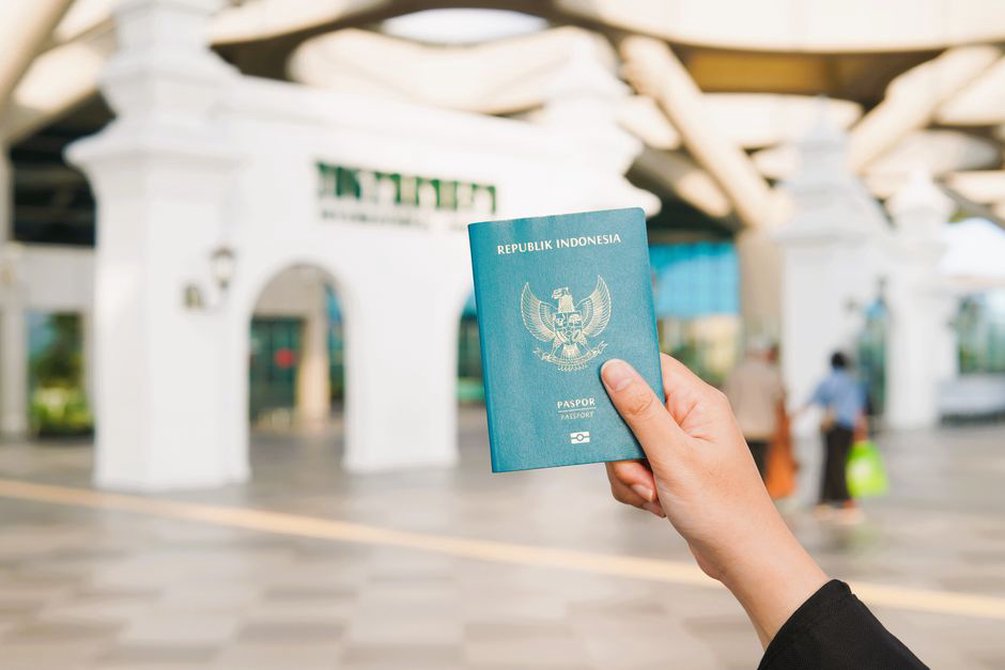
Passport photographs show where document design and automated recognition meet—and where they part. A standardized portrait could improve the reference image, but it could not fix a poor live camera image. Nor could a score comparing two photographs establish, on its own, that the document had been issued to its presenter.
Irises, voices, and other traits
Iris recognition attracted attention because detailed iris texture could be highly distinctive under suitable imaging conditions. Capturing that detail required cooperation and the right camera geometry. Voice had a different advantage: it could be captured over a telephone. Microphones, background noise, illness, and the words spoken could all introduce variation. Checking a speaker’s identity was not simply speech recognition under another name; the question was who was speaking, not what they said.
Hand geometry and dynamic signatures served narrower uses. Hand-geometry systems measured the shape of a hand and could suit controlled access points. Signature systems could examine timing and motion as well as the written mark. Neither trait belonged in a universal ranking: a method convenient at a staffed gate might be awkward for remote enrollment, while one suited to checking a claimed identity might be less useful for searching a large population.
Interoperability changed what could be deployed
As projects moved beyond one vendor’s equipment, compatibility became a problem in its own right. Components needed to read, exchange, and interpret stored biometric references. Standards work covered image formats, feature records, testing methods, and biometric information in machine-readable travel documents. The IEEE standards program offers one view of how technical communities formalize requirements for biometric systems and related technologies.
A common format did not guarantee the same result from two systems. Fingerprint readers might capture different portions of a finger; face cameras might work under different lighting; matchers might use different thresholds. Standards made exchange possible, but performance still needed testing with the devices, populations, and procedures a deployment would actually use.
Machine-readable travel documents brought those distinctions into focus. The ICAO specification for electronic passports, developed in the 2000s, made a facial image the mandatory biometric on the chip, with other biometrics possible under applicable arrangements. Chip storage tied a document to digital data, but authenticating the document, comparing portraits, and checking identity records remained separate tasks. If they were treated as a single act of recognition, it became harder to locate an error.
Testing the pipeline, not just the matcher
An accuracy figure means little without its test conditions. Researchers distinguished false matches from false non-matches and examined how a change in threshold traded one error against the other. They also tracked failures to enroll or acquire a sample. A person whose fingerprint could not be captured would never generate a matcher score, but the failure still counted in the system’s performance.
- Capture conditions: Was the sample collected by a trained operator, a fixed camera, or a self-service device?
- Population and time: Did the test include the people expected to use the system, and how long passed between enrollment and later capture?
- Search task: Was the system checking one claimed identity or searching across many enrolled records?
- Decision process: Did a person inspect uncertain cases, and were those referrals included in the results?
This is why a laboratory figure could not simply become a procurement promise. Even a carefully sampled evaluation might miss the pace of a busy checkpoint or the maintenance practices of a scattered network of readers. A deployment report, in turn, might reflect operator decisions and local rules as much as the algorithm. Stronger evaluations during the decade began to separate those layers.
Multimodal integration and its limits
Combining traits offered a way around some limits of individual modalities. A system might use a document photograph alongside a fingerprint, or ask for another sample when the first was inconclusive. Researchers explored combining measurements, match scores, or final decisions. The distinction mattered: if a face image was missing, treating that absence as a negative face match could distort the result.
More sensors did not automatically improve a system. Each capture step took time and might exclude someone unable to provide that sample. Conflicting results also needed a policy. If a fingerprint supported a claimed identity but a face comparison did not, the response depended on sample quality and the consequences of a wrong decision. Combining evidence was not a vote in which every modality carried equal weight.
Security research drew another boundary: a biometric match was not complete assurance. Stored templates needed protection, and live samples required checks suited to the capture setting. Unlike a password, a physical trait could not simply be replaced after exposure. Retention, access to stored data, audit records, and alternatives for people whose samples could not be captured all belonged in the design discussion.
What changed by the end of the decade
By the late 2000s, biometric research was more closely tied to building an identity process from end to end. Sensors were more available, digital identity documents offered new points of integration, and evaluations paid greater attention to capture failures and operating conditions. No single modality settled the trade-offs among convenience, scale, privacy, and error. A face camera at a document desk, a fingerprint reader at a door, and a telephone voice check were all biometric systems, but they called for different evidence and safeguards.
Consider an electronic passport inspection in which the chip cannot be read but the printed portrait is clear. An officer can still examine the document and its holder; the failed read nonetheless removes a source of digital evidence, and a good face comparison cannot replace it. A record that distinguishes the failed chip read, the available portrait, and the manual inspection captures the kind of detail that separated an operational system from a matching demonstration.