
At a mid-2000s ICASSP session, a speech-recognition result offered more than an error rate. Its test corpus, training conditions and evaluation choices let other laboratories ask whether their methods addressed the same problem. Conferences brought those choices into the open when speech, vision, machine learning and pattern recognition researchers often worked in separate communities. The result mattered; so did the discussion of what made two results comparable.
Different venues made different problems visible
There was no single conference circuit called “AI research.” ICASSP and INTERSPEECH were central meeting places for speech and audio work. CVPR, ICCV and ECCV brought together computer vision researchers; ICPR covered a broad range of pattern-recognition applications. NIPS, now called NeurIPS, and ICML were prominent venues for machine-learning methods, while AAAI and IJCAI offered wider AI forums. Someone working on spoken language identification might follow several of these communities, each of which emphasized a different part of the problem.
Those differences shaped submissions. A machine-learning paper might foreground a general objective function or inference method. A speech paper often needed to explain its acoustic conditions and language data. A vision paper might be judged partly on how it handled occlusion, viewpoint change or clutter. Venue choice affected how authors stated their contributions, which baselines they tested and which weaknesses reviewers were likely to notice. These were tendencies, not fixed rules: new methods and substantial application work appeared across the circuits.
Proceedings preserved the exchange, but each paper first had to meet a deadline, pass peer review and fit a presentation slot. That schedule pushed researchers to assemble complete, testable claims. It also imposed limits. Experiments might have been finished months before publication, and a short paper had little room for data-collection details or failed trials. A 2000s proceedings paper is best read as a snapshot of work prepared for a particular deadline, not as a timestamp for when the underlying idea emerged.

Benchmarks became shared negotiating ground
A talk could attract attention, but a reusable evaluation procedure gave other groups something to try when they got home. Common corpora and challenge tasks reduced the work of assembling a test set and made approaches easier to compare. In speech technology, shared evaluations associated with organizations such as NIST helped define tasks and reporting practices. In vision, datasets and workshops around object recognition encouraged experiments on common images; the PASCAL Visual Object Classes challenge, launched in the mid-2000s, became an influential example.
A benchmark could not decide what “better” meant by itself. Organizers or users still had to specify training and test partitions, permitted outside data, target labels and metrics. In object detection, a bounding box and an overlap criterion could determine whether an output counted as correct. In speech recognition, word error rate counted substitutions, deletions and insertions under a particular transcription scheme. Evaluating character recognition alone in document processing, meanwhile, could miss errors in reading order or page layout. Conference papers put these decisions where others could question, repeat and eventually revise them.
Shared tasks and leaderboards could narrow attention, too. A group might optimize for available labels while neglecting rare languages, unusual page designs or clinical populations missing from the test set. Licensing, privacy and recording constraints made some datasets hard to obtain or redistribute. A comparison was useful within its stated conditions; it was not proof that a system would work equally well elsewhere. That distinction mattered especially in biometric and medical-image research, where an attractive aggregate score could hide differences between acquisition sites or patient groups.
Workshops could define a problem before a benchmark existed
Smaller workshops made room for preliminary work that did not yet fit a mature competition. Participants could compare annotation practices, discuss scarce-language corpora or work out why two laboratories’ tracking results disagreed. A workshop did not need to produce a widely adopted dataset to matter. A clearer task definition, or a connection between researchers able to pool data and expertise, could give later full-length papers a foundation.
Methods crossed disciplinary boundaries in person
Researchers in the 2000s drew on tools that traveled between fields: hidden Markov models, support vector machines, conditional random fields, graphical models and feature-based representations appeared in different combinations. Conferences let people encounter an idea outside the application where they had first seen it. A structured-prediction method, for example, might interest groups working on sequence labels in speech, document analysis or biological data, though each field needed its own features and validation.
Borrowing an algorithm’s name was not enough. A model successful with carefully segmented inputs might struggle with continuous speech; a vision technique tested on clean photographs might fail on scanned pages. At presentations and posters, researchers could ask about preprocessing, tuning and failure cases that a compressed proceedings paper left unexplained. Sometimes an apparent disagreement about methods turned out to be a disagreement about test data.
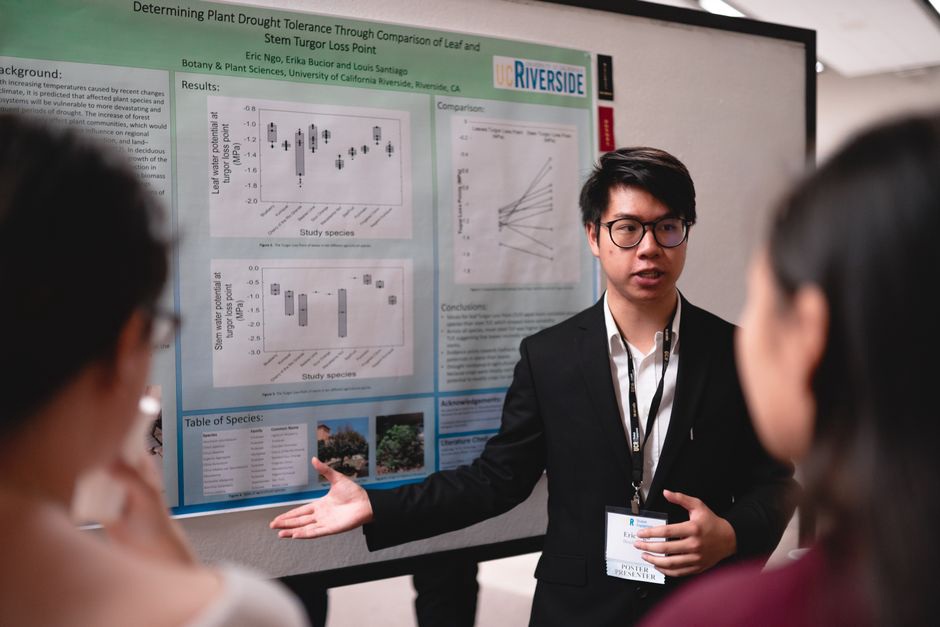
For early-career researchers, those exchanges also revealed a field’s unwritten expectations. A poster visitor might ask whether speakers overlapped between training and test sets, or whether a tracker had been restarted after failure. Such questions could sharpen the next experiment. Conference contact sometimes led to collaboration, but travel funding, visas and established professional networks were unevenly distributed.
Publication incentives shaped the record
In several AI subfields, a refereed conference paper was a major research output, not merely a preview of a journal article. Conferences thus became fast-moving archives of methods and experimental results. They also rewarded work that could be described and evaluated on a conference timetable. An incremental gain on an established test was often easier to present convincingly than the slower construction of a corpus for an under-resourced language or a careful study of a clinical workflow.
Programs show what a community chose to discuss, not everything its researchers were doing. Rejected submissions, private industrial work and unsuccessful replications rarely appear in proceedings. Acceptance alone does not show that a method held up later. To assess a well-known result, compare its conference paper with subsequent journal versions, released datasets where available and independent follow-up experiments.
That caution matters when reconstructing the history of deep learning. Its later prominence should not be projected backward onto every 2000s program. Statistical learning and neural-network research were present, but many influential talks concerned engineered features, probabilistic models, geometry and careful evaluation. Several approaches developed at once, often under different assumptions about compute and labeled data.
How to read a conference’s influence
Rather than asking only whether a famous paper appeared at a venue, trace what happened around and after it:
- Task definition: Did organizers clarify the input, output or data conditions?
- Comparison: Did later groups adopt the same corpus, split or metric?
- Exchange: Did workshops or cross-field sessions bring previously separate approaches into contact?
- Limits: Which data, users or failure modes remained outside the evaluation?
Try comparing the experimental sections of two papers from successive years of the same conference track. If the later paper keeps the earlier test split but adds a baseline or tests noisier conditions, you can see the venue’s influence in the changing experiment—not just in the citation count.