
A fingerprint match at a desk in 2005 depended on more than the ridges of a finger. The scanner needed a usable image, the software had to extract a template, and the system had to compare it with the right enrolled record. A border checkpoint, an office door, and a benefits counter each placed different demands on speed, supervision, and acceptable error. Those practical differences shaped biometric security in the 2000s.
Why deployment changed the research agenda
Biometrics identifies or verifies people through measured physical or behavioral characteristics. In verification, a person claims an identity, and the system compares a new sample with one record. In identification, it searches a collection for possible identities. The second task grows harder as the collection grows: even an uncommon false match may produce candidates when many records are searched.
Fingerprint systems in the 2000s drew on an established forensic tradition, while face and iris recognition attracted substantial research and procurement interest. Their uses were not interchangeable. A controlled fingerprint capture at a staffed counter provided different evidence from an unattended face camera in variable light. Laboratories therefore reported results by task, sensor, population, and test conditions rather than treating accuracy as an inherent property of a modality.
When reading a paper from the period, these distinctions help:
- Sensor versus matcher: a strong comparison algorithm cannot reliably make up for a poor capture.
- Enrollment versus later use: a carefully recorded reference sample may be compared with a hurried or degraded probe.
- Closed test versus operation: a fixed evaluation set may leave out sensor faults, repeat attempts, and changing environments.
- Candidate list versus decision: returning a possible match is not the same as authorizing access.
The hardware at the point of capture
Fingerprints, faces, and irises
Fingerprint readers ranged from optical devices to compact solid-state sensors. Software located ridge features and compared their arrangement, but dry skin, worn ridges, pressure, or partial placement could reduce sample quality. At a staffed counter, an operator could ask for another scan. An unattended reader had to decide when to retry or pass an uncertain result to another procedure.
Face recognition required no contact and could make use of photographic records. Its results, though, were sensitive to pose, illumination, expression, and camera quality. Researchers studied ways to align faces and represent their appearance, often under conditions more controlled than those around a hallway camera. Iris recognition required a suitable view of the eye and careful processing to locate the iris before comparison. Strong results in some controlled evaluations did not remove the practical difficulty of positioning users and handling unsuitable captures.
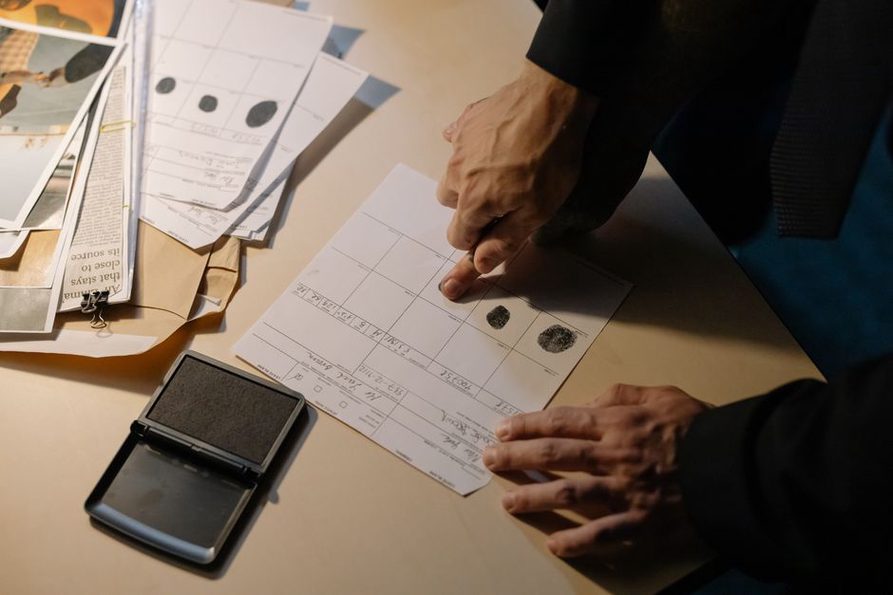
Choosing a sensor also meant choosing an interaction: touch a surface, face a camera, or look toward an eye-imaging device. Capture time, hygiene concerns, accessibility, lighting, and staff availability affected how consistently people could complete it.
Standards and the move between systems
As biometric projects crossed organizational boundaries, keeping templates inside a single proprietary product was often insufficient. Work during the decade addressed data formats, interfaces, and testing procedures. The ISO/IEC 19794 series, for example, specified exchange formats for several kinds of biometric data. Shared formats helped systems exchange records; they did not make different vendors' matchers agree or give samples from different sensors equal quality.
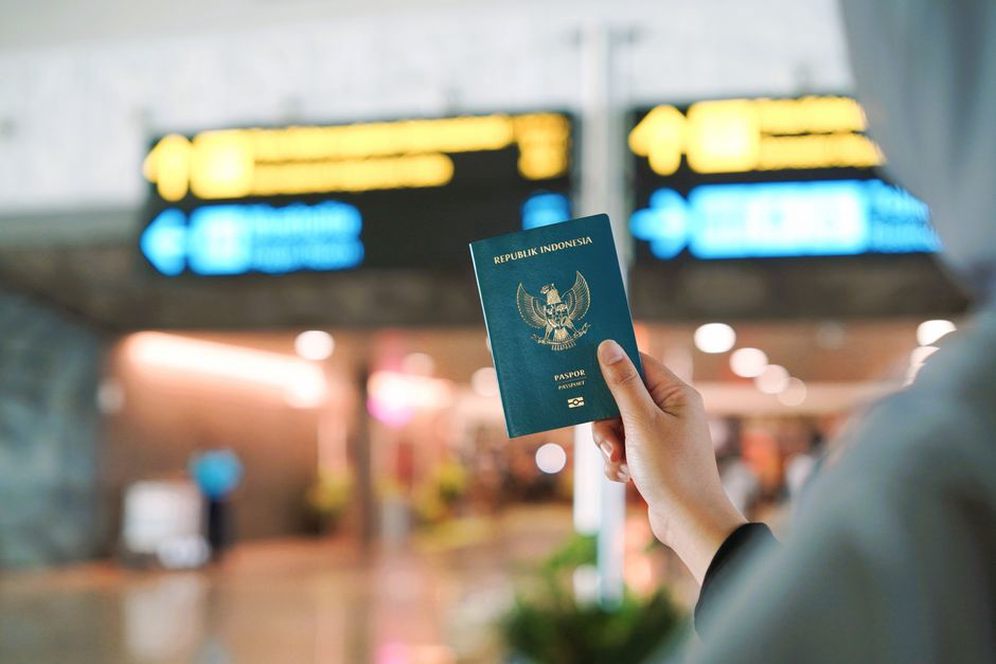
Electronic passports made the distinction visible. ICAO's e-passport framework included a digital facial image as a core biometric element; some issuing states also used fingerprints or iris data. A chip could carry a signed record so a reader could check whether the stored data had been altered. The signature did not establish that the person presenting the document matched the image. That still called for a comparison by an officer, software, or both. Document security, biometric reliability, and protection of the reader infrastructure remained separate questions.
What evaluation numbers did—and did not—say
Errors start before the threshold
Biometric studies often reported a false match rate, when different people are judged to match, and a false non-match rate, when samples from the same person are judged not to match. Changing the decision threshold usually trades one error against the other. Neither measure alone accounts for a failed capture or an unsuccessful enrollment. At a busy service counter, those failures can be hard to ignore.
Public evaluations, including NIST's fingerprint and face recognition tests, gave researchers common tasks and a way to compare methods under stated conditions. They also drew attention to image quality and differences between collections. A result from a carefully selected image set was not a forecast for every deployment. The share of genuine and impostor attempts, the number of records searched, and the policy for ambiguous cases all affected what happened in practice.
Security beyond the biometric comparison
A measured trait is not a secret like a password. Faces are routinely visible, and fingerprints may be left on surfaces. Defenses instead depend on trustworthy capture, protected storage, controlled access to records, and review of exceptional decisions. Researchers and practitioners also considered presentation attacks, in which something other than a live, cooperating person's intended sample reaches the sensor. Detecting such an attempt is a different task from comparing two genuine samples.
Privacy also depended on system design. A local verification system holding one person's reference record posed different risks from a centralized identification database. Retention periods, access logs, and rules for secondary searches shaped what could happen to data after its original purpose ended. Combining modalities could help when one kind of sample failed, but it also gave the operator more sensitive information to manage. These integration issues are explored more fully in Biometrics in the 2000s: Beyond the Matching Algorithm.
Consider a border kiosk that still cannot obtain a usable fingerprint after repeated supervised attempts. The matcher's error rate says little about what happens next. The kiosk's specification must say when retries stop, what an officer can inspect, and how the unresolved attempt is recorded. At the border, those procedures are part of the biometric system.