
A working flashlight is little help if its spare batteries are dead. The same goes for a kit with expired medication, no water, or a charging cable that fits none of the household’s phones. An emergency supply kit needs to cover basic needs when power, tap water, shops, or travel are disrupted—and its contents need to work when you reach for them.
Start with enough supplies for each person for at least three days, then adjust for local hazards and the chance of a longer disruption. Keep a home kit where household members can reach it without crossing a flooded basement or entering an unsafe garage. A smaller bag can hold what you would need to leave quickly. The two have different jobs: you can store more water at home, but a bag has to be light enough to carry.
Water and food come first
A common baseline for drinking and basic sanitation is one gallon of water per person per day for at least three days: 12 gallons for a household of four. Hot weather, illness, pregnancy, and strenuous activity can increase that amount. Pets need water too. Store commercially bottled water somewhere cool and away from chemicals, and follow the label’s replacement guidance. If you fill food-grade containers yourself, clean and sanitize them properly and set a rotation schedule you can keep. Never use containers that previously held chemicals.
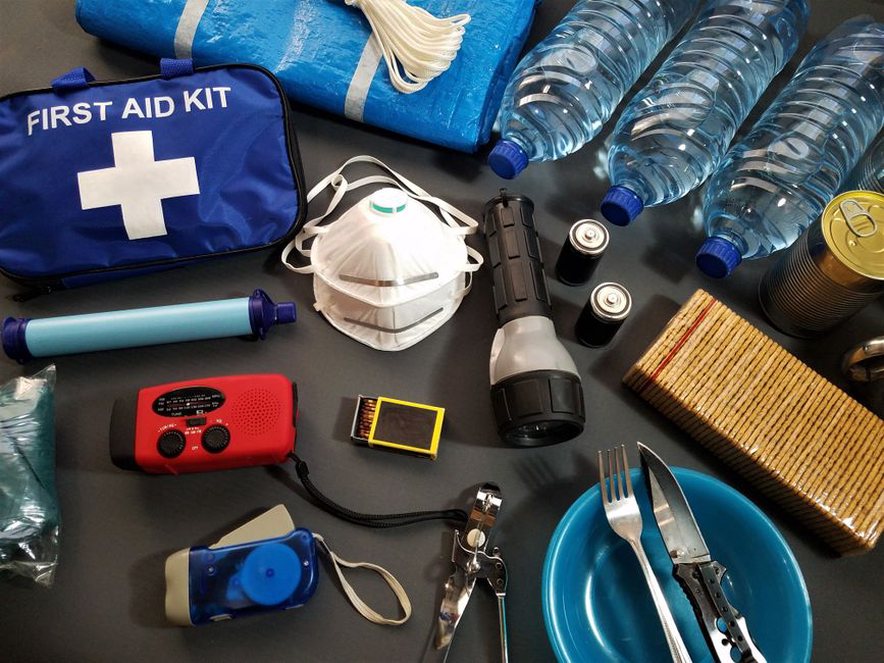
Choose at least three days of shelf-stable food that people in your household will eat. Canned beans or fish, nut butter, crackers, dried fruit, and shelf-stable meals are useful when you cannot cook, refrigerate food, or wash dishes. Check dietary restrictions, and pack a manual can opener if you need one. Food that requires water uses part of your drinking supply; food that requires heat calls for a safe cooking option. Never use a charcoal grill or outdoor fuel-burning stove indoors or in a garage: it can produce dangerous carbon monoxide.
Light, information, and a way to charge
Keep at least one flashlight or headlamp, plus spare batteries that fit. A headlamp frees your hands to carry water or check a breaker panel. Battery-powered or hand-crank lights are generally safer than candles, which pose a fire risk. Test your lights periodically; unopened batteries are no guarantee that they will work.
A battery-powered or hand-crank radio can carry local instructions when mobile service is congested or the internet is down. Find out which emergency broadcasts serve your area and check that your radio receives them. If its instructions recommend storing batteries separately, do so, and check for leaks. Keep a charged power bank, cables that fit your current phones, and a wall charger ready for when power returns. A compatible car charger may also help, but never run a vehicle in a garage or other enclosed space to charge devices.
Keep important phone numbers and likely meeting-place addresses on paper, along with simple instructions for contacting someone outside your area. A printed local map can help if an app loses connectivity or a familiar route is closed.
Medical supplies and personal health needs
Build around the people who will use the kit
A basic first-aid kit can include adhesive bandages in several sizes, sterile gauze, medical tape, disposable gloves, antiseptic wipes, tweezers, and a thermometer. Add supplies you know how to use for minor injuries and a first-aid guide. The kit is for small problems and initial help while you seek professional care, not a replacement for urgent treatment.
Prescription medicine takes more planning than a standard shopping list. Ask a pharmacist or clinician how to keep an emergency supply where permitted, and follow storage and expiration requirements. Include copies of prescriptions and a written list of medicine names, doses, allergies, and relevant medical conditions. If someone uses a powered medical device or medication that must stay cold, work out backup power or temperature control with their care team. A general-purpose cooler or battery may not be enough.
Add spare glasses or other essential vision supplies if available. Include hearing-aid batteries, mobility-device parts, and other items household members depend on. Choose over-the-counter pain relief and other medicines with age, allergies, interactions, and label directions in mind. Keep all medication secured from children and pets.
Hygiene and sanitation when taps or toilets fail
Set aside soap, hand sanitizer, tissues, toilet paper, menstrual products, and sturdy trash bags with ties. Moist wipes can help clean hands or surfaces when water is limited, but they do not replace safe drinking water or proper handwashing after certain exposures. Household bleach may be useful for sanitation if stored safely and used only as directed by its current label and public-health guidance. Never mix it with other cleaners.
If sewage service fails, follow local authorities’ instructions on toilet use and waste disposal. A bucket with a tight-fitting lid, heavy-duty liners, and disposable gloves can serve as a household backup. Keep waste handling away from food preparation and make hand hygiene possible afterward. For infants, pack diapers, wipes, feeding supplies, and any formula they use. If clean water may be scarce, plan for safe formula preparation; ready-to-feed products may make that easier where suitable.
Clothing, shelter, and simple tools
Pack a change of clothes and sturdy footwear for each person, or keep them beside the kit. Wet or inadequate clothing can become a serious problem without heat. Include a warm layer, rain protection, and a blanket or sleeping bag suited to your climate. A compact emergency blanket should not be your only source of warmth during prolonged cold.
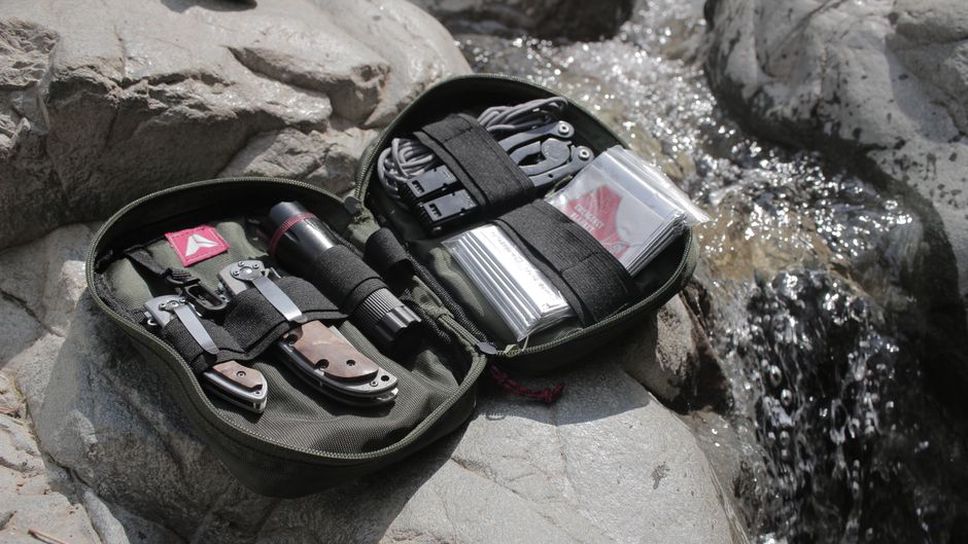
A whistle lets you signal for help without wearing out your voice. Other useful items include a manual can opener, work gloves, a multi-tool if you can use it safely, and a dust mask for dusty conditions. A mask does not make contaminated air safe; follow evacuation or shelter instructions during smoke, chemical releases, or other air-quality emergencies. Plastic sheeting and tape may help if local officials advise sealing a room, but follow their instructions for the specific situation.
Keep a fire extinguisher accessible in the home and learn to use it; it does not need to be buried in a supply bag. Know where your utility shutoffs are, too. Do not shut off gas unless your utility or emergency officials tell you to, or there is an immediate hazard and you know the correct procedure. Restoring gas service may require a professional.
Documents, cash, and practical contact details
Keep copies of identification, insurance information, essential medical records, and emergency contacts in a waterproof pouch. They can help with identification and claims, but a bag can be lost, so avoid carrying more sensitive data than necessary. A password-protected digital copy offers another way to get the information when a device and power are available. Make sure another trusted household member can access what they might need.
Put aside some cash in small denominations in case card terminals and cash machines are out of service. How much depends on your circumstances; aim to cover a few immediate purchases or transport needs without relying entirely on electronic payment. Add spare house or vehicle keys only if you can store them securely. Paper and a pen can be handy for leaving a note, recording an address, or writing down radio instructions.
Account for pets and household-specific needs
For each pet, set aside food, water, required medication, a leash or carrier, and waste-cleanup supplies. Copies of vaccination records and a recent description may help if you are separated. Check whether the places you might evacuate to accept animals; supplies alone are not an evacuation plan.
Some additions depend entirely on who lives with you. A child may need a familiar comfort item; an older adult may need spare batteries for an assistive device. Supplies for someone with limited mobility should be somewhere they can reach, not just somewhere convenient for a caregiver. If household members use different languages, write key contacts and medical information in the forms they will find easiest to use under stress.
Store a home kit and a portable bag differently
Use the home kit for heavier supplies: most of the water, extra food, blankets, and sanitation materials. Split them among containers people can move rather than overloading one box. Keep supplies above likely flood levels and away from heat or freezing temperatures when their labels require it. Everyone in the household should know where the kit is and how to reach it safely.
In a portable bag, give priority to things that would be hard to replace quickly: medication, documents, contact details, a flashlight, a radio if practical, charging supplies, a little food and water, weather protection, and individual essentials. The person expected to carry the bag must be able to lift it. If you commute regularly, a smaller set of shoes, water, medication information, and charging supplies might also make sense at work or in a vehicle, subject to storage-temperature limits.
Use a short check when assembling the kit
- Count people and pets: size water, food, and personal supplies for everyone who may need them.
- Check access: make sure the intended user can lift, open, and reach each container.
- Test devices: turn on lights and the radio, and check that cables fit current phones.
- Mark dates: keep a card in the kit for food, water, medicine, and battery checks.
- Revisit the contents: check them at least twice a year and whenever household needs change.
At each check, replace anything expired, leaking, used up, or no longer suitable. A new prescription or a change in diaper size calls for an update now, not at the next scheduled review. Write the review date on the outside of the container so anyone opening it can see when the contents were last checked.