
If you have to push several hangers aside to reach one shirt, start with a single section of the rail. Sort a span you can finish in one session—perhaps ten to fifteen garments—and put the keepers back before moving on. The bed and floor stay usable, and you can see whether that section is actually easier to use.
Set a limit the closet can support
First, pinpoint what makes the closet difficult to use. Are clothes packed too tightly to slide along the rail? Do folded items fall into piles? Are shoes blocking the door? Start with the trouble spot. A full closet can work well if you can see, reach, and return what you need; a half-full one can still be frustrating if its layout hides things.
Decide what belongs in this closet. Daily clothes need the easiest access. Formalwear, spare bedding, luggage, and off-season gear can go elsewhere if you have suitable storage. If this is your only storage space, give infrequently used items the highest shelf or back corner instead of prime space.
Leave room to use what remains. Hangers should slide without being forced apart. Drawers should close without compression, and you should be able to lift an item off a shelf without disturbing the whole stack. Those are practical capacity limits, not problems to solve by squeezing in more bins.
Sort in small, visible batches
Keep four destinations nearby: back in the closet, elsewhere in the home, donate or sell, and repair or decide later. A laundry basket and a few labeled bags will do. Use the bed or floor only for the batch in progress, and put its keepers away before opening another drawer or shelf.
Start with an easy category, such as everyday shirts, rather than sentimental clothes or special-occasion outfits. Seeing similar garments together makes duplicates easier to spot. For each item, ask:
- Fit and comfort: Can you wear it as it is through a normal stretch of your day?
- Condition: Is it clean and usable, or does it need a specific repair?
- Actual role: Does it suit your current work, climate, activities, or dress requirements?
- Preference: When you have a choice, do you reach for it?
These questions are more useful than a strict last-worn rule. A winter coat may sit untouched for months because it is summer; an uncomfortable top may sit untouched because you avoid wearing it. Keep the coat if you need it. Let the top go unless you have a realistic plan to make it wearable.
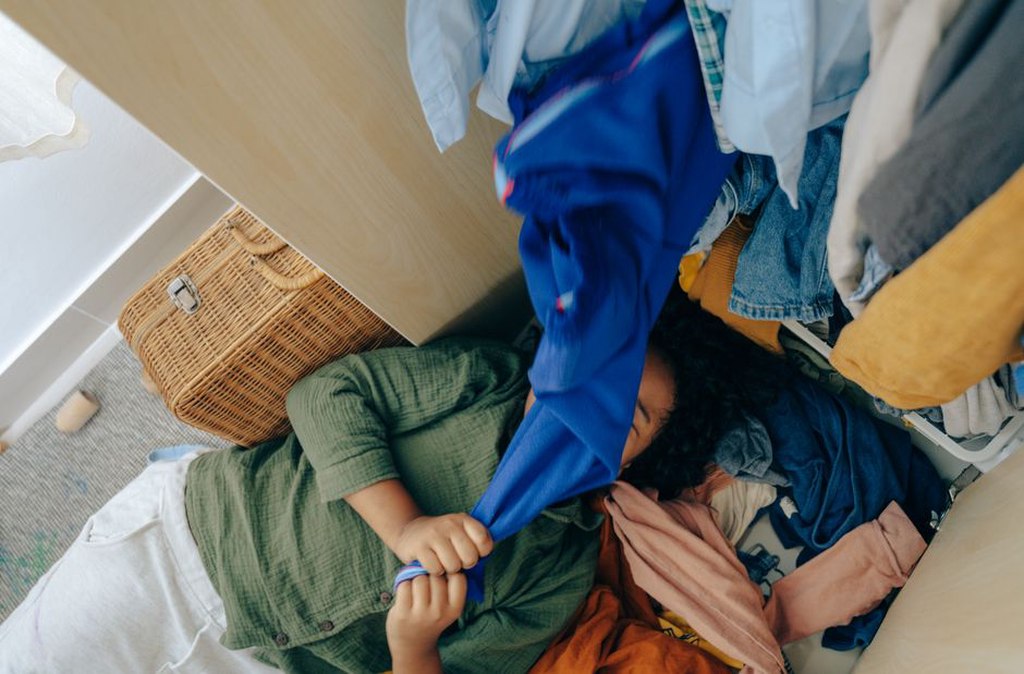
Give uncertain items a defined pause
An undecided pile can become a second closet. Put genuine maybes in one small, dated container, and write down what would settle each decision: trying the item on, seeing whether it works with an outfit, or finishing a repair. Set a date to revisit the container. If something needs alterations, give that job a realistic next step; otherwise, you are only moving the item into storage.
Do not send every unwashed or wrinkled garment to the maybe pile. If laundry or pressing is the only obstacle, take care of that first. Set borrowed items aside for their owners rather than counting them as part of your wardrobe.
Handle the categories that slow decisions
Duplicates earn their space when they get worn—work shirts and socks are good examples. Compare pieces that serve the same purpose side by side, and favor those that fit well and hold up to washing. There is no need to discard a useful spare just because it is a duplicate, but consider the space it takes.
For clothes that no longer fit, separate temporary plans from indefinite ones. An item awaiting a scheduled alteration is different from a whole rail reserved for an unspecified future size. If you keep clothes for a possible change in circumstances, contain them in one designated area so they do not push out what you wear now.
Sentimental pieces do not need to hang beside daily outfits. A graduation shirt or inherited scarf can be kept as a keepsake in a clean, dry place that suits its fabric. Set a space limit for these items, and keep delicate textiles away from dampness and crushing.
Be careful about where outgoing clothes go. Donate clean, wearable items according to the recipient’s stated requirements; worn-out or stained pieces may not qualify. Check local textile collection options for unusable fabric rather than assuming every donation bin accepts it. Sell only items whose likely return is worth the time spent photographing, listing, and storing them. Give the sell bag a deadline so it does not end up back in the closet.
Put clothes back where they are used
Once a section is sorted, arrange it so things are easy to take out and put away. Hang clothes that crease or are easier to see on a rail; fold sturdy knits that might stretch on hangers. Keep frequently worn items at a comfortable height, occasional items higher or farther back, and shoes clear of the door. Simple groupings—workwear together, long sleeves together—are usually more useful than a precise color gradient.
Add a container only when it solves a specific problem. A low shelf might need a divider to keep stacks upright; a deep shelf might benefit from a removable bin that brings items at the back within reach. Measure before buying. A box may fit an empty shelf but be difficult to pull out once it is full.
Labels help on high shelves and anywhere contents are hidden. Use plain names such as “winter accessories” instead of “miscellaneous.” Keep the floor as clear as the space allows: a shoe rack is useful only if you can still step in and open the door.
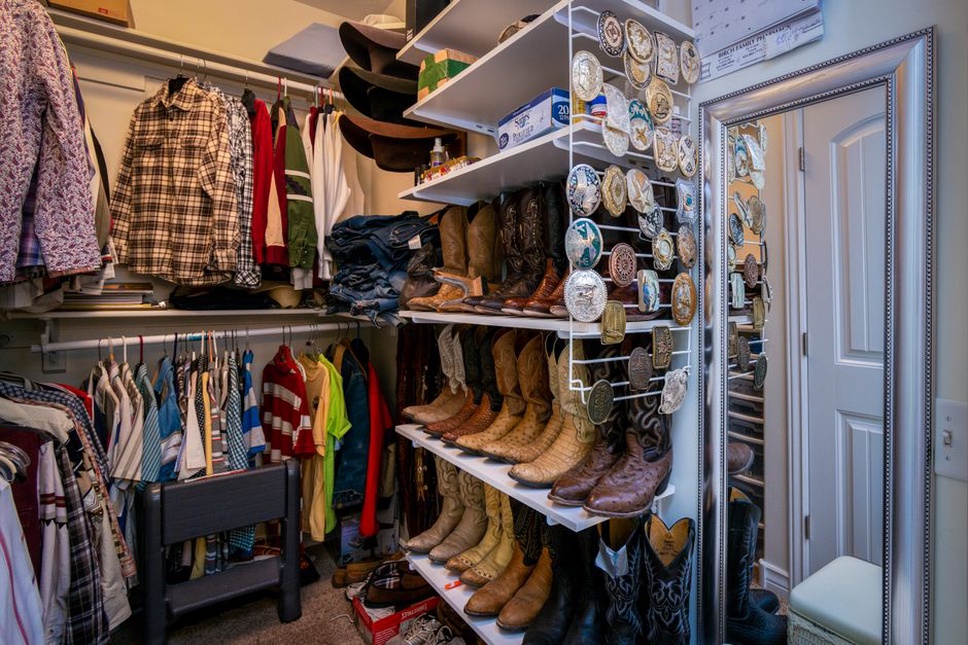
Protect the space you cleared
Move outgoing bags out of the closet as soon as you can. Until they leave, put them by the exit or in another temporary spot that reminds you to deal with them, not on an upper shelf. Check pockets before donating, and set aside any personal documents or valuables.
A short reset keeps crowding from returning. When you put laundry away, return each item to its place instead of starting a temporary stack. If a category no longer fits, check what you have added and what you have stopped wearing before buying another organizer. Seasonal changes are a good time to review coats, footwear, and other bulky items. Day to day, the test is simple: can you take out one piece and put it back without disturbing its neighbors?
If the rest of the closet still feels like too much, make the next session one drawer. Empty it, move anything that belongs elsewhere, group what remains, and close it without pressing down on the contents. You can leave the rest for another day.