
In 2005, the average number of authors per paper at the IEEE Conference on Computer Vision and Pattern Recognition (CVPR) hovered around 3.2. By 2008 it had climbed to 4.1. This seemingly small shift reflected a deeper transformation in how credit was assigned, negotiated, and contested across the fields of pattern recognition, speech processing, and computer vision. The mid-2000s were a hinge decade: the single-author paper, once a badge of individual mastery, was rapidly giving way to multi-institutional, multi-disciplinary collaborations. Understanding the authorship conventions of that era is essential for anyone reading the historical literature—it reveals who really did the work, who funded it, and whose career was launched by a well-placed first-author slot.
The First Author’s Burden and the Last Author’s Halo
By the mid-2000s, a near-universal convention had crystallised in the engineering sciences: the first author was almost always the graduate student or postdoc who had performed the bulk of the experimental work, wrote the code, and drafted the manuscript. The last author was the principal investigator—the lab head who secured funding, conceived the research direction, and often reviewed the final text. This “first–last” dichotomy was so entrenched that conference chairs and journal editors began to treat the last author as a de facto senior author. At ICASSP 2006, a listener could guess the provenance of a paper simply by scanning the author list: a single first name followed by a string of initials ending with a well-known professor’s surname meant the student had done the heavy lifting; a list that placed the professor in the middle often indicated a more collaborative, cross-lab effort.
Yet the rule was never absolute. In some European groups, authors were listed alphabetically by surname, a practice that obscured individual contributions and frustrated tenure committees. The 2004 paper “A Boosted Cascade of Simple Features” by Viola and Jones, for instance, was a two-author work—a rarity that stood out even then. By contrast, the 2007 PASCAL VOC challenge report carried nine authors, each responsible for a different object category. The alphabetical order debate flared up at workshops, leading to the now-common footnote “* indicates equal contribution.” That footnote first appeared in pattern recognition venues around 2005, often as a compromise between two PhD students who had worked side-by-side but whose advisor insisted on a single first author.

The Rise of the Corresponding Author
Before the mid-2000s, the corresponding author was simply the person who handled the submission portal. As papers grew longer and author teams more distributed, the role evolved into a gatekeeper of intellectual property and data. The corresponding author’s email domain became a signal of institutional control: a .edu address meant the data lived on a university server; a .com (Microsoft, IBM, Google) meant the code was proprietary. In speech recognition, the 2006 AMI Meeting Transcription system listed 12 authors, but the corresponding author was the only one who could answer questions about the microphone array setup—a fact that frustrated reviewers. The practice of marking the corresponding author with an asterisk or a superscript letter became standardised around 2007, and conference management software began to require a dedicated field for it.
The “et al.” Problem
For citation databases and reference lists, long author lists posed a practical headache. The 2005 ICML proceedings show that papers with more than six authors were routinely truncated to “FirstAuthor et al.” in the bibliography. This invisibility of later authors created perverse incentives: senior researchers sometimes insisted on being placed in the first five positions to avoid being swallowed by the et al. black hole. The problem was especially acute in cross-disciplinary work—a computer vision paper co-authored with a medical imaging group might have 15 authors, only the first three of whom would ever appear in a Google Scholar snippet. The community’s response was slow: only in 2008 did some journals begin to require full author lists in citations, but conference proceedings lagged behind.
Author Inflation: Causes and Consequences
The mid-2000s saw a steady increase in author counts across all subfields. Several forces drove this inflation:
- Data-driven research: The creation of large annotated datasets (e.g., Caltech 101, PASCAL VOC, TIMIT) required teams of annotators who were often listed as authors, especially if they contributed to the benchmark paper.
- Shared hardware and software: A single experiment might run on a cluster managed by a system administrator who, by convention, received a co-authorship.
- Industry–academia partnerships: A 2006 paper from the University of Oxford and Microsoft Research Cambridge typically carried four authors—two from each side—to satisfy both institutional promotion policies.
- The “gift” co-authorship: Lab directors sometimes added collaborators to a paper in exchange for access to a dataset or a speaking slot, a practice that was widely criticised but rarely policed.
By 2007, the average CVPR paper had 3.8 authors; by 2008 it was 4.1. The growth was slower in speech processing (ICASSP averaged 3.5 in 2008) but accelerated in biometrics, where multi-modal systems required expertise in face, fingerprint, and iris recognition simultaneously. The 120 Frames per Second: How High-Speed Video Reshaped Object Tracking in the Mid-2000s paper, for instance, listed five authors—a number that would have been unthinkable a decade earlier, when a single researcher could build a tracker from scratch.
Workshops as Authorship Incubators
Small workshops played a disproportionate role in shaping authorship norms. The 2006 Contacts 3 Workshop (already covered elsewhere on this blog) deliberately capped author lists at four to encourage focused contributions. At the 2005 Workshop on Machine Learning for Signal Processing, first-time authors were paired with senior mentors who served as second authors—a formalised apprenticeship that bypassed the usual advisor–student dynamic. These workshops also experimented with “author contribution statements” years before journals mandated them. In the 2007 IEEE Workshop on Automatic Speech Recognition and Understanding, several papers included a paragraph after the acknowledgments specifying each author’s role (“designed the feature extraction”, “collected the speech data”, “ran the baseline experiments”). This practice, though inconsistent, foreshadowed the CRediT taxonomy that would emerge a decade later.
The Role of the Senior Author in Speech Synthesis
In speech synthesis, the mid-2000s saw a peculiar authorial pattern: the last author was often the person who recorded the voice database. Because synthetic voices were built from hours of a single speaker’s recordings, that speaker—frequently a professional voice talent—was listed as a co-author, even if they contributed no technical work. The 2005 HTS (HMM-based Speech Synthesis) system papers from the Nagoya Institute of Technology consistently included the speaker’s name in the author list, a practice that blurred the line between subject and researcher. This convention was unique to speech synthesis and did not spread to other fields, but it illustrated how authorship could be shaped by the material conditions of data collection.
Author Order and Tenure: The Hidden Curriculum
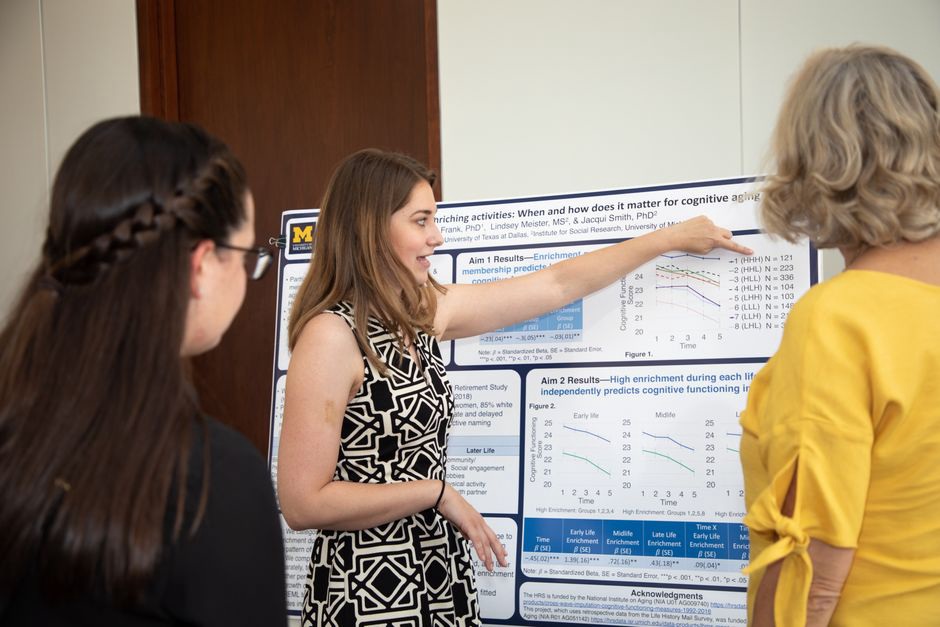
For junior researchers in the mid-2000s, the position of their name in the author list was a career-defining variable. Many departments explicitly counted only first-author papers toward tenure. This created a zero-sum game: a student who agreed to be second author on a paper that could have been first author risked a weaker academic job package. Advisors sometimes exploited this power dynamic, demanding first authorship on work that the student had conceived and executed. The community’s response was the “explicit contribution” footnote, which began appearing in CVPR 2007 papers. Yet even with footnotes, the first author remained the primary unit of currency in hiring committees.
Industry researchers faced a different calculus. At IBM Research and Microsoft Research, author order was often alphabetical to avoid internal competition. A 2006 paper from Microsoft Research’s Speech Group listed eight authors in alphabetical order, burying the actual lead developer in the middle. This practice frustrated academic collaborators, who expected the first author to be the point of contact. The tension between alphabetical and contribution-based ordering was a recurring topic at the 2007 Dagstuhl Seminar on Evaluation and Crediting in Pattern Recognition.
How Atom XML Changed the Metadata Game
One often-overlooked factor in authorship history is the infrastructure that transmitted author names to citation databases. In the mid-2000s, most conference proceedings were published as PDFs with embedded metadata that was inconsistently parsed. The How Atom XML Became the Academic Syndication Standard for Pattern Recognition Research article on this blog details how the Atom syndication format provided a structured way to encode author names, affiliations, and ORCID-like identifiers (though ORCID itself did not launch until 2012). By 2008, many pattern recognition conferences were publishing Atom feeds that included full author lists with email addresses, making it easier for citation managers to capture every name—including those buried after “et al.” in print.
The Legacy of Mid-2000s Authorship
For a researcher submitting to CVPR 2007, the decision of whether to list a co-author as a contributor or a supervisor often came down to a single email exchange the night before the deadline—a negotiation that would later determine citation counts and career trajectories for years to come. When reading a mid-2000s pattern recognition paper, pay attention to the author order: if the first and last authors are from different institutions, the work likely involved a cross-site collaboration, and the corresponding author’s email domain often reveals where the data was collected. The authorship conventions of that era are not just historical trivia; they are the key to understanding who really built the systems we now call artificial intelligence.