
A mid-2000s research project often produced much more than a final paper: recorded speech sessions, scanned forms, annotated images, source code, parameter files, evaluation scripts, slide decks, and email exchanges about corpus errors. The important change was not simply that these materials lived on computers. They could be copied, searched, compared, revised, and shared quickly enough to change how academic knowledge was produced.
For pattern recognition, speech technology, and computer vision, the shift was particularly important. These fields relied on data-heavy experiments long before “big data” became a common phrase. A recognition result meant little without its dataset, preprocessing choices, model assumptions, training procedure, and error measures. Digital tools made those dependencies easier to document, yet they also exposed a persistent gap: a PDF could circulate widely while the data and code needed to examine its claims remained unavailable.
From the library copy to the distributed research record
Before digital circulation became routine, access to technical work often depended on institutional subscriptions, conference attendance, interlibrary loans, or personal correspondence. Proceedings arrived as bound volumes; preprints moved through the post or small professional networks. Researchers relied on indexes, tables of contents, and memory. An important result could be missed simply because its venue was difficult to obtain.
Digitization changed the basic unit of circulation. Individual papers, rather than physical journal issues or proceedings volumes, became easier to find and transfer. Portable document files preserved equations, figures, and page layouts across computers. Search engines and repositories made titles, authors, and sometimes full text available beyond institutions that had bought the original publication. Email reduced a manuscript request from weeks to minutes.
Access broadened, though older inequalities did not disappear. Network reliability, library licenses, language barriers, and the cost of attending conferences still affected who could read and contribute. Even so, day-to-day research changed decisively. Scholars could assemble literature reviews across several archives, search documents for an algorithm or evaluation measure, and compare versions of a method without waiting for a physical copy.
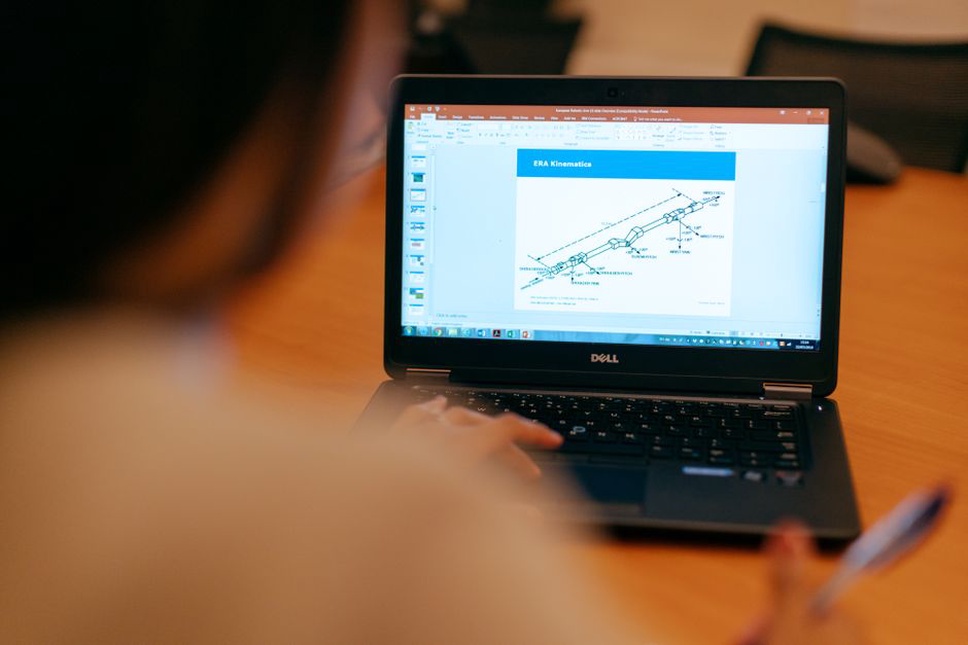
Search changed what it meant to find prior work
Keyword search sped up literature discovery, but it introduced its own blind spots. A searchable PDF favors terms that appear in the text. It may obscure older work that used different vocabulary, research published in poorly digitized venues, or findings presented mainly in diagrams and tables. OCR errors in scanned documents can also make names, formulas, and technical terms hard to retrieve.
Serious historical and technical research therefore required more than a few search terms. Productive digital investigation combined several approaches:
- searching for alternate names of a method, dataset, or evaluation measure;
- following reference lists back to foundational work;
- checking later citations to see how a claim was interpreted or revised;
- reading the complete paper rather than relying on an abstract or search snippet;
- recording publication dates, versions, and venue details when papers appeared in several forms.
The result was a different kind of scholarly abundance. The challenge was no longer only locating material, but judging provenance, version history, and relevance among a much larger body of accessible documents.
Experiments became digital pipelines
The change reached well beyond publishing. Academic experiments increasingly took the form of pipelines linking acquisition, annotation, feature extraction, model training, evaluation, and visualization. In speech recognition, recorded utterances were paired with transcriptions and pronunciation resources. In computer vision, images and video frames received labels for faces, objects, motion paths, or anatomical structures. In document analysis, page images were linked to ground-truth text and layout descriptions.
Every stage produced files and decisions. Resampling audio, excluding blurred images, changing a train-test split, or correcting an annotation convention could materially alter the result. Digital workflows made iteration practical: researchers could rerun an experiment after changing a parameter, retain intermediate outputs, and generate plots showing where a system failed.
What a reproducible experiment needed
A reported accuracy or error rate is not, on its own, a reproducible experiment. By the mid-2000s, many groups kept their materials locally but had no shared practice for packaging and releasing them. A stronger digital record identifies the pieces another researcher needs to understand—and, where permissions permit, reconstruct—the work.
| Component | Why it matters |
|---|---|
| Dataset description | Clarifies provenance, population, collection conditions, exclusions, and permitted uses. |
| Data split | Prevents accidental comparison between systems tested on different examples. |
| Preprocessing details | Explains transformations such as normalization, segmentation, filtering, or feature selection. |
| Software and settings | Connects a stated method to its actual implementation and parameter values. |
| Evaluation protocol | Defines metrics, thresholds, baselines, confidence intervals, and error categories. |
| Version record | Shows which code, annotation set, and document version produced a reported result. |
These details mattered sharply in recognition research. A face-matching system could look strong because test images were captured under conditions nearly identical to the training images. A language identifier might achieve high overall performance while failing on short texts or closely related languages. A medical image classifier could inherit biases from the way images were collected or labeled. Digital records made such limitations documentable; they did not compel researchers to document them.
Collaboration expanded beyond a single laboratory
Networked tools let teams divide work across institutions. One group might collect speech, another develop acoustic features, and a third analyze recognition errors. Shared repositories and version-control systems made coordinated software development easier, while online submission systems standardized the movement of papers through conferences and journals.
This mattered especially for technologies serving under-resourced languages. Building useful speech or language systems often required cooperation among linguists, native speakers, educators, engineers, and local institutions. Digital formats made it easier to exchange lexicons, recordings, transcriptions, and experimental reports, but they could not resolve questions of ownership, consent, orthography, or community benefit. Technical access and ethical legitimacy remained separate requirements.
Conference papers preserve a narrow but useful record of this work. The PRASA 2012 proceedings paper on language identification shows how a short technical publication can record a particular method, evaluation setting, and research priority while leaving the wider collection and deployment context outside its limited page count.
Peer review gained speed, not perfect visibility
Digital submission platforms simplified routine tasks: collecting manuscripts, assigning reviewers, tracking deadlines, distributing comments, and preparing final versions. Authors could revise quickly, while program committees could coordinate across countries. Conference websites also gave accepted papers a more durable public presence than a printed program alone.
These systems did not make peer review transparent or error-free. Reviewers often had little time, could not always rerun complex experiments, and might lack access to proprietary data. Automated formatting checks could catch missing files, but not a misleading experimental design. As online publication grew, it became more important to distinguish preliminary findings, archival papers, corrigenda, and revised preprints.
For historians of technical fields, differences between versions are evidence rather than an inconvenience. An early manuscript may make a broader claim; a later conference paper may add an experiment; a journal version may state limitations more clearly. Treating files with the same title as interchangeable erases part of the research process.
Data sharing brought new responsibilities
Digitized research materials can be copied almost perfectly and distributed almost instantly. That helps replication and education, but it creates serious risks when records contain personal or sensitive information. Speech recordings may reveal identity, accent, health-related traits, or private content. Facial and fingerprint datasets contain biometric data. Medical images may hold identifying metadata or clinically sensitive information. Even apparently anonymous datasets can sometimes be re-identified when combined with other sources.
Responsible digital research needs governance alongside technical documentation. Relevant safeguards include:
- obtaining consent that matches the expected uses and sharing arrangements;
- collecting only information genuinely needed for the study;
- removing direct identifiers while recognizing the limits of de-identification;
- using controlled access when open release would create undue risk;
- documenting known biases, restrictions, and groups that are inadequately represented;
- keeping secure records of access decisions and dataset versions.
Openness is not a single switch. A methodology can be described openly while sensitive raw files remain protected. Code can be released without redistributing licensed data. Aggregate findings can support scrutiny when individual records should not be exposed.
Digital preservation is not the same as keeping a file
A digital object can disappear quietly. A university page may be redesigned, a personal server may lapse, proprietary software may become unreadable, or a storage device may fail. File formats and hyperlinks create an impression of permanence that is often undeserved. Preserving research calls for persistent identifiers, redundant storage, readable formats, metadata, checksums, and plans for format migration.
Conference archives show both the value and fragility of this record. A downloadable proceedings paper can preserve a method long after the original presentation, yet it remains useful only if its bibliographic context, page order, figures, and stable location are retained. The PRASA 2011 paper on subspace GMMs for IsiXhosa is a compact digital artifact whose title, venue, and technical content must remain connected if later readers are to interpret it accurately.
For a research group preparing an archive, a practical final step is to deposit the paper, the accepted manuscript where permitted, a code snapshot, README, environment details, and non-sensitive evaluation materials together, with clear dates and version labels. A folder called “final_final2” may be familiar laboratory folklore, but it is no substitute for a scholarly record that can be traced, understood, and preserved.