
One mug beside the sink is easy to work around. Add a few more mugs, a chopping board, and a pan, and the next person may have nowhere to prepare dinner. A shared kitchen need not be spotless all day, but people should be able to use the sink, find clean equipment, and see what needs cleaning.
Agree on a usable baseline
“Leave it clean” means different things to different housemates. Agree on conditions everyone can check: the sink has room for washing produce or dishes, food scraps are off the worktop, spills are wiped up, and shared tools are back in their usual places. Those are easier to follow than “keep the kitchen perfect.”
Allow for interruptions without letting them turn into abandoned jobs. A pan soaking while its owner eats nearby is different from one left in the sink overnight. If a pan needs to soak, agree where it can sit, how long it can stay, and who will finish the job. “Later” needs a deadline.
Separate immediate tasks from scheduled tasks
- After use: put away ingredients, clear scraps, wash or load used dishes, wipe visible spills, and leave the sink accessible.
- Daily or as needed: check the bin, clean a heavily used hob, and replace a dirty dishcloth.
- Weekly: clean cupboard handles, the microwave, and other shared surfaces; check the fridge for expired or leaking food.
An occasional deep clean cannot make up for dishes left in the way every day. Separating the jobs also makes it easier to share work that no one person obviously owns.
Make clean-up easy at the point of use
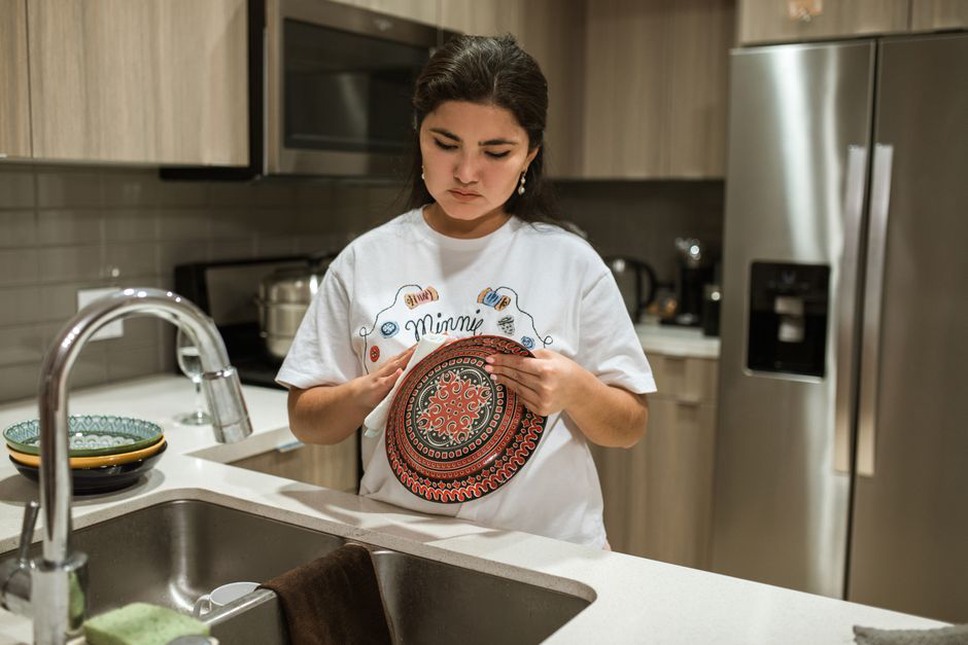
Keep supplies close to where they are needed: a cloth and suitable surface cleaner near the counter, and dish soap, a brush or sponge, and drying space by the sink. Give shared utensils a usual home so nobody has to decide where they belong after every meal.
The drying rack needs an agreement too. When clean dishes sit there for days, there is no room for the next batch. Each person could put away their own dry dishes when they next enter the kitchen. If ownership is hard to tell, give frequently used personal items a designated shelf, or agree that anyone may put away dry shared equipment.
After cooking, return refrigerated ingredients, clear packaging, wash equipment you no longer need, and wipe the area you used. It is a smaller job then than it will be later. Wash and dry knives separately rather than leaving them hidden in soapy water, where someone reaching into the sink might not see them.
Give shared space clear boundaries
A crowded counter may be a storage problem rather than a cleaning problem. Decide which appliances need to stay out and which can go in a cupboard. Keep at least one section free for food preparation. If several people own similar tools, ask before moving or getting rid of anything; an agreed place for each item is better than an unexplained clear-out.
Fridge shelves can be assigned by person, by food type, or both, as long as everyone understands the arrangement. Keep raw meat or fish securely contained on a low shelf so drips are less likely to reach other food. Label leftovers with an owner or date if they might be mistaken for communal food, and set aside a small area for ingredients everyone may use.
If rubbish regularly piles up beside a full bin, check whether the bin has enough capacity. Agree on a trigger for taking it out—when the lid will no longer close, for example—instead of waiting for one named person to notice. If recycling causes repeated disagreements, keep the sorting instructions visible.
Divide recurring work without policing every crumb
The person who used a dish or made a spill can clean it up. Jobs such as mopping or cleaning the microwave are harder to attribute, so a rotation may help. Keep it short enough to read at a glance, and spell out what each job means. “Clean the fridge” could mean wiping a spill, checking for old food, or removing every shelf.
Set the rotation according to how often the kitchen is used, then adjust it if the workload feels uneven. Someone who cooks nightly should clean up after their meals, but need not take on every shared job. Someone who rarely cooks still uses the fridge, sink, and bin. A short conversation is usually more useful than keeping score of every crumb.
Handle problems while they are small
When an issue repeats, use a concrete example and make a request: “The drying rack was full on three evenings this week. Can we put away our dry dishes before dinner?” That gives housemates something specific to change. An angry note addressed to no one is more likely to leave people guessing or defensive.
Different schedules and capacities may call for different arrangements. Someone arriving home late might leave a washed pan to dry overnight, provided it does not block the sink; agree on ways to finish chores quietly. A housemate with limited mobility may need a different share of the tasks. Fair does not have to mean identical, only workable for everyone.
Keep hygiene rules distinct from tidiness preferences
Some rules are about food safety, not appearance. Clean up spills from raw food promptly with appropriate materials, and wash hands and utensils after handling it. Replace or launder cloths that are dirty or persistently damp. Follow product directions when cleaning or disinfecting surfaces, including any required contact time, and do not mix cleaning chemicals.
Other details are open to discussion. One person may want the kettle aligned with the tiles; another just needs room to prepare food. Deal first with what affects everyone’s use of the kitchen, then talk about preferences if they still matter.
If an agreement stops working, look for the snag rather than rewriting every rule. When mail keeps collecting on the counter, put a small tray outside the food-preparation area and ask everyone to clear their papers each week. That leaves the next person room to chop vegetables without sorting through someone else’s post.