
A wool sweater packed away with an unnoticed food spot may come back months later stained—or with insect damage. Before storing seasonal clothes, clean them, let them dry completely, and inspect each piece in good light. Those steps matter more than an elaborate storage container.
Start with a small sorting pass
Sort the clothes you plan to store into three groups: ready to keep, needing care, and unlikely to be worn again. Check cuffs, underarms, collars, pockets, and hems. Empty pockets, remove detachable accessories, and set aside anything with a missing button or loose seam. Fixing it now means the garment will be ready when its season returns.
Keep damp, stained, or strongly scented pieces out of storage until they have been treated. Perfume, deodorant, body oils, and food residue can be hard to see, yet may discolor fabric over time or attract pests. Follow each garment’s care label rather than washing everything together. Clean dry-clean-only items as directed, then remove the cleaner’s thin plastic covering. It is meant for transport, not months in a closet.
Check that clothes are dry all the way through. Thick waistbands, coat linings, down filling, and folded cuffs can hold moisture after the surface feels dry. Give freshly cleaned garments time to air out, especially after a trip to the cleaner. The storage space must be dry, too.
Choose a place before choosing a container
Look for a clean, dark spot with reasonably stable temperature and humidity. An interior closet, under-bed space in a dry room, or enclosed shelf is usually easier to manage than a garage, attic, or damp basement. Heat can weaken elastic and affect finishes; moisture encourages mildew and musty odors. Sunlight can fade exposed shoulders or the top garment in a stack.
Keep containers off floors where leaks are possible, with enough room around them to clean and inspect the area. If a basement or attic is your only option, check it during wet and hot weather before storing valuable garments there. A lidded container cannot make a persistently damp space safe; it may trap moisture inside.
Match the container to the location
Clean, sturdy plastic bins protect against dust and minor splashes in a dry room. Choose bins that close securely, but never use them to seal in clothes that are still damp. Wash and thoroughly dry reused bins so detergent residue or lingering fragrance does not transfer to the fabric.
Breathable cotton storage bags or clean fabric covers work well for hanging garments in a protected closet. They keep dust off while allowing more air movement than sealed plastic garment bags. Cardboard boxes cost less, but absorb moisture, attract dust, and offer little protection against leaks or pests. If you use them briefly, keep them dry and do not let delicate fabrics rest against stained or acidic paper.
For fragile or valuable textiles, clean acid-free tissue can cushion folds and separate layers. The overview of textile preservation explains why storage conditions, handling, and material choice matter over time. Everyday clothes rarely need museum-style packing, but prolonged pressure, dampness, light, and unnecessary handling are still best avoided.
Fold or hang according to the garment
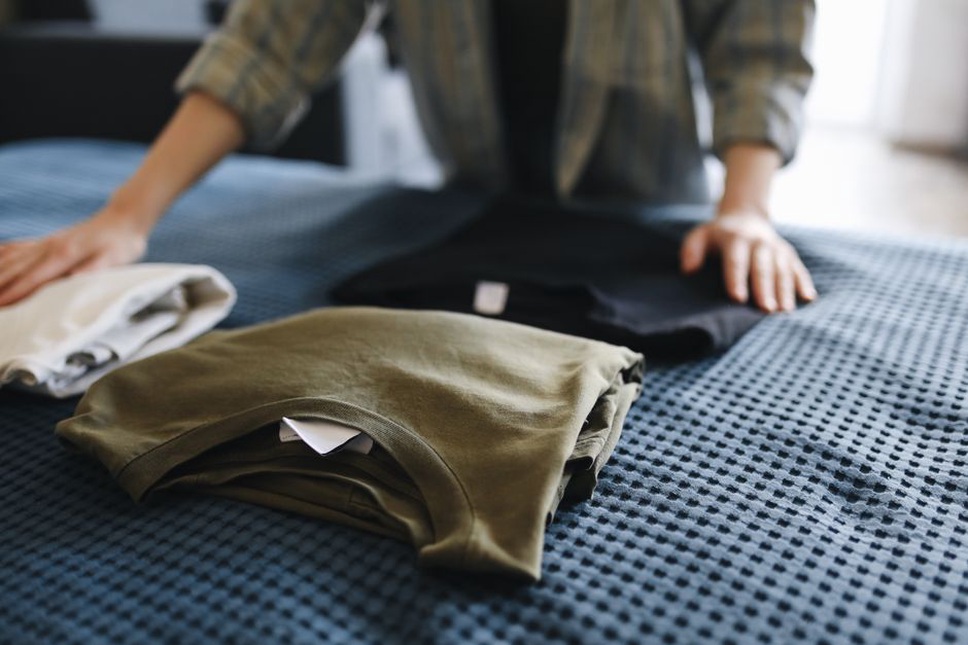
A hanger is not always gentler than a box. Knits and heavy sweaters can stretch at the shoulders under their own weight, so fold them loosely. Stack heavier items below lighter ones, and leave enough space to lift out one sweater without pulling the others out of shape.
Structured coats, jackets, and garments that crease badly may do better on broad, supportive hangers under breathable covers. Fasten a few buttons or the front closure to help a coat hold its shape, without pulling it taut. Leave space between hanging clothes so sleeves are not crushed. Trousers can be folded along existing creases if they will lie flat, or hung if you have room and a suitable hanger.
Cushion sharp folds in delicate pieces with tissue, or roll them loosely where practical. Do not trap a silk blouse under a heavy coat or press embellishments into the fabric below. Keep beads, hooks, and rough fasteners away from garments they might snag.

Pack by fabric and function
Grouping similar garments makes them easier to protect and find later. Label containers with specific contents—“winter wool sweaters, sizes and names” or “summer linen and cotton shirts,” for example—rather than just “clothes.” Keep a short inventory inside the lid or in a household note. Avoid writing directly on a fabric bag, where ink might transfer.
- Wool, cashmere, and other animal fibers: Clean thoroughly, fold without crowding, and inspect the storage area for signs of clothes moths or carpet beetles. Check seams and spots that held food or body oils.
- Cotton and linen: Store clean and fully dry. Loosen sharp folds on items that will sit untouched for a long time, especially delicate or heavily pressed pieces.
- Down and insulated outerwear: Avoid long-term compression. A roomy bag or hanging space helps the filling retain its loft; check the care label before laundering.
- Stretch fabrics and swimwear: Rinse or wash away salt, chlorine, sunscreen, and sweat as the care label allows. Store flat or loosely folded, away from heat that can shorten the life of elastic.
- Leather and suede: Follow specialist care guidance. Do not seal them in plastic, and keep them away from damp spaces and materials that might transfer dye.
Give shoes, belts, and handbags separate attention. Clean shoes and let them dry before placing them near clothes; a soft insert can help boots or structured bags keep their shape. Do not put recently worn shoes into a tightly closed clothing bin. Wrap or separate metal parts on accessories so they cannot mark nearby fabric.
Keep pests out without masking a problem
Clean textiles and a clean storage area are your first defense. Vacuum closet edges and shelves before packing, including cracks where lint collects. If you find insects, shed skins, webbing, or new holes, identify and address the infestation before returning clean clothes. Sealing affected garments in a box may simply seal the problem in with them.
A pleasant smell is no guarantee of protection. Cedar’s scent fades, while scented sachets can leak oils or irritate sensitive skin. Mothballs are pesticides, not room fresheners; do not scatter them casually among clothes. Follow label directions and local guidance if you consider using them. For routine storage, inspection, cleaning, and suitable containers are generally more useful.
Use space without crushing the contents
Vacuum storage bags save room, but they are a poor default for garments that need loft or structure, such as down coats and structured jackets. They may be useful for short periods with sturdy, washable items, provided everything is completely dry. For a whole off-season, leave some room in an ordinary bin rather than keeping fabrics under constant pressure.
If space is tight, give the best protection to garments that are costly to replace or easily damaged. A frequently worn cotton T-shirt can take a closer fold than a lined wool coat. Measure shelf or under-bed clearance before filling containers: a bin that has to be forced into place is hard to inspect and may damage nearby clothes.
Check once during the off-season
A quick inspection midway through storage can catch trouble before it spreads. Open bins in a dry room and look for condensation, musty smells, stains, or insect activity. Check that hanging garments have not slipped off their supports. If anything smells damp, unpack it and investigate the storage spot instead of adding fragrance or closing the lid again.
When the season changes, air out stored clothes and inspect them before wearing. Wash or refresh only what needs it, following the care labels. Once a bin is empty, wipe it clean and let it dry with the lid off. Update the label before you refill it, so the next time you open it, you know what is inside.