
A speech recognizer trained on recordings from one laboratory could stumble on speech collected at another. The cause might be the microphone, the room, the speakers, or the transcription rules—not the recognition method. By the mid-2000s, exchanging data and evaluation procedures gave academic groups a way to test whether a result held up beyond the lab that produced it.
That sort of collaboration involved more than adding researchers to a project. Someone had to define the task, collect suitable examples, build a model, and judge its output in the setting where it was meant to work. In speech technology, computer vision, document analysis, and medical imaging, obtaining data and deciding what counted as a correct answer could be as demanding as developing the method.
Why a shared task needed more than shared code
A speech lab might know acoustic modeling but rely on linguists to decide how to transcribe hesitations, dialect forms, or switches between languages. A vision group might design an object tracker while another team annotated the video needed to test it. Clinicians working with medical-image researchers could ask whether a proposed measurement corresponded to anything clinically useful.
These partnerships changed the question from “Did the score improve?” to “What does the score measure?” Labels had to represent the phenomenon of interest, and test data had to resemble the conditions in which the system would be used. An argument over how to label a case could expose a task that had never been specified clearly enough.
- Domain specialists defined meaningful categories and identified ambiguous cases.
- Data teams documented collection conditions and annotation decisions.
- Method developers tested models against agreed baselines and reported failures.
- Evaluation organizers maintained common rules for comparing results.
These were not necessarily formal job titles. The distinction was between work that made a model run and work that made its result interpretable.
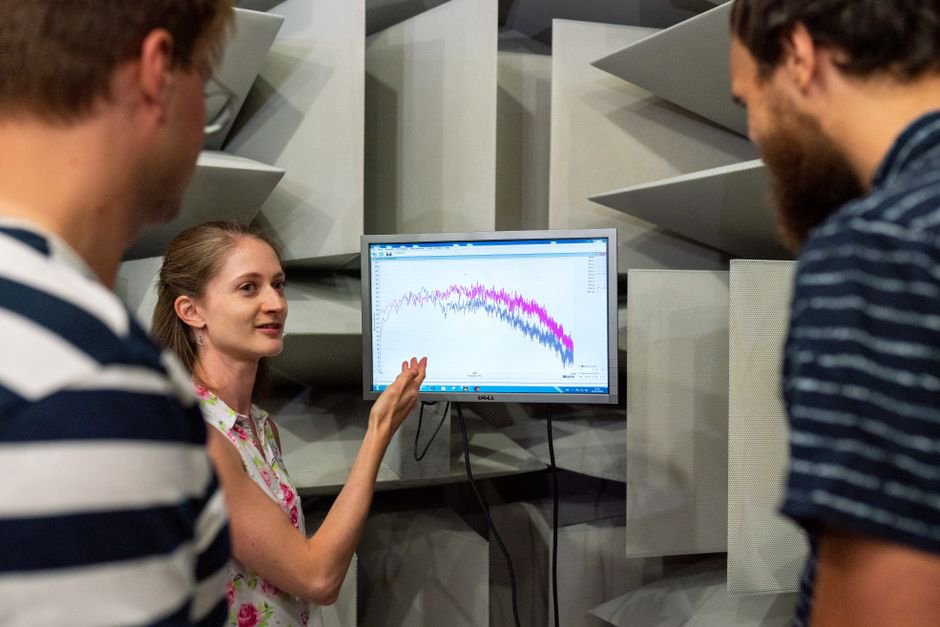
Common datasets made disagreement productive
A gain measured on a private dataset was hard for another laboratory to assess. One test set might contain clean read speech; another might include spontaneous conversation and unfamiliar speakers. Shared corpora and benchmark tasks gave groups a common reference. Researchers could dispute a finding by changing the features, model, or evaluation procedure while keeping the test material more nearly constant.
A common dataset was no guarantee of a fair comparison. Licenses could limit access, annotations could be wrong, and collection conditions could favor certain methods. Repeated testing on familiar material also encouraged improvements that might not carry over elsewhere. Documenting data provenance, keeping held-out tests separate from training, and reporting where performance fell off were therefore part of the work.
Evaluation rules were a research contribution
In a multilingual speech task, two systems might produce similar transcripts yet receive different scores because evaluators handled borrowed words, spelling variants, or word boundaries differently. Transcription conventions and scoring rules belonged in the design of the experiment, not in clerical cleanup afterward. For one speech-specific case, the history of speech-recognition error measures shows how the choice of unit shaped what a score could say.
Vision posed its own questions. A tracker might follow an object's approximate position but lose its identity after an occlusion. A stereo-reconstruction method might produce a plausible depth map while failing on reflective or textureless surfaces. Collaborators had to decide which failures mattered and annotate the data closely enough to find them.
Interdisciplinary work altered what systems could attempt
Some problems could not be made realistic simply by enlarging a familiar dataset. Low-resource speech research often had few recordings, inconsistent spelling, and too few trained annotators. Working with language communities and linguists helped researchers settle pronunciation and transcription choices. Access to recordings, however, did not by itself grant permission to reuse or distribute them without restriction.
Historians and archivists could point out structures a generic OCR pipeline might miss in digitized documents: marginal notes, columns, stamps, or degraded print. Clinicians could distinguish an attractive medical-image segmentation from a measurement that remained reliable across scanners or observers. In both cases, researchers had to work out what counted as ground truth before treating it as a fixed input.

Conferences and visits connected methods across fields
In the mid-2000s, conferences, workshops, visiting researchers, and shared tasks carried ideas between academic groups. A conference paper could reach specialists who did not read the same disciplinary journals. Poster conversations brought out details a short paper might leave out: how much data had been discarded, which settings were sensitive, or why a particular test case failed. Workshops could turn those questions into a better-specified challenge.
Borrowing a method did not mean it would work unchanged. A classifier suited to clean document images might falter on noisy video frames. A speech-modeling approach might need different assumptions for language identification than for transcription. Failed transfers were useful when collaborators could pin down the conditions under which a method worked.
Credit, access, and reproducibility mattered
A multi-institutional paper could make the labor behind a result hard to see. Recording speech, resolving annotation disputes, and maintaining an evaluation set all took time, even when the headline number drew attention to the final model. Describing how data was created and who contributed made the result easier to assess—and gave later researchers a clearer idea of what they could replicate.
Privacy and consent also limited reproducibility, especially with voices, faces, and clinical scans. Publishing a method did not make its underlying data suitable for public release. When data could not be shared, researchers could still publish annotation guidelines, dataset characteristics, evaluation code where permitted, and enough detail about splits and baselines to explain the comparison.
When reading a historical result, put the score beside three questions: Who supplied the data? Who defined the labels? Was the test set kept apart from model development? If the paper leaves recording conditions or annotation rules unclear, those gaps may matter as much as the model architecture.