
An OCR engine can recognize every word on a two-column newspaper page and still make a mess of the article by reading across the columns. For a historian searching an archive, that error can render a quotation unusable even when the transcription looks accurate. It captures a central problem in 2000s document-processing research: success depended on what a project needed to preserve, not just how many characters the software recognized.
Begin with the output, not the algorithm
“Document processing” covered quite different tasks. A library digitization project might need searchable text in the right reading order. A business-form application might need the value beside a particular label. An archive might first need to separate handwriting from print. A table-extraction system had to preserve the relationships between cells, not merely transcribe their contents. The same page could have several valid measures of success.
Researchers commonly described a pipeline of acquisition, image cleanup, page analysis, recognition, and interpretation. Those stages helped locate failures, but decisions made early could constrain everything that followed. Merge two regions during cleanup, and the gap between newspaper columns may disappear; a later language model cannot reliably recover a boundary no longer represented. Keep every speck of scanning noise, and character segmentation has to contend with marks that were never ink.
Comparing methods therefore meant asking what evidence each used, what it assumed about the page, and what its tests actually measured.
Before recognition: making the page measurable
Binarization versus retaining grayscale
Many pipelines converted grayscale scans to black foreground on a white background. One global threshold was fast and often sufficient for clean, evenly lit print. Stains, faint strokes, uneven illumination, and show-through from the reverse side made it less dependable. Locally adaptive thresholds used nearby pixel values and could recover pale letters a global cutoff would erase. They could also mistake paper texture for text.
Keeping grayscale information longer preserved weak edges and differences in intensity for later analysis, though it required more computation and more complex features. Neither approach was inherently better. A crisp office scan and a deteriorated archival leaf called for different choices.
Correcting geometry without erasing evidence
Deskewing estimated the dominant direction of text lines and rotated the page until they were roughly horizontal. Projection profiles, connected components, and measurements of lines could all help establish that angle. Cropping, border removal, and noise filtering reduced distractions, but heavy cleanup could damage punctuation, diacritics, mathematical notation, or thin ruling lines. At low resolution, a detached mark might be dirt—or part of a character. The test was how preprocessing affected later recognition, not how tidy the page looked afterward.
Page layout was a separate inference problem
A printed page might contain headlines, footnotes, illustrations, marginal notes, tables, and multiple columns. Bottom-up layout methods grouped pixels, connected components, words, or lines into larger regions. They could handle irregular shapes, but broken characters and accidental connections caused trouble. Top-down methods split the page or a large region using whitespace and other separators. They worked efficiently on regular layouts but might stumble over a headline spanning two columns.
Hybrid systems added assumptions about document structure to visual evidence. A wide region in large type near the top of a newspaper page, for instance, was likely a headline; a narrow block below a column might be a caption. Those clues helped with familiar publications and could mislead a system on material from another period or source.
Finding the regions still left the question of reading order. Sorting blocks top to bottom could interleave two columns; sorting strictly by column could put a full-width title in the wrong place. An evaluation that counted characters but ignored region order might show improvement while the page remained difficult to read.
Recognition methods reflected the material
Printed-text OCR combined character segmentation, handcrafted image features, statistical classifiers, and dictionaries or language models in various ways. A segmentation-based system proposed character boundaries, then classified the shapes it found. That worked when letters were clearly separated; touching characters and broken strokes made the cuts uncertain. Other approaches kept several possible segmentations in play or recognized sequences without committing so early to individual characters.
A dictionary could help resolve a faint letter from its surrounding word. The same mechanism could pull an unfamiliar name or technical term toward a common word. Historical spelling, mixed languages, and unusual typefaces made that trade-off particularly important in archives.
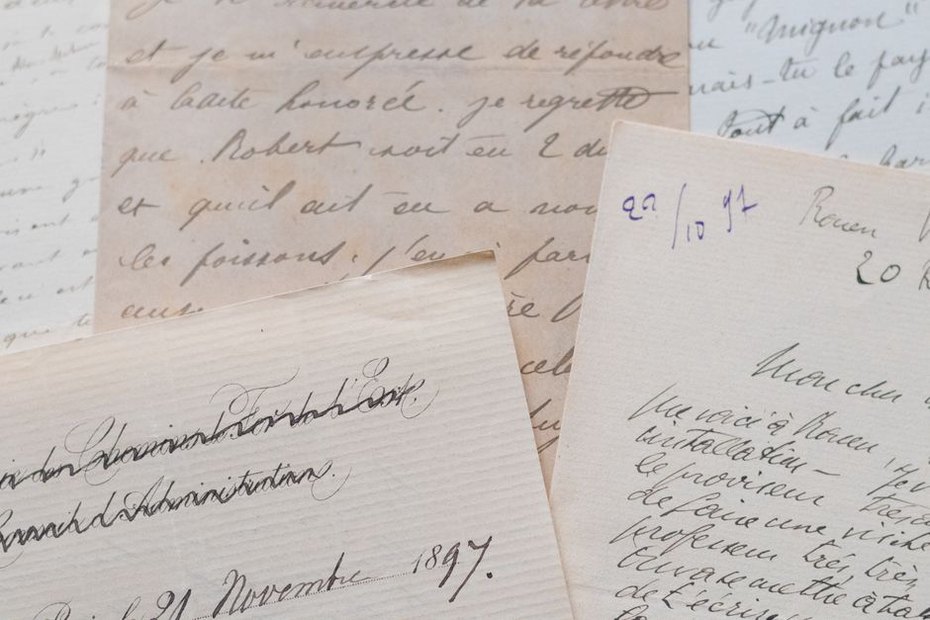
Handwriting called for different expectations. Letters varied between writers and across a single writer’s page, while cursive strokes could join several characters. Boxes on a form constrained the writing enough to make character-level methods plausible; an unconstrained letter did not offer the same advantage. Line or word recognition, supported by contextual models, was often more suitable for freer handwriting if appropriate training examples were available. A claim that a system handled “documents” well said little without the print or handwriting, script, and scan quality being specified.
Forms, tables, and the value of structure
Data capture required more than transcription. A form-processing system had to connect each value to the right label. On a fixed template, expected field positions were practical and often accurate. That approach grew brittle when a copy was shifted or resized, or the form was redesigned. Systems that instead used labels, ruling lines, alignment, and spatial relationships could tolerate more variation, at the cost of greater complexity.
Tables raised a similar issue. Ruling lines could mark cells, but some tables depended entirely on spacing and alignment; scanned lines might be broken or run through characters. Even perfect recognition of the numbers would not establish whether a value belonged under “2003” or “2004.” Evaluating a table result meant checking its cells and row associations as well as its text.
How methods were compared in the 2000s
Public datasets and shared evaluations made comparisons more useful, within the limits of their test pages. The document image analysis overview maps the field’s tasks, including layout analysis and recognition. In a research paper, though, a reported percentage meant little without knowing what was counted and which documents were tested.
- Character error rate counted substitutions, deletions, and insertions in a transcription, but did not show whether columns appeared in the right order.
- Word accuracy more closely reflected searchability in ordinary prose, while treating a word with one wrong character as incorrect.
- Region or field measures checked whether a system found the correct block, label, or value.
- Structural measures tested reading order, table cells, and links between labels and values—relationships a plain text score missed.
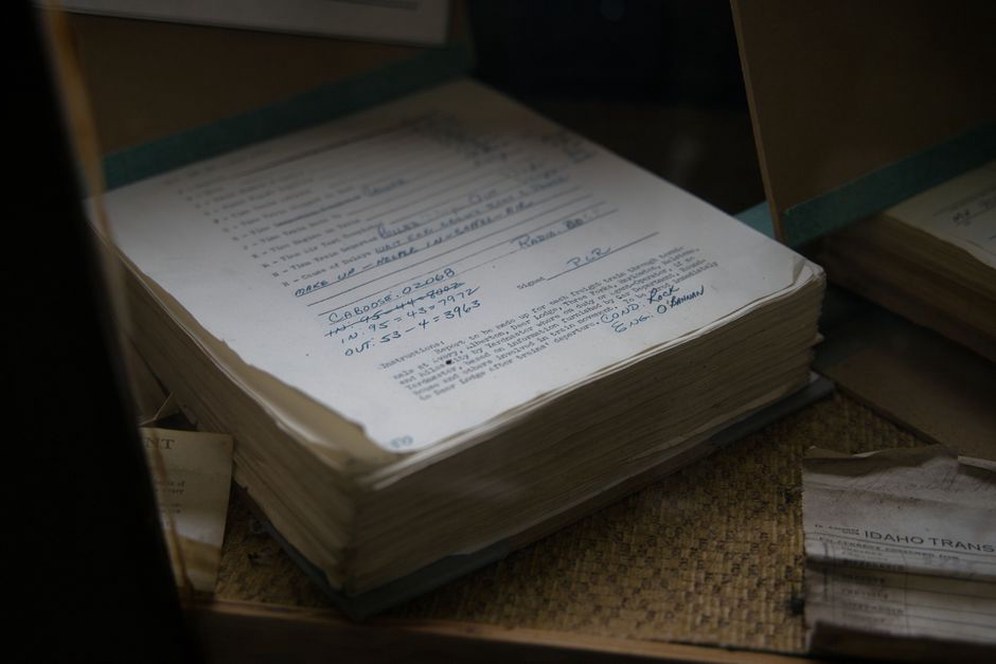
The reference transcription, or ground truth, needed consistent rules. Annotators might disagree about whether a caption should come before or after the paragraph referring to it. A faint mark could be transcribed as punctuation, omitted as noise, or marked uncertain. Such choices could affect measured differences between systems.
Test material mattered too. Results on clean, modern English pages could not be compared casually with results on aged multilingual newspapers. Keeping training and test pages separate was necessary, but testing on an entirely different collection could reveal more. Pages from one publication tended to share typefaces, layout habits, and scanning conditions; learning those habits did not guarantee success in another archive.
What deployment exposed
Practical choices also depended on speed and the cost of human correction. A slow recognizer might be justified for a small, valuable manuscript collection but not for a large backlog of routine pages. Confidence scores could point reviewers toward uncertain words or fields. They were less helpful when the words were recognized confidently but the region itself had been given the wrong role; a reading-order error could pass unnoticed through a word-level check.
Keeping the page image alongside the processing results made some corrections possible without starting over. For a two-column newspaper, a review record could retain the scan, detected text regions, proposed reading order, and transcription. If a paragraph jumped between columns, an editor could fix the ordering while leaving the correctly recognized words intact.