
Lowering the thermostat while the house is empty can save energy, but the best approach depends on the heating system. A conventional furnace can usually run at a lower setting for several hours without trouble. A heat pump may be different: raising the temperature sharply when everyone gets home can bring on auxiliary electric heat. Rather than follow a universal setback rule, watch how your equipment responds and choose a schedule you can live with.
The same thinking applies elsewhere in the home. Energy use depends on how much power a device draws and how long it runs. A kettle uses a lot of power briefly; a small device left on around the clock can add up over months. Look for repeated uses you can measure, not just the appliance that draws the most attention.
Find the loads that matter in your home
Start with a few months of utility bills. Compare usage rather than only the amount due: rates, fixed charges, and weather can change the bill even when your habits stay the same. Electricity is commonly billed in kilowatt-hours (kWh). Gas may be billed in therms, cubic metres, or another local unit. A daily average, if your bill provides one, makes months of different lengths easier to compare.
Heating and cooling often account for a large share of household energy, though climate, insulation, fuel, and household size all matter. Water heating, clothes drying, cooking, refrigeration, and electronics are other recurring loads. A home with electric heat, an electric water heater, or an electric vehicle will have a very different electricity pattern from one that uses gas for heat and hot water.
A plug-in electricity meter can show what a suitable appliance uses, particularly one that cycles on and off. Measure it over several days; a momentary watt reading won't tell the whole story. Never use a plug-in meter beyond its rated load or on equipment it wasn't designed to measure. Smart-meter or utility account data, where available, may show whether usage rises overnight or at particular hours. That can help you tell a persistent load from an occasional one.

Make heating and cooling habits fit the building
Set temperatures for occupied hours
In many homes, a modest thermostat change kept in place for several hours saves more than changing settings repeatedly for short absences. During heating season, try a slightly lower temperature while people are home and an appropriate setback overnight or when the house is empty. During cooling season, try a slightly higher setting. Comfort, health needs, pets, and humidity set sensible limits; there's no prize for an extreme setting.
A programmable or smart thermostat helps only when its schedule matches real routines. Check its clock and heating and cooling modes, and find out what it does after a power interruption. If you have a heat pump, ask the installer or consult the manual before using large setbacks. Some controllers manage recovery efficiently; others may call on auxiliary heat. Radiant floors and other slow-response systems may do better with small, steady adjustments than sharp daily changes.
Keep conditioned air where you need it. Close exterior doors promptly, run kitchen and bathroom exhaust fans for the task at hand rather than indefinitely, and make sure windows latch fully. If direct sun overheats a room in summer, close the blinds. In winter, opening curtains on sunny windows may add some warmth; close them after sunset if the window feels cold. Orientation, glazing, and local climate affect the result.
Help equipment move air
Furniture or rugs blocking supply and return vents can make rooms uncomfortable and interfere with airflow. Keep vents clear and follow the equipment's filter-replacement instructions. A dirty filter may restrict airflow, but the most restrictive replacement filter isn't necessarily the right one for your system. If one room stays much hotter or colder than the rest, investigate its airflow or drafts before changing the thermostat for the whole house.
Fans cool people by moving air across their skin; unlike air conditioners, they don't lower an empty room's air temperature. Switch them off when nobody is there to benefit. When a room is occupied, a fan may make a higher cooling setpoint comfortable. In mild weather, open windows can take the place of mechanical cooling if the outdoor air is suitable. Keep them closed when heat, humidity, smoke, pollen, or security concerns make that a poor choice.
Use hot water with a purpose
Hot water takes energy before it reaches a shower, sink, or washing machine. Shorter showers cut both water use and water-heating demand, though the saving depends on showerhead flow and how long showers were to begin with. Pausing the water while lathering can help if your shower setup makes it practical. Fix dripping hot-water taps, too: a steady leak keeps drawing heated water into the plumbing.
For laundry, use a cold-water cycle when the fabric and soil level allow it. Many modern detergents work at lower temperatures, but follow garment-care and detergent instructions, especially for heavily soiled items or hygiene-related washing. Run reasonably full loads without packing the drum so tightly that clothes can't move. If the machine has an automatic water-level setting, use it instead of assuming every load needs the highest level.
Adjust water-heater temperature with care. Very hot water raises scald risk and storage heat loss, while excessively low storage temperatures can create hygiene concerns, including bacterial growth. The right setting depends on the heater, plumbing, household needs, and local guidance. If you aren't familiar with the controls, check the manual or ask a qualified professional. When hot water takes a long time to reach a tap, collect the initially cool water for a suitable non-drinking use rather than letting it run away.
Cook with the appliance that suits the meal
An oven heats a large space around the food. For a small portion, a microwave or another appropriately sized appliance may use less energy, though cooking time and food quality still matter. When the oven is the right choice, cook several items at a compatible temperature if the meal allows it. Try not to open the door repeatedly; each opening releases heat and can lengthen cooking time. Don't shorten cooking at the expense of food-safety temperatures.
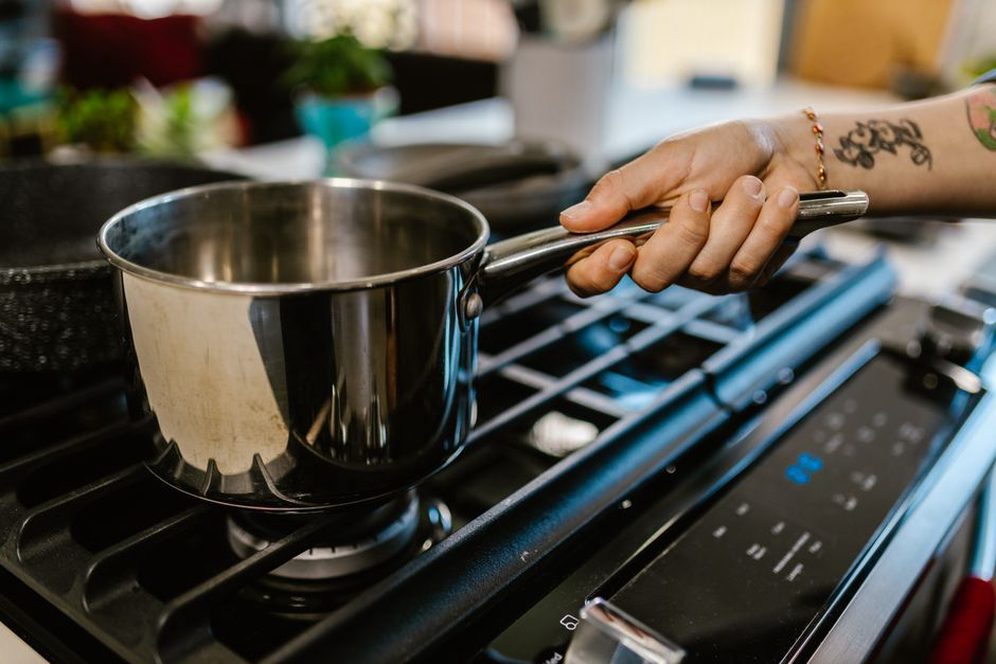
On the stovetop, match the pan to the burner and put a lid on it when simmering or bringing water to a boil. Heating more water than you need wastes time and energy, whether you're using a pot or a kettle. Once food is boiling, many dishes need only enough heat to hold a simmer; a vigorous boil won't necessarily cook them faster. The residual heat of an electric hob may finish a suitable dish after you switch it off, but keep the heat on when precise cooking or food safety requires it.
Refrigerators and freezers run every day, so ordinary use matters. Let hot food stop steaming before refrigerating it, but don't leave perishables at room temperature beyond food-safety guidance. Cover food, leave space for air to circulate, and check that door seals make consistent contact. A refrigerator thermometer can confirm that the compartment is cold enough for food safety without setting it colder than necessary. If ice builds up in a manual-defrost freezer, follow the manufacturer's defrosting instructions.
Dry clothes without adding unnecessary heat
Dryers use heat and airflow, so removing more water in the washing machine can shorten drying time. Choose a spin speed appropriate for the fabric. Clean the lint filter as directed before or after loads, and maintain the dryer vent according to the manufacturer's guidance. Restricted airflow can lengthen cycles and create a safety hazard; vent care isn't just about efficiency.
Separate heavy towels from lighter clothes when practical. Otherwise, the lighter pieces may keep tumbling while the towels finish drying. A moisture-sensing cycle can prevent unnecessary running if it works properly; check whether clothes are actually dry rather than defaulting to the longest timed cycle. A rack or outdoor line avoids dryer energy when space, weather, building rules, and indoor humidity permit. In a damp home, drying large loads indoors may add moisture that ventilation or dehumidification then has to remove.
Pay attention to lights and electronics, but keep perspective
Turn off lights in empty rooms, particularly if you still have incandescent or halogen bulbs. Replacing a frequently used old bulb with a suitable LED can cut electricity use substantially. Check brightness, colour, fixture compatibility, and dimmer requirements. An efficient bulb that flickers or gives unpleasant light probably won't stay in use.
Electronics may draw power even when they appear to be off, but the amount varies. Notice devices that stay warm, show a continuous display, or maintain a network connection. A switched power strip can make it easier to turn off several nonessential devices together. Leave power on for anything needed for safety, medical care, security, scheduled recordings, or necessary software updates. If an outlet meter shows that a device's standby draw is tiny, put your attention elsewhere.
Screen brightness and power settings are easy adjustments for televisions, monitors, and computers. Set sleep modes around the breaks you actually take, and shut down a machine when you won't need it for a longer stretch. There's little point in disabling useful functions for an uncertain saving. An idle-power habit should be easy enough to stick with.
Make the habits easy to repeat
Pick changes that match your household's pattern. Summer afternoon electricity peaks might point you toward shading sunny windows and using fans in occupied rooms. Long, frequent showers may make hot-water habits more important. If you rarely cook, pan lids won't change your bill much. Renters can often change routines, curtains, filters where permitted, and portable devices. Owners can also look into leaks, insulation, or equipment condition, though those larger projects aren't prerequisites for useful daily habits.
A short trial can show whether a change is workable and worth keeping:
- Choose one repeated action. For example, use the washing machine's cold cycle for suitable loads for four weeks.
- Record what changed. Note the start date, how often you did it, and whether the cleaning results were acceptable.
- Compare appropriate measurements. Look at energy use per day or per load where possible, not just the bill total. Weather and other changes can hide small savings.
- Keep or revise the habit. If it's inconvenient and you can't detect a benefit, try a more consequential load.
A household bill can't isolate every small change, especially when outdoor temperatures shift. A simple log can at least stop you from crediting a new habit for a drop caused by weather or a change in occupancy. It can also reveal an easy fix: if the dryer usually runs after dinner, try a moisture-sensing cycle and check it when it ends. Dry clothes don't need another half-hour of tumbling because nobody noticed the machine had stopped.