
Introduction to Object Tracking
In the mid-2000s, object tracking became a pivotal area of study within computer vision, establishing techniques that have continued to evolve. At its essence, object tracking involves automatically detecting and following objects as they move through video frames. This task presents challenges due to the unpredictable nature of real-world settings, where factors such as occlusion, lighting variations, and complex object interactions can complicate the process.
Early Techniques and Approaches
Several groundbreaking techniques emerged during the 2000s, each enhancing the accuracy of object tracking systems. One widely adopted method was the Kalman Filter, which offered a mathematical approach to predicting an object's future position based on its previous states. This technique was particularly effective for scenarios with predictable object paths, assuming linear motion and Gaussian noise.
The Mean Shift algorithm was another significant development. Known for its simplicity and efficiency, this non-parametric method was adept at identifying the mode of a feature space to locate objects in subsequent frames. However, it struggled with objects that underwent significant changes in appearance or size.
Particle Filters and Their Impact
Gaining popularity in the 2000s, the Particle Filter, or Condensation algorithm, offered a more sophisticated approach. Unlike Kalman Filters, Particle Filters could manage non-linear and non-Gaussian processes, making them highly adaptable. They represented an object's state with a set of particles, allowing for the modeling of multiple hypotheses at once and accommodating sudden motion changes and complex dynamics.
- Advantages: Adaptability in managing intricate motion patterns and noise.
- Challenges: High computational demands, necessitating careful tuning and optimization.
Applications in Real-World Scenarios
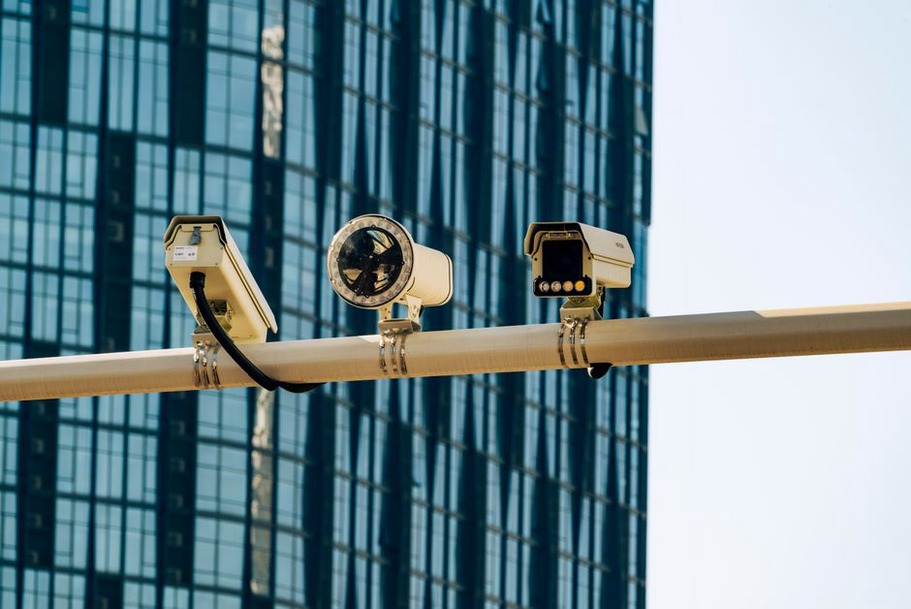
In the early 2000s, object tracking found its way into numerous practical applications. Enhanced tracking algorithms improved surveillance systems, leading to better monitoring and alert capabilities in security settings. The automotive industry also began incorporating these techniques into driver-assistance systems, setting the stage for today's autonomous vehicles.
In sports, object tracking enabled detailed analysis of player movements, providing strategic insights and performance evaluations. The entertainment industry utilized these advancements for augmented reality applications and special effects production.
Challenges and Limitations
Despite advancements, object tracking faced ongoing challenges. Occlusion, where an object is temporarily obscured, was a major hurdle. Solutions like using multiple cameras and sensor fusion were explored to address this, though they added complexity.
Lighting changes and background clutter also posed difficulties, often leading to errors in object detection and tracking. Researchers continually worked to improve the resilience of tracking algorithms against these environmental issues.
Legacy and Influence on Modern Systems
The techniques developed in the 2000s laid a foundation for today's object tracking advancements. While deep learning and convolutional neural networks (CNNs) have significantly advanced the field, the core concepts of prediction, hypothesis testing, and feature representation remain key components of modern methods.
The focus on computational efficiency and real-time processing from the 2000s continues to shape current research. As computational power has grown, it has enabled the development of more sophisticated models that build on past techniques.
For more insights into how these early methods influenced later developments, the article "How the Humble Banner Ad Became an Unlikely Training Ground for Computer Vision" explores the intersection of advertising technology and computer vision advancements.

Conclusion
The innovations in object tracking from the 2000s not only addressed the challenges of that era but also set the stage for ongoing advancements in the field. As technology progresses, the foundational work from this period remains a testament to the creativity and foresight of researchers committed to advancing computer vision.