
In 2005, a research group at the University of Cambridge released a face dataset containing 2,000 frontal images captured from volunteers on a single afternoon. Within two years, the same images appeared in at least eight unrelated studies—face recognition, expression analysis, age estimation—without any re-consent or notification to the subjects. This was not an outlier. It was the norm for a field that prized data quantity over data governance. The mid-2000s were a golden era for pattern recognition, speech processing, and computer vision, but they were also a time when privacy was an afterthought, if it was thought of at all.
Privacy Blind Spots in Mid-2000s Pattern Recognition Research
The academic appetite for large, labeled datasets grew explosively between 2000 and 2007. Researchers at major laboratories—CMU, MIT, the University of Oxford, and South Africa’s own CSIR—competed to build the most comprehensive corpora for face detection, speaker identification, and document analysis. Yet the ethical frameworks governing those collections were rudimentary. The FERET database, assembled between 1993 and 2000, included signed consent forms, but those forms did not anticipate indefinite reuse across institutions. The TIMIT speech corpus, a staple of acoustic modeling, contained no de-identification measures; speakers could be identified by their voiceprints decades later.
A glance at the PRASA 2003 archive: a time capsule of pattern recognition research reveals this gap plainly. Papers on speaker recognition and face detection from that symposium describe algorithms in meticulous detail—feature extraction, classifier design, error rates—but not a single one addresses the privacy of the subjects whose data made the experiments possible. The proceedings treat human voices and faces as neutral scientific inputs, not as personal identifiers with legal and ethical weight.
Biometric Systems and the Unspoken Trade-Off
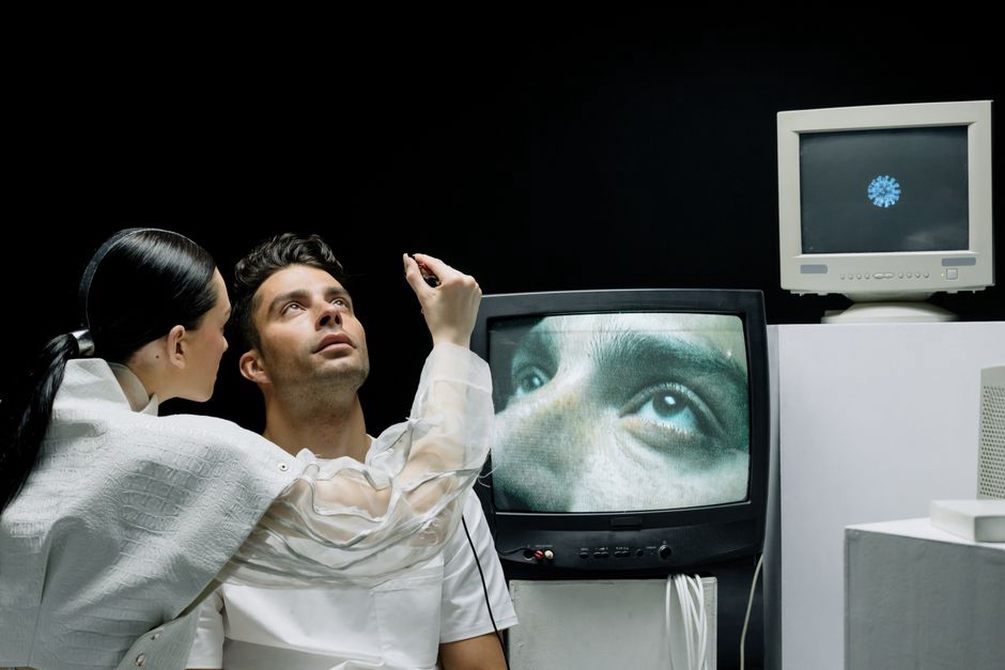
Nowhere was the tension between performance and privacy more acute than in biometrics. Contact image sensors, which read fingerprints by placing a finger directly on a glass platen, became the workhorse of early 2000s biometric systems. The sensors were cheap, fast, and accurate—but they also produced raw fingerprint images that, if stored without encryption, could be lifted from a researcher’s hard drive and used to impersonate the subject. The story of how contact image sensors reshaped document processing and biometrics in the mid-2000s is a technical success, but it also illustrates a missed opportunity: the engineers who perfected the hardware did not simultaneously design privacy-preserving storage or one-way template transformation. It would take another decade for the community to widely adopt such measures.
The same trade-off appeared in iris recognition and gait analysis. Researchers at the 2004 PRASA symposium presented a gait-based person identification system with 93% accuracy on a dataset of 100 volunteers. The paper celebrated the result; it did not discuss what happened to the video footage after the experiment ended. The culture of academic openness—sharing data for reproducibility—collided with the reality that biometric data is irrevocable. Once a fingerprint or iris code is leaked, the owner cannot simply change it like a password.
Early Privacy-Preserving Techniques in Computer Vision
Despite the general neglect, a handful of research groups began experimenting with privacy-preserving methods as early as 2003. One strand involved k-anonymity applied to face databases: blurring or pixelating facial regions so that each image could not be linked to a unique individual. Another strand used secure multiparty computation to perform face recognition on encrypted data, allowing a server to verify a person without ever seeing the raw face image. These techniques were computationally expensive—a single comparison could take minutes on 2005-era hardware—so they remained niche. The first workshop dedicated to privacy in pattern recognition did not appear until 2007, and it attracted only a dozen papers. Yet those early experiments laid the groundwork for today’s federated learning and homomorphic encryption.
A typical privacy oversight in mid-2000s research can be summarized in a short list:
- Face databases collected without explicit consent for secondary uses.
- Speech corpora distributed on CD-ROMs with no de-identification.
- Biometric templates stored in plaintext on lab servers.
- No opt-out mechanism for subjects whose data was reused years later.
- Conference proceedings that described datasets without any privacy discussion.
These patterns were not malicious; they reflected the era’s assumptions. Data was a resource to be shared, and privacy was a legal hurdle to be cleared, not a design principle.
The Role of Conference Archives in Understanding Privacy Evolution
The PRASA archives from 2001 to 2004 offer a rare longitudinal view of how privacy concerns slowly crept into the discourse. In 2001, not a single paper mentioned privacy, anonymity, or data protection. By 2004, one paper on document processing noted that scanned bank checks contained sensitive account numbers and proposed a method to automatically redact them before storage. That isolated example signaled a shift: researchers were beginning to see privacy as a technical problem, not just an administrative one. The PRASA 2003 archive shows no such awareness, making the contrast with 2004 all the more striking.
Outside the PRASA community, similar trends emerged. The 2005 IEEE Workshop on Privacy and Security in Biometrics drew a small but engaged audience. Presenters discussed cancelable biometrics—transforming a fingerprint into a revocable template—and differential privacy for statistical disclosure control. These ideas were too slow and too memory-hungry for production systems at the time, but they planted the seeds for today’s privacy-by-design approaches in machine learning.
What the Mid-2000s Teach Us About Privacy Today
The mid-2000s were not a dark age of disregard; they were a period of rapid technical progress that outpaced ethical reflection. Researchers were so focused on making algorithms work that they did not stop to ask who might be harmed by the datasets they curated. The archives of conferences like PRASA are not just technical records—they are also cautionary tales. They show that privacy is not a feature to be added later, but a constraint that must be baked into the research pipeline from the moment a camera is pointed at a face or a microphone is held out to a speaker.
The 2007 workshop on privacy in biometrics accepted only twelve submissions, but its very existence marked the first time the community formally acknowledged the problem. One of those submissions proposed a method to use encrypted face templates that could be matched without decryption—a direct ancestor of today’s secure face verification systems. That workshop’s proceedings, now sitting in digital archives alongside the PRASA proceedings, are a quiet monument to the moment when pattern recognition began to take privacy seriously.