
In 2004, the annual Symposium of the Pattern Recognition Association of South Africa (PRASA) produced its proceedings volume. That process—from paper acceptance to printed book—involved authors, session chairs, a publications chair, and a local print shop. It was labor-intensive, mixing editorial rigor with the quirks of pre-automation publishing. Understanding how these proceedings were assembled shows the technical constraints of the era and the careful human workflows that kept research archived reliably.
From Camera-Ready Copy to Compiled Volume
The term “camera-ready” itself harked back to the days when authors pasted text and figures onto boards for photographic reproduction. By the 2000s, it meant a PDF file that met strict formatting rules: page size, margins, font embedding, and resolution of images. Authors received an author kit — a ZIP file containing style templates, sample pages, and instructions. For PRASA 2004, for example, that kit specified LaTeX or Microsoft Word templates, required all fonts to be embedded, and demanded figures at 300 dpi or higher. Submissions were due weeks before the conference, giving the publications chair time to check each file for compliance.
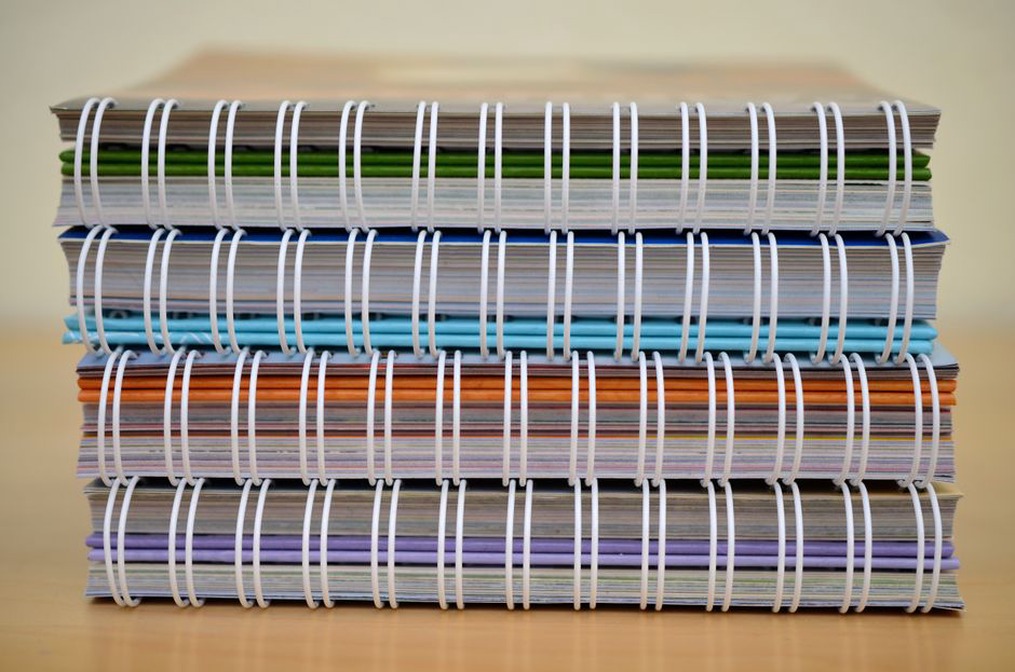
Once the final PDFs were collected, the publications chair manually assembled them into a single proceedings document. This often meant renumbering pages, inserting a table of contents, and adding front matter — a preface, committee lists, and sometimes a message from the general chair. The table of contents itself was frequently hand-coded in HTML for the conference website, as described in an earlier article on how mid-2000s researchers structured digital proceedings. The compiled PDF was then sent to a printer, who produced a run of perhaps 100 to 300 copies, perfect-bound with a card cover. Attendees received a printed copy in their registration bag.
< >
>
The Parallel Digital Track: CD-ROMs and Online Archives
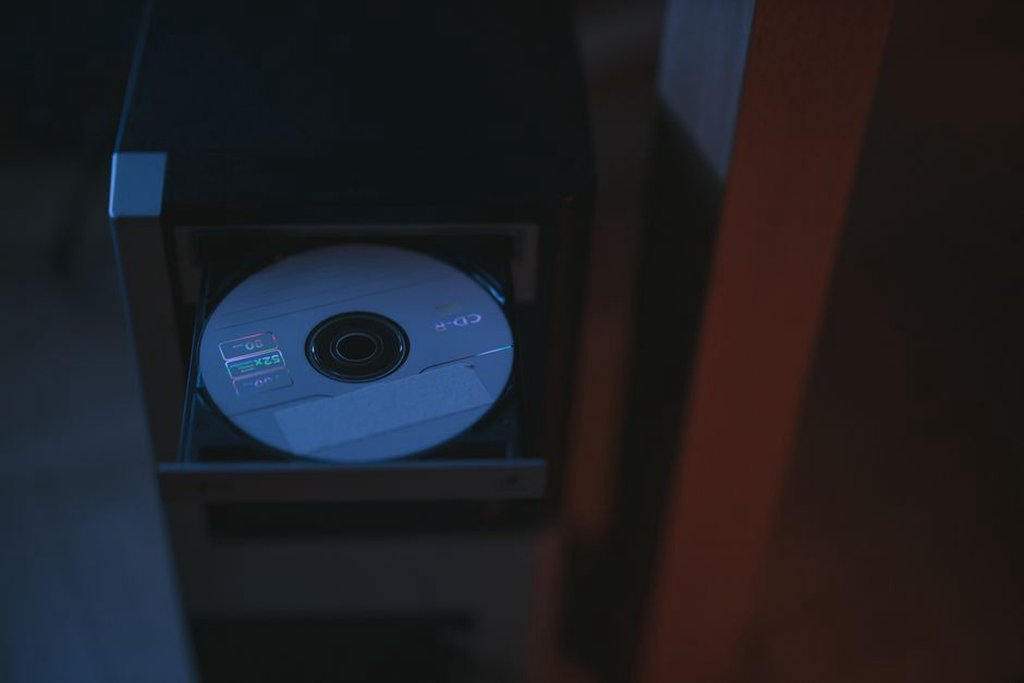
Alongside the printed book, most conferences in the mid-2000s distributed proceedings on CD-ROM. This was cheaper than printing full colour pages for every paper, and it allowed inclusion of multimedia content — audio clips for speech papers, video for object tracking, or colour images for medical analysis. The CD-ROM typically contained the same PDFs, organised in folders by session, plus a simple HTML index. Some conferences, like the Contacts 3 Workshop in 2006, offered both printed abstracts and a full-paper CD. The CD-ROM was a transitional format: it preserved the content digitally but still required physical distribution.
Simultaneously, a few conferences began hosting proceedings online — often as a password-protected area of the conference website. This was before institutional repositories and open-access mandates became common. The online version was usually a mirror of the CD-ROM content, with the same HTML table of contents. Maintaining these sites required manual uploading and link checking. The PRASA proceedings from 2001 to 2004, preserved in the blog’s archives, show exactly this kind of hand-built digital publication.
The Role of Proceedings in Academic Communication
Proceedings served several critical functions beyond mere record-keeping. They were the primary means of disseminating research before preprint servers like arXiv gained traction (arXiv only expanded into computer vision and speech around 2003–2005). A proceedings paper was considered a peer-reviewed publication, often with a rejection rate of 30–50% for mid-tier conferences. Inclusion in the proceedings gave a researcher a citable, archival document. For many graduate students, their first proceedings paper was a milestone.
Proceedings also shaped the direction of the field. The table of contents reflected the conference’s review decisions, session organisation, and even the biases of the programme committee. A reader scanning the proceedings of PRASA 2004, for instance, would see a strong emphasis on biometrics, document processing, and low-resource speech technology — topics that mirrored the research interests of the organising committee and the funding priorities of the time. The proceedings thus acted as a time capsule, preserving not just the papers but the intellectual landscape of a community.
Production Challenges and Workarounds
Producing proceedings was rarely smooth. Common problems included:
- Late submissions: Authors often submitted their camera-ready versions minutes before the deadline, leaving no time for quality checks.
- Formatting errors: Missing fonts, incorrect page sizes, or low-resolution figures forced the publications chair to contact authors for fixes, sometimes days before the print run.
- Indexing and numbering: Manually assigning sequential page numbers across dozens of PDFs was tedious and error-prone. A single mistake could misalign the table of contents.
- CD-ROM mastering: Creating a bootable or auto-run CD required specialised software and testing on multiple drives to ensure compatibility.
To mitigate these issues, some conferences created detailed author kits with checklists. The PRASA 2004 author kit, for example, included a step-by-step verification procedure and a sample PDF. That kit is now a valuable historical artifact, showing the level of detail expected from authors in a pre-automation era. The blog has examined that kit in a separate post, highlighting its instructions on embedding fonts and flattening transparency.
Legacy of the Mid-2000s Proceedings
Today, most conference proceedings are digital-only, published through platforms like IEEE Xplore or ACM Digital Library. The printed book has become a rarity, and CD-ROMs are obsolete. Yet the proceedings from the mid-2000s remain an important resource for historians of technology. They document the state of the art before deep learning, the hardware constraints (e.g., limited RAM and CPU speeds), and the social networks of researchers. Because many of these proceedings were never digitised by large publishers, they survive only in personal collections, library archives, and the occasional conference website that still hosts the old HTML pages.
For the researcher interested in the evolution of pattern recognition, speech processing, or computer vision, these proceedings offer a granular view of how problems were framed and solved. The PRASA archives, for instance, contain papers on contact image sensors for fingerprint capture, stereo reconstruction using rectification algorithms, and language identification for under-resourced languages — topics that later converged with mainstream deep learning but were then explored with handcrafted features and statistical models. Each proceedings volume is a snapshot of a community’s collective effort, preserved in the very format that its authors laboured to produce.
< >
>
Two decades later, those proceedings survive in personal collections and library archives. The PRASA 2004 volume sits on a shelf in the blog author's office, its card cover yellowed but the PDFs still readable. That physical artifact is a reminder of the human effort behind every published paper—the authors who met formatting deadlines, the publications chair who manually assembled PDFs, and the printer who bound the books. Without that work, the research would have been lost.