
A sofa partly blocking a window can leave a living room dim even when the lighting is otherwise fine. Pull it away from the glass, or move a tall bookcase to another wall, and the room may feel different without a purchase. Take photos from the doorway and the seat you use most often before changing anything. Blocked light, awkward walkways, and crowded surfaces are easier to spot in a picture.
Decide what the room needs to do before deciding what to buy. A place for conversation and reading calls for different furniture positions and lighting than a room centered on a television. Write down the daily irritations—screen glare, nowhere to set a cup, a dark reading corner—and let those guide any spending.
Start with a free layout experiment
Measure the room and its largest pieces before moving heavy furniture. Note door swings, outlets, radiators, vents, and the routes people actually take. Painter’s tape or sheets of paper can mark a proposed position on the floor. That helps you tell the difference between a layout that photographs well and one you can walk through with a laundry basket.
Change one relationship at a time. Angle two chairs toward the sofa to make conversation easier, or move a side table from an unused corner to the seat that needs it. If the sofa faces a screen, check for glare when the room is usually occupied. Keep vents clear and make sure doors can open fully.
Photograph each arrangement from the same spots, then live with a promising one for a few days. Ordinary use exposes problems a floor plan misses: a lamp cord crosses a walkway, a chair blocks a cabinet, or an end table sits just out of reach. You can always move furniture back.
Edit what is visible before adding more
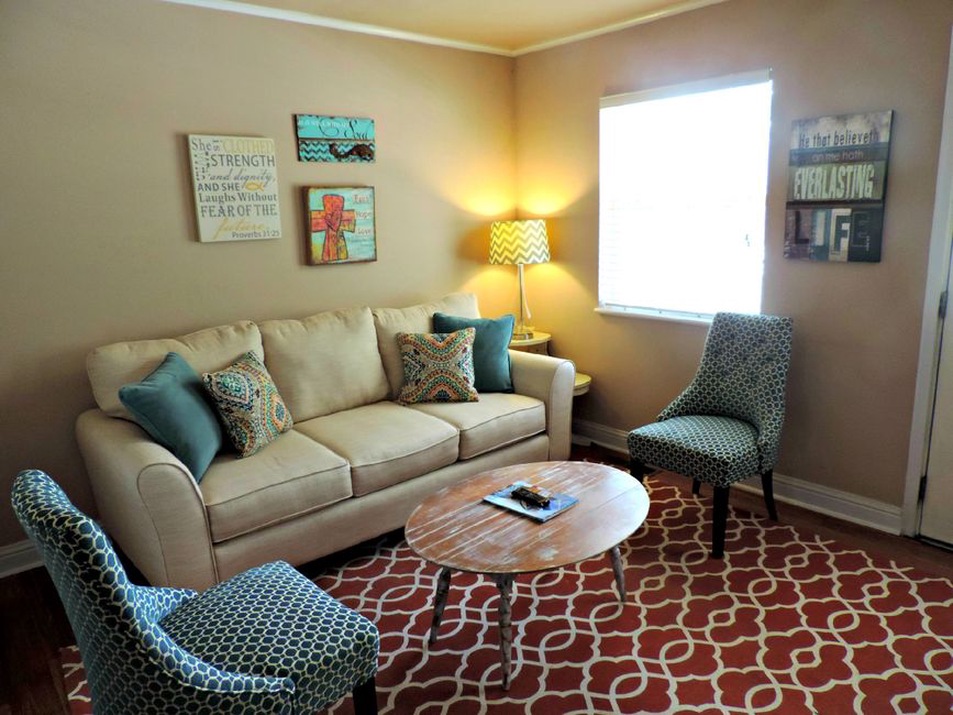
Clearing a room does not mean stripping out everything personal. Give useful and meaningful objects room to be seen. Empty the coffee table, shelves, and side tables, then return what belongs there. Corral remotes in a small container, keep frequently read books within reach, and put stray objects back where they belong.
Pay attention to the gaps. A packed shelf can hide its best objects; several small pictures scattered across a wall may work better as one deliberate grouping. Remove or relocate things before shopping for baskets. An organizer is helpful only when you know what it will hold and where it will go.
Cleaning may show which surfaces actually need work. Wash throws according to their labels, vacuum upholstery with a suitable attachment, dust lampshades, and clean the windows. Test cleaning products on an inconspicuous part of a rug or upholstered piece, and follow the maker’s guidance. A stain or worn finish that remains is a specific problem to address—not a reason to replace everything around it.
Use lighting to change how the room feels
A lamp may do more for the room than another decorative object. An overhead fixture can light the floor while leaving faces in shadow and reading spots dim. Try moving existing lamps first: put one beside the reading chair and another where it softens a dark corner. Keep cords out of walkways, follow fixture labels, and never cover a lamp or exceed its rated bulb wattage.
Look at the bulbs you already have. Noticeably different color temperatures can make adjacent corners look mismatched. Warm white may suit an evening seating area, while reading may call for a brighter task light; choose for the activity and the fixture. Compare lumens when judging brightness rather than assuming equal wattage means equal light output. If you use a dimmer, check that it and the bulb are compatible.
Make daylight work for the room
Open curtains fully and check whether furniture, plants, or shelving blocks the window. Clean the glass, then see whether moving a lamp or reflective surface helps daylight reach farther into the room. A mirror should not throw harsh sun onto a seat or screen. Heavy-looking curtains may need only neater hanging or one less layer; check nighttime privacy before removing a window covering altogether.
Refresh textiles without buying a full matching set
Textiles can shift the room’s color and texture without replacing expensive furniture. Borrow a throw from another room, switch cushion covers if the inserts are sound, or reposition a rug so it connects better with the seating. A cover is usually cheaper and easier to store than a whole new cushion. Measure the insert before buying one.
Work with the upholstery, flooring, and curtains already there. Repeating one accent color in two or three places can connect pieces that do not match. Texture can do the same job: a woven throw adds interest against a smooth sofa without introducing another pattern.
Think about upkeep, too. A delicate pale cover may not be a bargain in a room used daily by children or pets. Washable fabrics and replaceable covers can be practical, but check their care labels. If a rug’s edges curl or it slips, use an appropriate pad or move it rather than living with a trip hazard.
Change the walls selectively
A wall may not need a full repaint. Clean marks using a method suitable for the finish, fill small holes where permitted, and touch up paint only if you have a matching product. Older paint may have faded, so test in a discreet spot; a fresh patch can be more obvious than the original mark. If you rent, check the lease before painting, drilling, or using adhesives that might damage the finish.
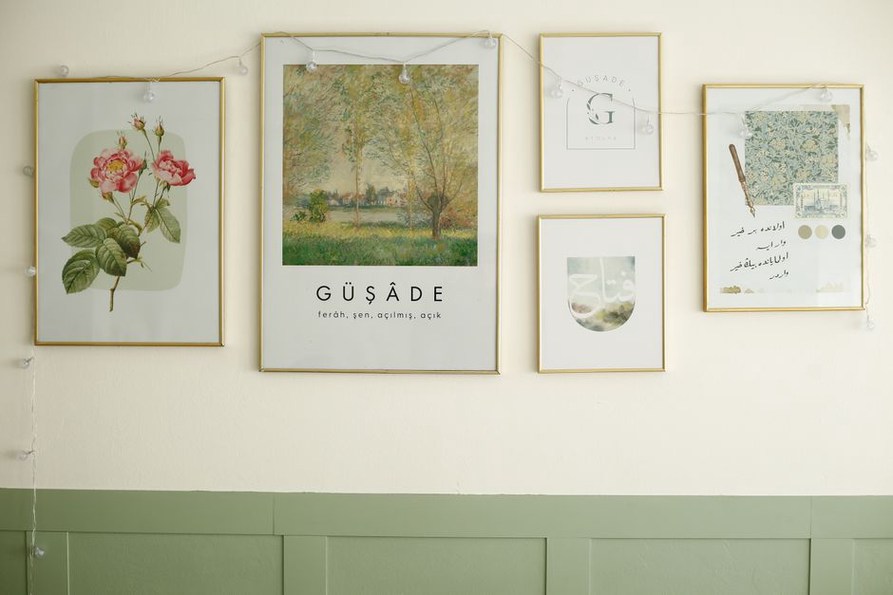
Try rearranging existing art. Lay frames on the floor to test their spacing, then use paper templates on the wall. Choose a height that works from the room’s usual viewing position rather than lining everything up near the ceiling. Match hooks or anchors to the weight of the art and the wall type. Where drilling is not allowed, an existing picture ledge or a secure spot on a mantel may be an option.
If you do want new art, consider prints you own, photographs you have permission to display, or a secondhand frame for an existing piece. A new mat may be all a reused frame needs. Keep irreplaceable photographs and works on paper out of direct sun, and choose appropriate framing materials if they will stay on display long term.
Give older furniture a specific job
A piece does not have to go because its finish no longer matches. A sturdy side table might serve better beside a chair than next to the sofa. Swapping tables between rooms costs nothing and may solve a height or size problem. Check that a piece is stable before putting a lamp or drinks on it.
Small repairs make sense when they fix a clear defect: tighten loose hardware, replace a missing furniture foot, or treat a minor scratch with a suitable product. Inspect an inexpensive secondhand piece for structural problems, odor, and damage before bringing it home. Check upholstered items closely around seams and crevices, and leave behind anything showing signs of pests or persistent moisture damage.
Painting furniture can be inexpensive, though preparation, ventilation, and materials add up. Identify the surface before sanding or stripping it; older finishes and coatings may call for special precautions. Changing the finish of a valuable, antique, or uncertain piece could do more harm than good. Try it in another position first.
Spend in an order that avoids duplicate purchases
Set a total budget before browsing, and keep some of it unassigned until you have tested the free changes. For each possible purchase, note the problem it solves, its full cost, and the dimensions it needs to fit. A cheap lamp is less appealing if it also requires an expensive shade, another table, and an awkward extension cord.
- First: clean, clear surfaces, and test the furniture layout.
- Next: fix a daily inconvenience, such as poor reading light or an unstable side table.
- Then: choose one noticeable visual change, such as cushion covers or a new arrangement of existing art.
- Last: consider decorative extras if the budget and surfaces have room for them.
Measure before buying anything new or secondhand. Check a table’s height against the nearby seat, not just its floor footprint. Mark a rug’s proposed edges on the floor to see whether doors clear it and furniture sits where you intend. Keep receipts when possible, and check return terms for items whose color or scale is hard to judge outside the room.
Compare a purchase with a reversible alternative
Think you need a larger coffee table? Try an existing side table beside the seat that lacks a surface. Before buying art for a blank wall, rearrange frames from elsewhere. Either test might solve the problem—or confirm that the purchase is worth making, with a clearer idea of what to look for.
Keep comfort and access in the plan
Leave clear routes to doors and frequently used storage. Someone seated should be able to reach a lamp control, light switch, or table where needed. Secure tall furniture appropriately, particularly where children may climb; do not stack heavy objects where they could fall. Keep heaters, vents, and exits unobstructed.
Contrast matters under changing light. The W3C’s explanation of visual contrast concerns digital text, not interiors, but the principle is relevant: differences in lightness affect how easily we distinguish an object from its background. Check whether a seat, table edge, or step remains easy to see in daylight and under the lamps used at night, rather than judging colors only in a store.
Before spending what is left, run one more trial. Move the reading chair closer to its lamp, put a table within reach, and use that setup for a week. If the corner is still too dim, you now know what the next purchase must do: light that chair from a workable position without putting a cord in anyone’s path.