
A narrow entryway can be hard to use long before it looks cluttered. Shoes in the door’s swing, a bag at shoulder height, and mail on the nearest shelf can make every arrival awkward. Clear the route from the door to the next room first. The space left for storage matters more than the length of an empty wall.
Measure the space you need to move through
Open the door fully and note where it swings. Then walk through carrying what you normally bring home—a work bag or groceries, for instance. Notice where you turn and where you stop to take off your shoes. A cabinet may fit against the wall on paper yet catch your elbow or have a drawer blocked by the open door.
Mark the footprint of a bench or shoe cabinet with painter’s tape before buying it, and leave the outline in place for a day or two. In a tight hall, a shallow shelf or wall hooks may work better than furniture on the floor. If the entry is part of an accessible route, keep the clear space needed by everyone who uses it, including someone with a mobility aid. A standard furniture layout will not suit every household.
Check what is fixed in place, too. Doors need room to open, and outlets and vents must remain usable. Building rules may limit drilling or prohibit objects in a shared corridor. Keep storage inside your home, not in a communal exit route.
Give the entryway a small number of jobs
The entry needs to handle the move between outdoors and indoors: shoes and outerwear in current use, a place to put down what is in your hands, and a reliable spot for things you need on the way out. It does not have to hold every coat, reusable bag, or pair of boots in the house.
Separate daily items from occasional ones
Count the coats and shoes used in an ordinary week. Give them the easiest spots to reach, and move off-season gear to a closet or another storage area. If five people use the entry, make room for five people’s daily belongings—not just one neatly hung coat. Leave hooks free for guests if you often have visitors.
Give each category a limit: a tray for keys and sunglasses, a basket for gloves, a rack for shoes currently being worn. When one fills up, decide what belongs there instead of stacking more on top.
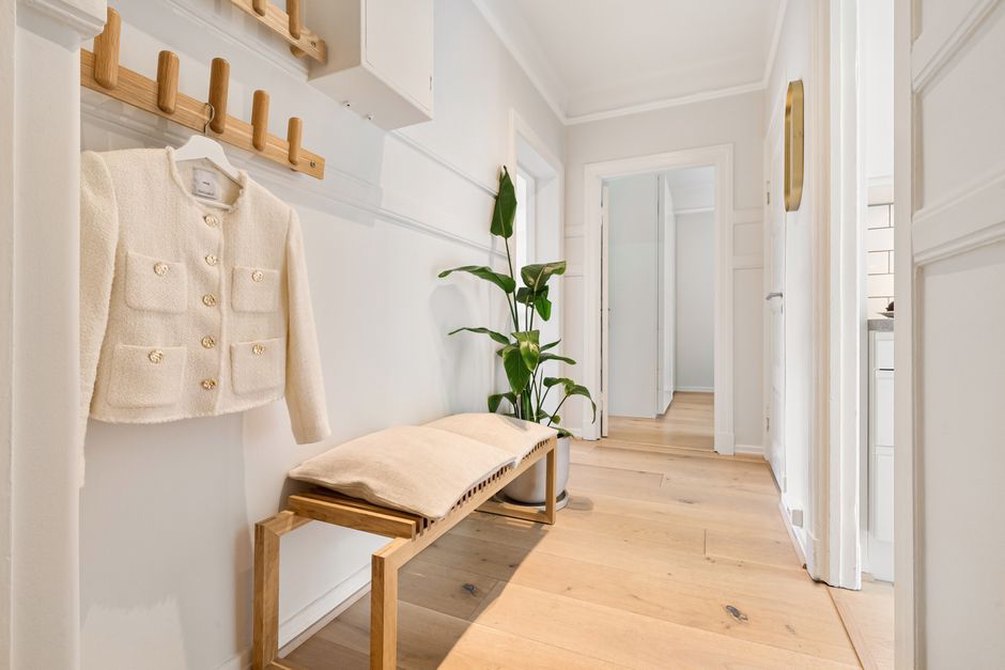
Choose storage by how it is used
Hooks often beat hangers in a cramped entry: you can put away a coat with one hand. Mount them where the people using them can reach, including children expected to hang up their own jackets. Space them for bulky coats. A long row of tightly packed hooks may hold less than you think.
Wall shelves keep the floor clear, but watch their depth. A shelf near head height can jut into a narrow passage; one beside the door may catch a bag. Use a shallow ledge for small objects, or put a deeper shelf where no one walks beneath it. Choose fixings suited to the wall and the weight the storage will carry. Heavy bags and several winter coats strain a hook rail far more than keys do.
A shoe cabinet hides clutter, but check its inside dimensions. Tall boots and large shoes may not fit a slim tilt-out model. Open racks make shoes easier to see and give damp pairs room to dry, though the rack still needs a set capacity. A tray beneath wet shoes protects the floor and is easier to empty and clean than a whole mat.
Make a drop zone without making a dumping zone
If people regularly come in carrying keys, mail, or parcels, put a small landing surface near the door. A narrow console, shelf, or sturdy shoe cabinet can do the job. Give it a purpose—say, a key dish and one spot for outgoing items. Move mail that needs attention to wherever you handle paperwork, before it becomes a permanent pile.
No room for a shelf? A bag hook and a small dish on a nearby surface may be enough. The first thing people do when they come in should be easy to repeat.
Keep the floor working for you
Floor space matters most where people turn, open doors, or put on shoes. A bench helps only if someone can sit without blocking the route. A small stool that tucks under a shelf may work better; in some homes, the best choice is no seat at all.
Choose a mat that clears the door and lies flat. One that catches underneath or curls at the edges becomes a daily annoyance and a trip hazard. In wet weather, an absorbent mat at the entrance and a washable shoe tray farther inside can keep damp footwear out of the doorway.
Make sure light reaches the lock, hooks, and floor. You will find dropped keys more easily and notice wet patches sooner. If a battery-powered light is the simplest choice, aim it at those areas rather than into someone’s eyes as they enter.
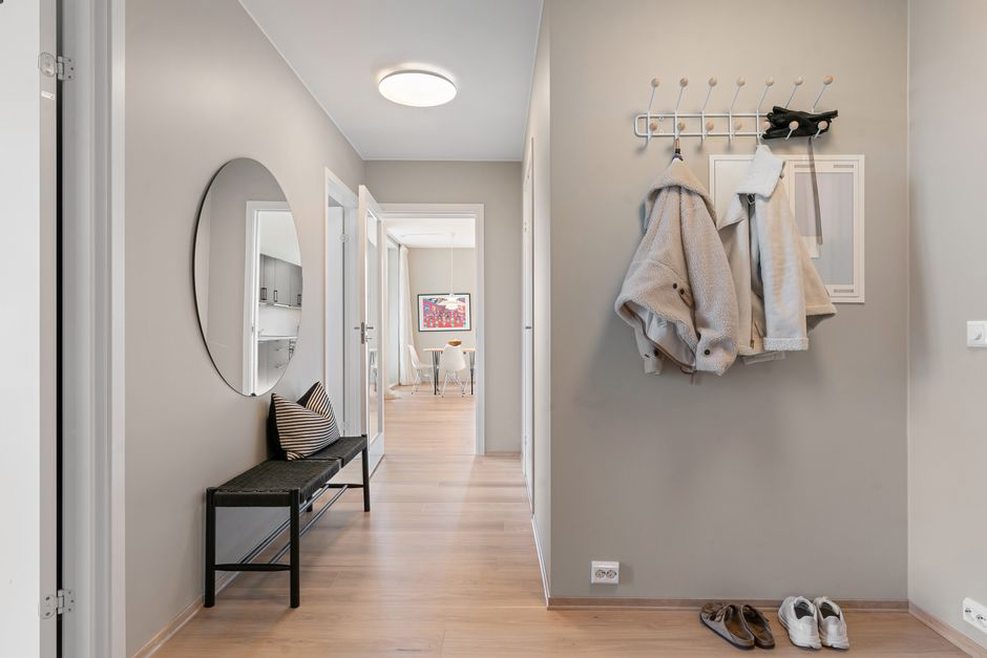
Adapt the layout to the shape of the entry
For a narrow hallway, keep storage on one side if you can. Shallow hooks, a slim shoe rack, and a wall-mounted key dish leave more room to pass. Avoid putting hooks and shelves opposite each other at the same narrow point.
For a door that opens straight into a living room, define a small entry area rather than trying to create a hallway. A mat marks where outdoor shoes stop; a nearby hook rail and compact tray give belongings a place to go. A freestanding divider can add separation if it is stable and does not crowd the route.
For a recessed nook, use its depth without packing it from floor to ceiling. Keep frequently used things within reach, heavier items low, and occasional items above. Before adding a cabinet or bins, check that their doors or drawers can open fully inside the recess.
Test the setup against ordinary days
For a week, notice what lands outside its assigned spot. A backpack on the floor may need a lower hook—or an unoccupied one. Shoes beside a full rack may mean you need more room for daily pairs, or that unworn pairs should move elsewhere. If the key tray stays empty while keys collect on the kitchen counter, it may be in the wrong place.
Change one thing at a time: move a hook, keep fewer shoes by the door, or shift the tray closer to where bags are set down. If the door still hits a basket, remove it rather than asking everyone to remember to push it back. Then carry a bulky bag through the open doorway. You should not have to turn sideways or move anything to get through.