
In 2004, the International Conference on Pattern Recognition (ICPR) published its proceedings as a hybrid set: a printed volume and a CD-ROM containing PDF files alongside a basic HTML index. That same year, the South African PRASA symposium—focused on pattern recognition and speech research—still distributed its papers as stapled photocopies at the event, while the digital versions lived on a university FTP server as raw PDFs. The gap between these two worlds illustrates a quiet revolution that reshaped how mid-2000s researchers accessed and shared technical knowledge.
The Pre-HTML Era: Paper and PDF
Before the mid-2000s, conference proceedings in pattern recognition and speech technology were predominantly print-first. Authors submitted camera-ready hard copies, which were then compiled into bound volumes. A handful of conferences offered supplementary CD-ROMs, but the content was often just a directory of PDFs. Navigating these required either a printed table of contents or a clunky Adobe Acrobat bookmark panel. For researchers working on under-resourced languages—where funding for travel and subscriptions was scarce—obtaining these proceedings was a challenge. Libraries in developing countries might receive one or two copies, and interlibrary loan delays could last months.
The PDF format itself was a step forward from paper, but it remained a static container. Hyperlinks between papers, cross-references to cited works, or even a simple searchable author index were rare. The file names, often cryptic (e.g., prasa2011_01.pdf), gave little clue about the content. A researcher hunting for a specific technique—say, subspace Gaussian mixture models for IsiXhosa—had to download the entire proceedings archive and manually open each PDF.
The Shift to HTML in the Mid-2000s
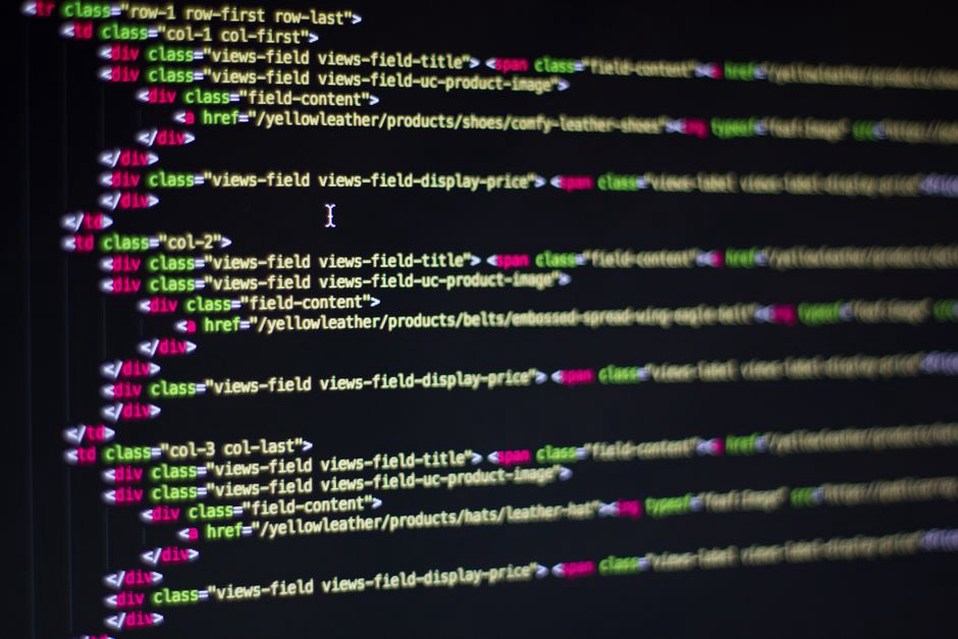
HTML offered a fundamentally different paradigm. Instead of a monolithic document, a conference could present its program as a set of interlinked pages: an index of sessions, individual paper pages with abstracts, author affiliations, and direct download links. The European Conference on Computer Vision (ECCV) and the International Conference on Acoustics, Speech, and Signal Processing (ICASSP) began experimenting with HTML proceedings around 2005. The key advantage was discoverability: a search engine could index each paper’s abstract and keywords, making the content findable to anyone with an internet connection.
For the PRASA community, the transition was gradual. The 2005 PRASA proceedings still arrived as a single PDF file. By 2007, the symposium’s website included an HTML program page with links to individual PDFs. The 2011 PRASA proceedings still used a PDF compilation, but the accompanying website offered an HTML table of contents. The real shift came around 2012, when the 2012 PRASA Proceedings PDF was supplemented by a full HTML index with abstracts and author bios. That transition decade—roughly 2005 to 2015—saw HTML evolve from an optional extra to the default access method for pattern recognition research.
Impact on Under-Resourced Language Research
The move to HTML had an outsized effect on research into under-resourced languages. In the mid-2000s, teams working on languages like isiXhosa, Sepedi, or Tshivenda often operated with limited institutional support. HTML-based proceedings meant that a researcher at the University of Limpopo could, with a dial-up connection, browse the program of a major conference, read abstracts, and decide which PDFs to download—without needing to purchase a printed volume. The ability to copy and paste text from HTML pages also aided in building bibliographic databases and shared citation lists.
Moreover, HTML made it easier to include supplementary material: audio samples, video demonstrations of object tracking or stereo reconstruction, and links to open-source code. For speech technology, embedding short audio clips of language identification or speaker diarization results became feasible. A paper on language identification for under-resourced languages could link to WAV files of the test utterances, something impossible in a printed volume.
A Case Study: PRASA Proceedings
The PRASA symposium provides a well-documented microcosm of this shift. The earliest available proceedings (circa 2001) are single PDFs with no hyperlinks. By 2007, the symposium’s website listed papers as HTML bullet points with author names and titles. The 2011 proceedings—still a monolithic PDF—included an HTML version of the front matter. The 2012 volume, as noted, introduced a full HTML index. By 2013, the PRASA website featured separate HTML pages for each paper, complete with abstracts and keyword tags.
These changes were not merely cosmetic. The HTML structure allowed the symposium organizers to generate statistics: which papers were most viewed, which sessions attracted the most clicks. For the first time, program chairs could see that a paper on subspace GMMs for IsiXhosa received as many downloads as a paper on mainstream object tracking. That visibility encouraged future submissions on under-resourced language topics, because authors knew their work would be equally accessible.

The Legacy of HTML in Academic Publishing
Today, it is easy to take HTML-based proceedings for granted. Yet the mid-2000s were a period of experimentation. Some conferences tried XML-based formats; others used Flash-based viewers. HTML won because it was open, lightweight, and required no proprietary software. The same reasons drove its adoption in the pattern recognition community, where many researchers were already comfortable with web technologies.
One concrete legacy is the practice of embedding DOIs (Digital Object Identifiers) in HTML metadata. The PRASA proceedings from 2012 onward include DOIs in the HTML header, enabling persistent linking even after the conference website changes. Another legacy is the use of responsive design: by the late 2000s, some conference sites began to adapt to mobile screens, allowing researchers to browse proceedings on early smartphones during poster sessions.
For the historian of technology, the HTML transition offers a clear boundary marker. Before HTML, conference proceedings were artifacts you owned; after HTML, they became services you accessed. The shift changed not only how papers were distributed, but how they were discovered, cited, and reused. It lowered barriers for researchers in resource-constrained environments and amplified the visibility of niche topics like under-resourced language processing.
In 2005, a PRASA attendee might have carried home a CD-ROM with 40 PDFs. By 2015, the same attendee could bookmark an HTML page that aggregated all papers, with links to code repositories and supplementary datasets. That change—from a stack of files to a web of interlinked resources—was quietly engineered by a handful of conference organizers who chose to write <a href> tags instead of shipping a disc. And the first step was simply deciding to start with HTML.