
In the mid-2000s, a conference presentation often lasted little more than twenty minutes. Yet the conventions around it could influence a field for years. Authors had to define a problem precisely, compare their work with a recognizable baseline, disclose experimental conditions, and answer questions from people capable of reproducing—or challenging—the result. These were not ceremonial requirements. They allowed technical claims to travel between laboratories working on speech, vision, documents, and pattern recognition.
Academic conventions are the shared practices through which research communities decide what counts as evidence, novelty, a fair comparison, and an unresolved limitation. Deadlines, peer review, proceedings, poster sessions, benchmarks, citation formats, and program committees can seem administrative from a distance. In practice, they formed the coordination system that helped early machine-learning and recognition methods become scientific knowledge rather than isolated demonstrations.
Conventions turned prototypes into comparable results
Recognition research has always been susceptible to persuasive but misleading demonstrations. A speech recognizer may look impressive on a small, clean recording set; an object tracker may appear stable in carefully selected video; a document-analysis system may perform well on pages from the same collection used during tuning. Without shared reporting expectations, other groups cannot tell whether an apparent improvement came from a better method, an easier dataset, a different evaluation measure, or accidental data leakage.
By the middle of the 2000s, many research communities had settled on broadly understood expectations for experimental papers. Authors were generally expected to identify the data, define the task, explain the model or algorithm, name the evaluation metric, and compare results with earlier work or a baseline. Standards varied across fields, but the purpose was the same: a numerical result needed enough context to be interpreted.
Word error rate, for example, became a familiar reference point in automatic speech recognition, but the figure alone settled little. Results depended on vocabulary size, language model, acoustic conditions, speaker population, transcription conventions, and whether the task involved read speech or spontaneous conversation. Reporting those conditions gave the number meaning. In computer vision, a tracker’s success rate similarly depended on annotation policy, sequence selection, occlusion handling, initialization, and the definition of failure.
What a useful technical comparison needed
- A defined task: not simply “recognition,” but language identification from short speech segments or page segmentation for scanned newspapers.
- A stated dataset split: training, development, and test material should be distinguished, especially when samples from the same speaker, document collection, or video sequence could otherwise overlap.
- A metric with its conditions: error rate, accuracy, precision and recall, overlap score, or processing time mean little without a clear evaluation protocol.
- A baseline: a modest established method can show whether added model complexity produced a genuine gain.
- Limits and failure cases: errors involving noisy audio, mixed scripts, motion blur, or unusual anatomy often revealed more than a single headline score.
These expectations did not guarantee rigor. Small datasets, selective reporting, and hard-to-reproduce software remained persistent problems. They did, however, give reviewers and later readers a shared vocabulary for identifying weaknesses. “Our system worked” could become a claim that others could examine.
The conference was a working institution, not just a calendar event
Technical conferences concentrated several kinds of work into a short cycle. A call for papers marked the field’s current boundaries. Reviewers considered whether submissions offered evidence or method. Program committees arranged sessions that put related work into conversation. Proceedings fixed an accessible version of a claim, while hallway discussions and question periods exposed assumptions that a formal paper could not fully anticipate.
This mattered especially in applied fields moving quickly. A laboratory building a speech recognizer for an under-resourced language might need feedback on transcription choices, phoneme inventories, limited data, or appropriate evaluation protocols long before a journal article could appear. A vision group testing stereo reconstruction needed to know whether apparent gains held across scenes or only under controlled lighting. Conferences offered a rapid, imperfect, and useful feedback loop.
Regional and specialist meetings were particularly important when research problems were grounded in local conditions. They made room for work that did not fit the dominant datasets or languages of larger international venues. South African speech and pattern-recognition communities, for example, provided forums for discussing language technology alongside limited corpora, code-switching, multilingual speaker populations, and uneven computing resources. One research thread can be seen in how a 2011 PRASA paper tackled language identification for under-resourced South African languages.
Peer review created a record of disagreement
Peer review is often described as a quality filter. That is only part of its role. More durably, it formalizes disagreement before a claim enters the archival record. Reviewers may ask whether a model was evaluated fairly, whether an ablation is missing, whether a conclusion goes beyond the evidence, or whether the work repeats an existing approach under new terminology.
In recognition research, review often pushed authors to make sharper distinctions:
- Did the improvement come from a new feature, a new classifier, more training data, or a different preprocessing pipeline?
- Did the system generalize across speakers, cameras, document layouts, or clinical scanners?
- Were errors measured at the same unit as earlier work: frames, words, characters, identities, regions, or volumes?
- Could another group plausibly reconstruct the experiment from the paper and accompanying materials?
Review was, and remains, fallible. It can favor familiar methods, reflect uneven expertise, and operate under deadlines that limit close reading. Novel work may be rejected, and weak work may be accepted. Still, visible review criteria, revisions, and published proceedings leave a better historical trail than informal claims alone. Even when code or data have disappeared, readers can often recover the conference, date, authorship, references, and experimental framing.
Proceedings preserved the field’s provisional knowledge
Conference papers are sometimes treated as lesser versions of journal articles. Historically, that view understates their value. Proceedings record research while key choices remain unsettled: which features to extract, which corpus to collect, which labels to trust, which performance measures to standardize, and which application problem deserves attention.
For historians of technology, that provisional quality is valuable. A proceedings volume may show several teams testing related approaches before one method becomes conventional. It can also preserve work that never developed into a polished journal article but still influenced students, collaborators, datasets, and later system designs.
The shift toward digital proceedings in the 2000s widened access. Searchable PDFs made it easier to trace citations, find methodology sections, and compare tables across papers. Digitization did not solve preservation automatically: broken links, incomplete metadata, and inaccessible scans could still hide a paper. It did lower the practical barrier to reading work beyond the small group present at the meeting.
Why citation conventions mattered
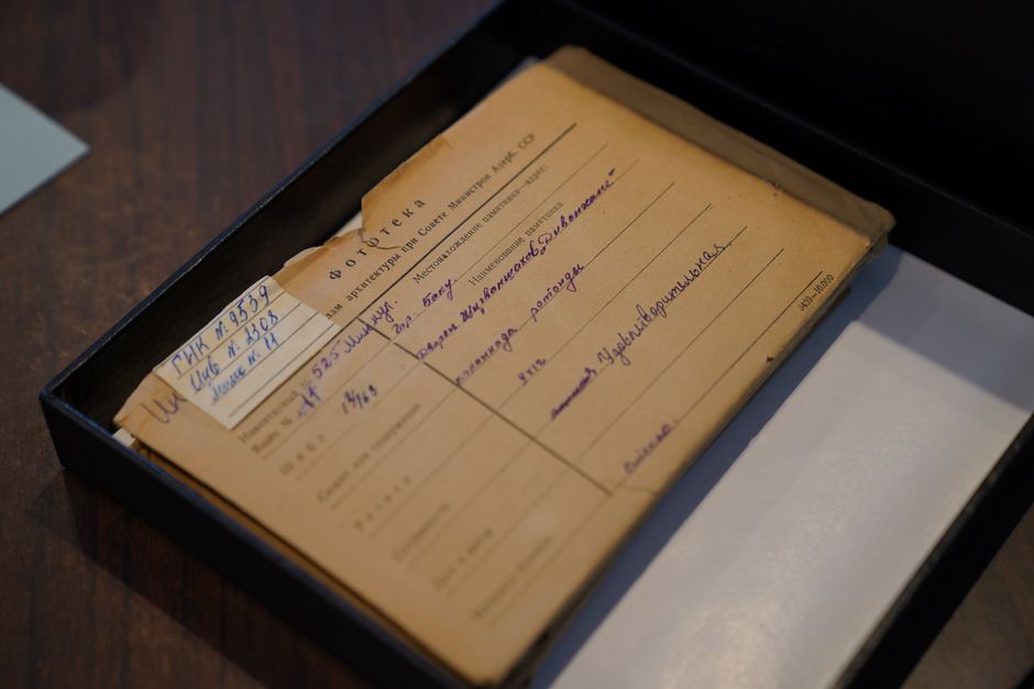
A citation is more than a signal of intellectual ancestry. In technical work, it directs readers to assumptions embedded in an experiment: an earlier feature representation, a corpus description, a scoring protocol, or an algorithmic implementation. Standard bibliographic details—authors, title, venue, year, and page range—made those paths easier to follow across libraries and later digital archives.
Citation practice also established continuity in small or emerging fields. Researchers working on a low-resource language could show that their work belonged to an evolving technical conversation rather than a one-off local project. Careful citation also exposed a recurring limitation: methods built around well-funded languages and large benchmark datasets could not simply be transferred without reconsidering data collection, linguistic structure, and evaluation.
Shared benchmarks accelerated progress—and narrowed attention
Benchmarks offered a practical answer to the comparison problem. When many groups evaluated the same corpus, image set, document collection, or tracking sequences, improvements became easier to detect. Standard tasks encouraged reusable tools and clearer baselines. A student could begin with a known benchmark rather than building every component from scratch.
The convenience came with costs. A benchmark models a real problem; it is not the problem itself. Systems can be tuned to the quirks of a particular dataset: studio-quality speech, restricted camera angles, a narrow range of document fonts, or diagnostic images collected under one acquisition protocol. Researchers may report small gains that do not carry over to new languages, hospitals, or deployment settings.
| Convention | What it enabled | Typical limitation |
|---|---|---|
| Shared dataset | Direct comparison across groups | Overfitting to dataset-specific conditions |
| Common metric | Compact reporting of performance | Can hide uneven errors across subgroups |
| Peer review | Structured scrutiny before publication | Limited time and variable reviewer expertise |
| Proceedings archive | Durable record of methods and claims | Metadata and supplementary materials may be incomplete |
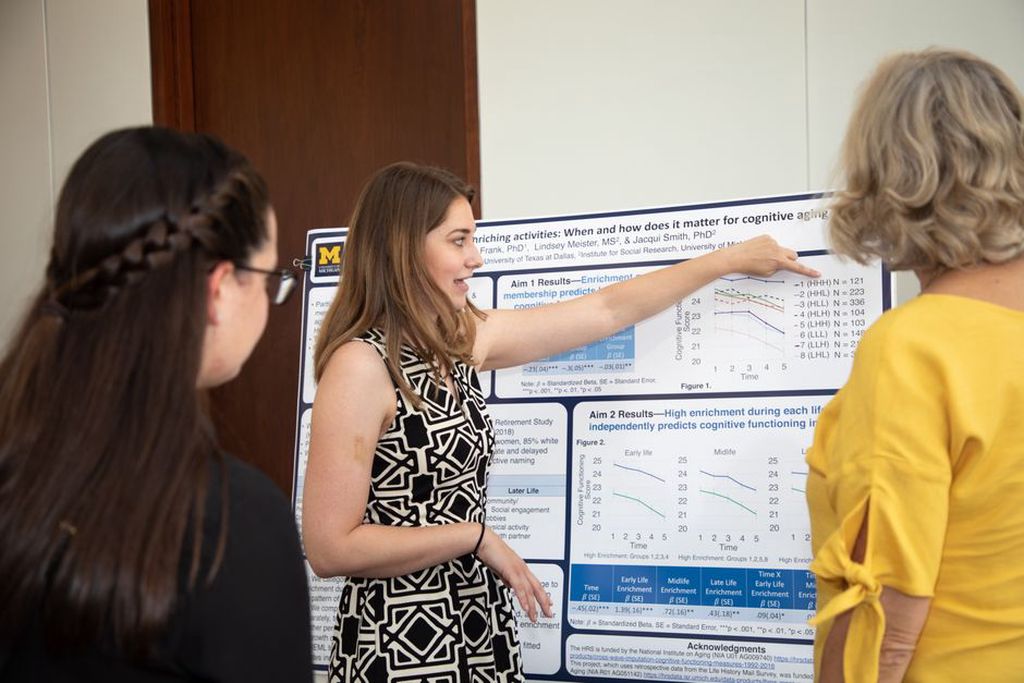
| Poster and discussion session | Fast technical exchange and collaboration | Important feedback may remain undocumented |
The strongest research cultures treated benchmarks as instruments rather than final authorities. They paired benchmark scores with cross-condition tests, error analysis, and descriptions of who or what the data represented. This was especially important for biometric and medical systems, where aggregate performance could conceal serious variation by demographic group, sensor type, or clinical site.
Conventions also distributed credit and access
Authorship order, acknowledgments, affiliation lines, and funding statements shaped who became visible in the technical record. These conventions could recognize people who designed algorithms, collected data, built instruments, transcribed speech, annotated images, or supported computing infrastructure. They could also conceal labor when contributions were poorly documented.
In low-resource language technology, acknowledgment was more than etiquette. Community members, language experts, and annotators often supplied knowledge that generic engineering practice could not replace. Explaining how data were obtained, who participated, and what permissions governed their use improved scientific interpretation and ethical accountability. The same applies to clinical image repositories and biometric datasets: provenance affects both validity and governance.
A useful way to read an older conference paper is to place one result table beside its experimental section. Identify the test set, baseline, metric, and exclusions, then look for the authors’ explanation of the largest error category. The table states the claim; the surrounding method shows why it should count as evidence.