
A fingerprint matcher does not determine whether someone is “really” the person they claim to be. It compares a newly captured sample with a stored reference, produces a similarity score, and applies a threshold. That modest distinction shaped decades of biometric research: verification is a statistical decision made under imperfect sensing conditions, not a direct reading of identity.
Academic biometrics emerged where pattern recognition, signal processing, computer vision, and security engineering met. Researchers looked for ways to recognize relatively stable physical or behavioral characteristics while accounting for noise, changing conditions, aging, injury, differences in presentation, and deliberate attempts to deceive a sensor.
Verification and identification are different tasks
Biometric systems are often discussed as though they answer a single question. In practice, verification and identification call for different designs.
- Verification, or one-to-one matching, tests a stated claim. A person presents an identity label, such as an account or credential, and the system compares the new biometric sample only with that person’s enrolled template.
- Identification, or one-to-many search, tries to find a person in a database without relying on a claimed identity. The system compares a probe against many enrolled records.
Verification appealed to access-control systems because it limited the search. Identification was important in forensic work, duplicate-enrollment detection, and large civil databases, but it brought harder problems of scale, false matches, and the legitimacy of searching for people who had made no active claim.
Another distinction matters: authentication is the wider process of establishing a claim, while biometrics is only one possible factor. A password is something known, a token is something possessed, and a biometric is commonly described as something a person is or does. Researchers increasingly treated biometrics as one component in a layered decision process, rather than a universal substitute for other credentials.
From distinctive traits to computable features
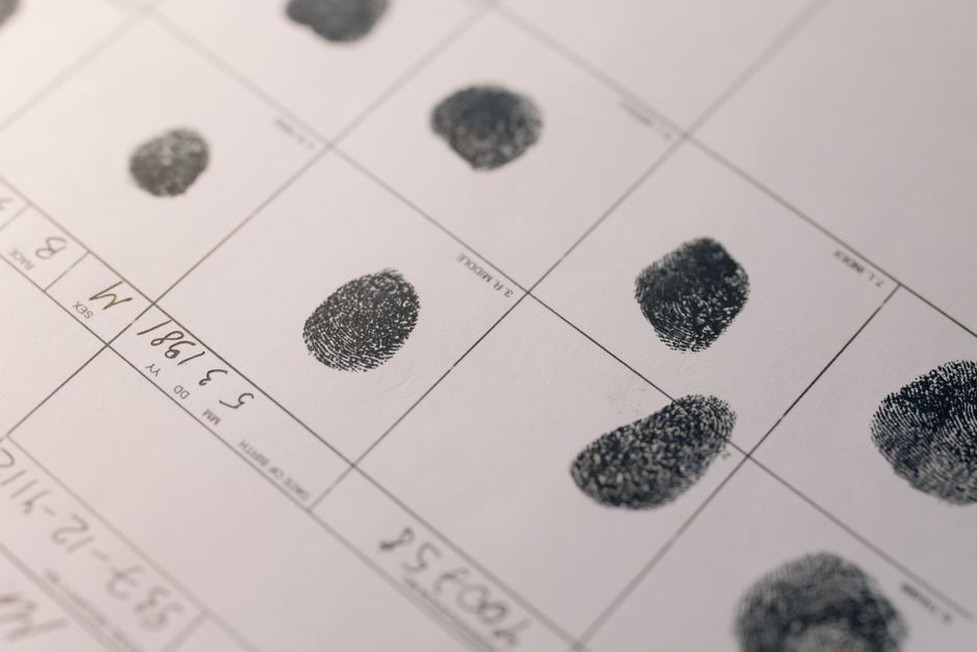
Fingerprints were used long before digital systems because trained examiners could classify and compare ridge patterns. Computerized research translated that work into image-processing stages: enhance a print, locate ridge endings and bifurcations, record their positions and orientations, align two samples, and estimate correspondence. The resulting template was not a photograph of a finger, but a compact mathematical representation intended for matching.
Each modality required its own processing pipeline. Face recognition had to contend with pose, illumination, expression, focus, and partial occlusion. Iris recognition analyzed texture in the annular region around the pupil after segmenting eyelids and reflections. Speaker recognition extracted spectral and temporal properties of speech, while separating person-specific cues from the effects of language, microphone, health, and transmission channel. Hand geometry, signature dynamics, gait, and keystroke rhythm offered other ways to model identity.
The common pattern-recognition pipeline
Despite those differences, much biometric research followed a familiar sequence:
- Acquisition: a sensor captures a fingerprint, face image, iris image, voice recording, or behavioral trace.
- Quality assessment: the system identifies blur, weak contrast, clipped speech, poor framing, or other conditions likely to undermine matching.
- Feature extraction: algorithms convert the raw signal into a representation suitable for comparison.
- Template creation and protection: the representation is stored, ideally with safeguards that limit exposure if a database is compromised.
- Matching and decision: a comparison score is evaluated against a threshold chosen for the intended risk and operating conditions.
The sequence also explains why a biometric device can fail when the matching algorithm itself is capable. A badly placed finger, glare on eyeglasses, a noisy telephone line, or a poor enrollment image can weaken the evidence before comparison even begins.
Errors were central research objects, not minor exceptions
Biometric evaluation centers on two opposing errors. A false match occurs when the system accepts an incorrect comparison. A false non-match occurs when it rejects a valid user. Tightening a threshold generally lowers false matches while raising false non-matches; loosening it has the opposite effect.
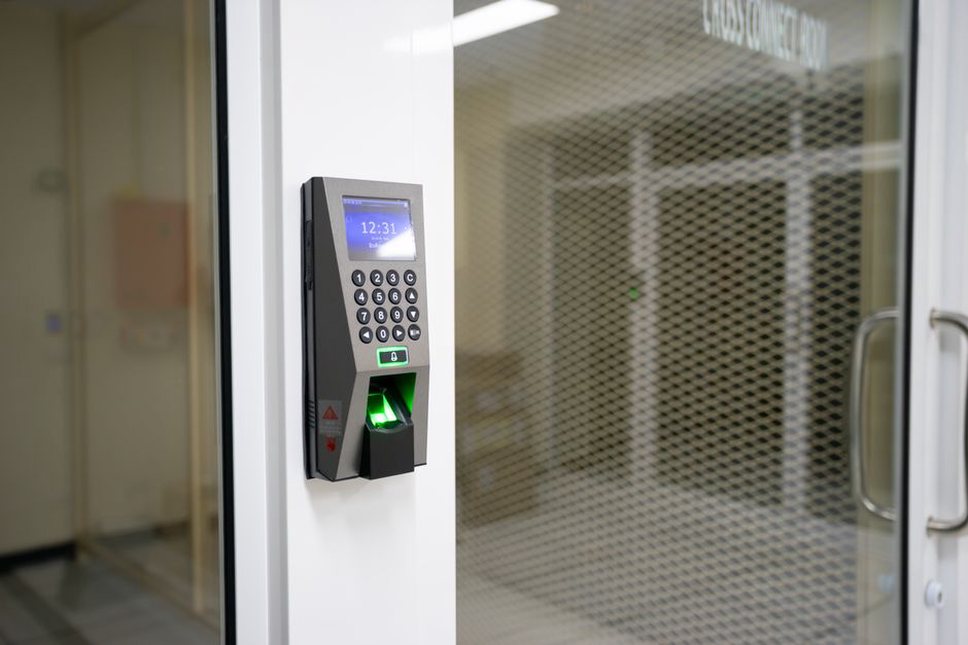
Researchers mapped this trade-off with measures such as false match rate and false non-match rate, often over several thresholds. Equal error rate offered a convenient comparison point in some studies, but it did not determine the appropriate operating point for a real system. A border-control system, a phone-unlock feature, and a time-attendance terminal face very different consequences when they make mistakes.
Quality and population variation made aggregate performance figures harder to interpret. Results from carefully collected laboratory samples could not automatically predict what would happen when people used a device quickly, outdoors, or with little instruction. Evaluation protocols gradually gave more attention to independent test data, repeatable benchmarks, sensor variation, aging effects, and demographic analysis. Such work made results more interpretable, while showing how much a single headline accuracy figure can conceal.
For a focused account of how mid-2000s systems translated these measures into operational choices, see Biometric Recognition in the Mid-2000s: Systems, Errors, and Deployment Lessons.
Why multimodal biometrics became compelling
No biometric trait is universally available, equally easy to capture, or equally distinctive in every situation. Someone may have worn fingerprints; a face may be obscured; a voice may be affected by illness or background noise. Multimodal research therefore examined combinations such as face and fingerprint, iris and face, or voice and a knowledge-based credential.
Fusion could take place at several levels: through raw sensor information, joined feature vectors, combined match scores, or a final decision based on several subsystem outputs. Score-level fusion was especially practical because independently developed matchers could remain intact. It also introduced new difficulties: scores needed calibration, missing modalities needed to be accommodated, and requiring several captures for every transaction could make a system harder to use.
Security research moved beyond recognition accuracy
A system may recognize enrolled people accurately and still be vulnerable. Presentation attacks—using an artifact, recording, mask, or other substitute to fool a sensor—showed that matching alone was not enough. Researchers investigated liveness detection and presentation-attack detection, seeking signs that a signal came from a living, present subject rather than a replica. Performance varied by modality and attack type, so claims of “spoof-proof” biometrics warranted caution.
Template protection became a second major concern. Passwords can be changed after disclosure; biological traits cannot simply be replaced. This led to work on protected templates, biometric cryptosystems, and revocable representations intended to prevent straightforward reconstruction or cross-database linkage. Such methods must balance privacy, matching performance, and the ability to recover operationally when problems arise.
Identity verification also became a governance problem
Biometrics connect a technical measurement to someone’s access, mobility, benefits, employment, or reputation. Consent, purpose limitation, retention periods, access controls, audit trails, and routes for contesting decisions are therefore part of system quality, not administrative afterthoughts.
Research also made clear why human review matters in high-consequence cases. A similarity score is evidence produced by a particular sensor, algorithm, threshold, and dataset; it is not an explanation of identity on its own. When an automated result blocks an account or flags a possible match, a reviewer needs enough context to assess sample quality, matching conditions, and alternative explanations.
A useful research record preserves the operating threshold, sensor model, enrollment protocol, test-set composition, and failed-capture rate alongside match results. Those details allow later investigators to tell the difference between a genuine improvement in recognition and a change in data collection or evaluation conditions.