
A biometric system in 2005 was rarely a single “identity detector.” It was a sequence of decisions: capture a sample, judge its quality, isolate the relevant pattern, convert it into a compact representation, compare it with stored references, and decide whether the evidence was sufficient. A fingerprint reader might fail before matching even began because a finger was dry, wet, scarred, badly positioned, or recorded with poor contrast. That ordinary problem drove a great deal of research during the period.
By the mid-2000s, biometrics were moving beyond laboratory demonstrations into border control, workplace access, civil identity programs, and forensic support. The move into service did not settle the underlying science. It exposed the gap between a controlled benchmark and a deployment involving different sensors, rushed users, aging templates, changing light, and tight limits on false matches.
Recognition was a problem of evidence, not magic
Biometric recognition generally took two forms. Verification, or one-to-one matching, asked whether a person matched a claimed identity—for example, a cardholder presenting a finger. Identification, or one-to-many search, compared an unknown sample against a database. Identification was harder because even a low chance of an accidental match could produce a substantial list of plausible candidates in a large collection.
Researchers described this trade-off through error rates. A false match rate measured how often an impostor was accepted; a false non-match rate measured how often a legitimate user was rejected. Moving the decision threshold could reduce one error while raising the other. The widely used equal error rate, where the two curves met, offered a convenient comparison point, but it was not an operating policy. An airport gate, an employee time clock, and a forensic candidate-search system could reasonably use very different thresholds.
| Stage | Typical mid-2000s concern | Why it mattered |
|---|---|---|
| Acquisition | Sensor resolution, lighting, pose, contact quality | Poor input limited every later stage |
| Feature extraction | Finding stable ridges, iris texture, facial landmarks, or hand geometry | Features had to survive ordinary variation |
| Matching | Similarity scoring and threshold selection | Scores had to be interpreted for a specific risk setting |
| Operational review | Exceptions, retries, demographic variation, audit trails | Real deployments needed accountable decisions |
Fingerprints remained the practical benchmark
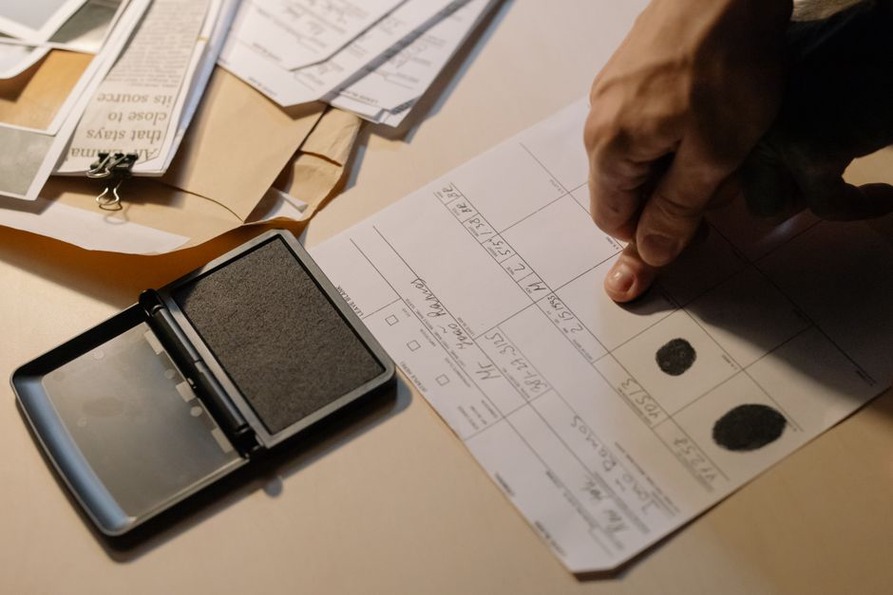
Fingerprint recognition had a long forensic history and an established vocabulary of ridge endings and bifurcations, commonly called minutiae. Automated systems typically enhanced the fingerprint image, estimated ridge flow, detected minutiae, and compared their spatial arrangements. Academic work continued on image enhancement, tolerance of distortion, and matching where only part of a print overlapped.
The main deployment problem was not simply whether a system could find minutiae. It was whether it could find them consistently under different capture conditions. Optical, capacitive, and other sensors produced different image characteristics. Manual work, age, skin condition, and finger pressure could all affect a capture. Enrollment therefore mattered greatly: a poor initial template could cause repeated failures long after the system was installed.
Fingerprints also marked an important change in system design. Rather than treating every acquired print as equally useful, systems increasingly included quality assessment. A quality score could prompt another capture, mark a sample for closer handling, or stop a poor image from being treated as strong evidence. That was less conspicuous than a new matching method, but it addressed a common cause of operational error.
Face recognition encountered uncontrolled reality
Face recognition was appealing because a camera could capture an image without requiring someone to touch a reader. Yet it was highly sensitive to everyday variation: lighting, head pose, expression, camera angle, focus, compression, facial hair, glasses, and the passage of time. A system that worked well on carefully prepared image sets could perform much worse when comparing an indoor identity photograph with a low-resolution outdoor video frame.
Researchers in the mid-2000s worked on local facial features, subspace methods, illumination normalization, three-dimensional face data, and improved alignment. Each addressed part of the same difficulty: an image of a face is not the face itself. A useful representation had to distinguish identity-related structure from variation caused by capture conditions.
Evaluation programs made those limits easier to see. Large shared tests and datasets gave researchers a common basis for comparison, but they also showed how strongly reported accuracy depended on the protocol. Was the task frontal still-image matching? Was there a time gap between enrollment and probe images? Were subjects cooperative? A single headline percentage could not answer those questions.
Why facial systems were not interchangeable
- Controlled access: cooperative users, fixed cameras, and consistent lighting could support repeatable verification.
- Document comparison: matching a live capture to an identity-photo record introduced differences in age, pose, and capture device.
- Video search: low resolution and motion blur made detection and tracking as important as identity matching.
- Forensic investigation: a match score often served as a lead for expert review rather than an autonomous final decision.
For that reason, “face recognition” described a family of tasks, not one uniform capability.
Iris, hand geometry, and multimodal designs
Iris recognition rested on a persuasive technical idea: the visible iris contains detailed texture that can be encoded and compared efficiently once the pupil and iris boundaries are located accurately. Controlled near-infrared imaging reduced some visible-light variation and supported high-quality capture. The trade-off was operational specificity. Users had to position themselves correctly, and the camera needed a suitable view of the eye.
Hand geometry systems measured broad hand and finger dimensions. They could work well for verification in managed settings because capture was quick and templates were relatively compact. Their ability to distinguish between individuals was generally lower than fingerprint or iris methods, so suitability depended on the size of the enrolled population and on whether another credential was used alongside the biometric.
Voice biometrics offered another option, particularly for telephone authentication and speaker recognition. Voice, however, changes with microphones, illness, background noise, emotion, channel effects, and speaking style. This helped drive interest in multimodal biometrics: combining two or more sources of evidence, such as face and fingerprint, could improve performance when one signal was weak. Fusion was more complicated than adding scores. Scores needed normalization, missing samples required explicit treatment, and related failure modes could weaken an apparently diverse combination.
For a broader account of how academic work organized these modalities and evaluation practices, the blog’s history of biometric identification in mid-2000s academia provides useful research context.
Standards made interoperability a research issue
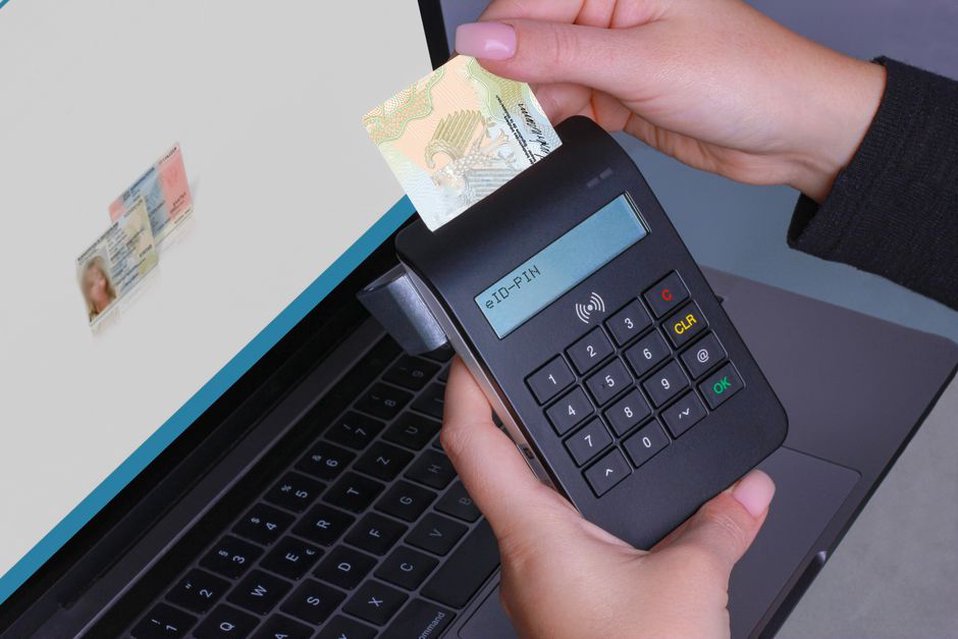
As institutions began exchanging biometric records, interoperability became as important as recognition accuracy. A template created by one device or vendor needed a defined representation if it was to be stored, transmitted, or compared elsewhere. The period brought major attention to common interchange formats for fingerprints, face images, and iris data, alongside broader work on biometric data exchange and performance testing.
Standards did not remove the hard choices. A format could define how to encode an image or template without guaranteeing that two implementations would compare samples in the same way. Compression could reduce file size while affecting forensic or automated usefulness. Enrollment guidance, image-quality requirements, and transaction logs became practical parts of the system rather than administrative afterthoughts.
What deployments taught researchers
Operational experience made population effects difficult to ignore. Performance could vary by age group, occupation, sensor type, environmental conditions, and enrollment procedure. Failure-to-enroll and failure-to-acquire rates mattered alongside matching accuracy. A system that could not obtain a usable sample from part of its intended population placed extra burdens on those users and on the staff handling exceptions.
Privacy and governance were technical design concerns as well. Biometric traits cannot be handled exactly like passwords: a person cannot simply replace a fingerprint or face after a compromise. Responsible systems needed purpose limits, access controls, retention rules, protected storage, audit mechanisms, and clear procedures for correction or appeal. A biometric template is not necessarily a full image, but it remains sensitive personal data and can create risk when linked across databases.
A disciplined way to interpret a 2000s performance claim
- Identify the modality and task: verification, identification, or candidate ranking.
- Check the dataset conditions, including cooperation, sensor type, time lapse, and image quality.
- Look for false-match, false-non-match, acquisition, and enrollment failures rather than one accuracy figure.
- Ask what threshold and human review process the intended deployment used.
- Separate a research benchmark from evidence of reliable performance in a new environment.
A 2006 evaluation result is meaningful only when read alongside its sensor, protocol, population, threshold, and exception-handling procedure. That lesson was one of the period’s lasting contributions: better matching methods mattered, but so did a clearer way to measure systems whose failures carried administrative, legal, and human consequences.