
A talking machine has always involved a compromise: intelligibility, naturalness, memory, and available computing power pull in different directions. Early systems sounded mechanical not because their designers failed to understand speech, but because speech changes rapidly and in overlapping ways—pitch, resonance, timing, and articulation—that limited hardware could not easily represent.
Speech synthesis did not progress along a single path toward a more pleasant voice. Its history is one of competing accounts of language and sound: mechanical articulators, electronic vocal-tract models, rule-based text-to-speech programs, recorded speech units, and statistical methods trained on data. Each approach widened access to spoken information for people with different literacy needs, disabilities, telephone constraints, and language backgrounds.
From mechanical speech to acoustic models
Wolfgang von Kempelen’s speaking machine, developed in the late eighteenth century, remains one of the best-known early experiments. Bellows, a reed, and adjustable passages were meant to imitate the lungs, vocal cords, and vocal tract. The machine could produce vowel-like sounds and some consonants. Its lasting importance was not fluent speech, but its underlying claim: speech could be studied as a physical process rather than treated as an inexplicable human faculty.
That idea shaped later work in acoustics and phonetics. During the nineteenth and early twentieth centuries, researchers examined the links between articulatory movement and sound. The source-filter theory associated with Gunnar Fant became especially influential. It describes voiced speech as a source—usually periodic vocal-fold vibration—shaped by the resonances of the vocal tract. These resonances, known as formants, and their changing frequencies provide important cues for vowels and many consonantal transitions.
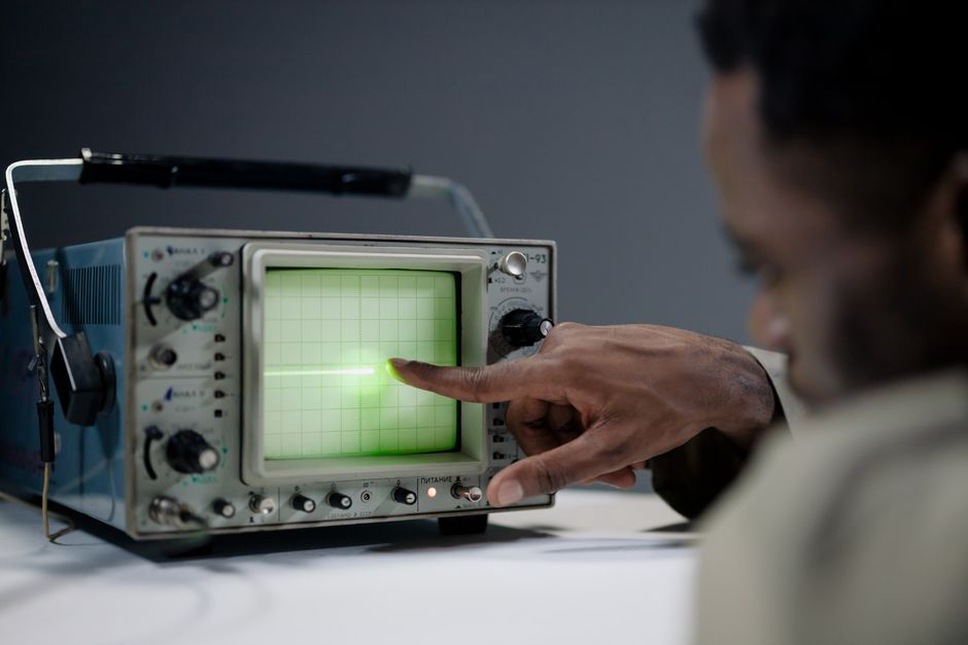
Electronic synthesis became more practical once engineers could control such acoustic parameters directly. A formant synthesizer produced speech through rules or parameter tracks rather than replaying recorded words. It could be compact and could, in principle, produce any allowed sequence of phonemes. But its limitations were instructive. A system may select the right phonemes and still sound distinctly unnatural if it mishandles duration, stress, coarticulation, or intonation.
Why a phoneme inventory was never enough
Early text-to-speech work sometimes treated the problem as a sequence of mappings: letters to phonemes, then phonemes to sound. English quickly showed why that was insufficient. The spelling ough is pronounced differently in though, through, rough, and cough. Other writing systems raise different problems. They may omit vowels, encode morphology more directly than pronunciation, or use symbols whose readings depend on context.
A correct phonemic transcription is only the beginning. A phone changes acoustically in response to neighboring phones; this is coarticulation. The /t/ in “tea,” for instance, is not realized exactly like the /t/ in “too,” because the following vowel affects tongue position before the consonant has finished. Prosody introduces further uncertainty. Phrase boundaries, emphasis, speaking rate, and sentence type all affect timing and pitch, while text often leaves these choices unspecified.
- Text normalization expands or interprets dates, numbers, abbreviations, currencies, and symbols.
- Grapheme-to-phoneme conversion derives pronunciations from spelling, dictionaries, and contextual rules.
- Prosody assignment estimates phrasing, prominence, durations, and pitch movement.
- Waveform generation turns linguistic and acoustic representations into audible speech.
These stages made synthesis a meeting point for phonetics, linguistics, signal processing, and computer science. They also show why a voice built for one language could not simply be carried over to another by translating its dictionary.
The landmark systems that changed expectations
Bell Labs played an important part in mid-twentieth-century speech research. Demonstrated in 1939 by operator Helen Harper, the Voder was a manually controlled electronic device based on Homer Dudley’s work. A trained operator used keys and controls to shape a buzz or noise source into speech-like output. The Voder was not text-to-speech in the later sense, yet it showed that intelligible speech could be produced from controllable acoustic components.
Dudley’s earlier Vocoder served a different immediate purpose: speech analysis and communication. It represented speech through slowly changing spectral-envelope information and an excitation signal. This separation mattered widely because elements of speech production could then be analyzed, transmitted, modified, or resynthesized.
During the 1960s and 1970s, research groups began building systems that accepted ordinary text. MITalk, associated with Dennis Klatt, became influential for its intelligibility and fine-grained control of formant-synthesis parameters. Klatt’s work also made the synthesizer useful in experimental phonetics. Researchers could test which acoustic cues listeners needed to hear a distinction. The machine was therefore more than a voice generator; it was an instrument for studying speech perception.
The 1980s brought a prominent public example of synthesis as assistive technology. DECtalk, developed by Klatt and colleagues at Digital Equipment Corporation, offered several distinct synthetic voices and became closely associated with the voice used by physicist Stephen Hawking. It was plainly artificial, but clear, portable, and dependable enough to support practical communication. Human resemblance was not the only measure that mattered. Consistency, comprehensibility, latency, and a user’s control over expression mattered as well.
Recorded fragments and the rise of more natural speech
Formant systems attempted to model speech production. Another line of work pursued realism by concatenating recorded material. Diphone synthesis stores units that span the transition between one phoneme and the next. Since coarticulation is built into each unit, a relatively modest inventory can yield broadly intelligible speech. The joins can still sound abrupt, however, and extensive prosodic changes may reduce quality.
Later unit-selection systems drew on far larger databases of recorded phrases, words, syllables, or subword segments. For a target utterance, the system selected units by balancing two concerns: how closely a candidate matched the intended linguistic context, and how smoothly it connected with neighboring units. When the recordings covered a target context well, the result could sound remarkably natural.
| Approach | Primary strength | Persistent limitation |
|---|---|---|
| Formant synthesis | Small footprint and flexible control | Natural prosody and timbre are difficult |
| Diphone concatenation | Captures transitions with manageable inventories | Audible joins and limited expressive range |
| Unit selection | High naturalness in well-covered contexts | Large recordings and unpredictable coverage gaps |
| Statistical parametric synthesis | Compact voices and systematic adaptation | Historically prone to oversmoothed sound |
In the 1990s and 2000s, statistical parametric synthesis presented a different compromise. Instead of selecting a recorded waveform, it modeled acoustic parameters from annotated speech data, often with hidden Markov models. Such systems could build a voice from comparatively limited resources, adapt toward a target speaker or style, and require less storage than large unit databases. Their characteristic smoothness could make speech less vivid, yet the method mattered greatly to groups working with languages that lacked extensive commercial corpora.
Language barriers are engineering and social barriers
Speech synthesis is often presented as a way to cross language barriers, but that phrase can hide unequal starting conditions. A well-resourced language may have pronunciation dictionaries, broadcast-quality recordings, trained annotators, standardized writing practices, and abundant text. A minoritized or under-resourced language may lack readily reusable versions of those resources. The issue is not that its speakers possess less language; digital materials and institutional support are distributed unevenly.
For these languages, an initial usable system may depend on careful, modest choices rather than a large neural model. Work might begin with a verified orthography, a small pronunciation lexicon, basic text-normalization rules, and recordings made by one speaker using a consistent microphone. Community review matters, especially for names, borrowed words, dialect forms, and culturally specific expressions. A voice that repeatedly mispronounces local names can lose trust quickly, regardless of its technical fluency.
Research on under-resourced languages also exposed assumptions inherited from English. Tone languages need pitch treatment that preserves lexical distinctions. Languages with rich morphology can generate forms absent from a fixed dictionary. Languages written in multiple scripts require decisions about input conventions and transliteration. Code-switching creates another practical challenge: speakers may alternate languages within a sentence, requiring compatible pronunciation models and coherent voice behavior.
These concerns connect to the wider task of adapting pattern-recognition systems to uncontrolled conditions. Our post on information accommodation in pattern recognition examines why systems built around controlled assumptions often require explicit ways of handling variation. In speech synthesis, that variation includes spelling practices, regional pronunciation, preferred terminology, and the conditions in which a voice will actually be heard.
Evaluation beyond “does it sound human?”
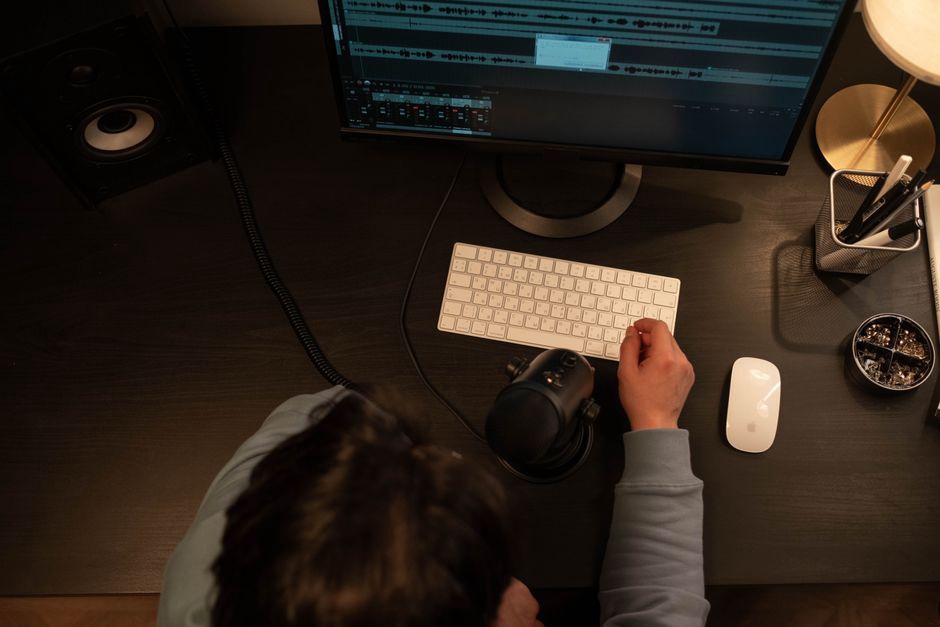
Early evaluation often focused on intelligibility. Diagnostic rhyme tests and modified rhyme tests asked listeners to choose among carefully selected alternatives, making it possible to measure confusable consonants. Sentence-level tests measured how much content listeners could recover. These methods remain important: an attractive voice that obscures a medication name, bus stop, or emergency instruction is not adequate.
Naturalness ratings added another measure, commonly asking listeners how closely speech resembled a human speaker. They are not a final verdict. Evaluation should also consider the intended task, listener familiarity, noise, latency, pronunciation coverage, and the views of the language community. A screen reader user may prefer stable pronunciation and quick navigation to theatrical expression. An educational application may need slow, segmentable speech, while a public-information service may require clarity over a poor telephone line.
- Test pronunciations of high-value vocabulary, including names, places, dates, and technical terms.
- Include dialect and code-switching examples that reflect actual local use.
- Separate intelligibility testing from naturalness judgments.
- Record the conditions of listening, such as headphones, loudspeaker, or telephone audio.
- Return findings to speakers and reviewers before presenting the system as representative of the language.
What the pioneers left behind
Early synthesis research left behind a set of methods as much as a collection of machines. Mechanical devices made articulation visible. Vocoders separated source from filter. Formant systems exposed acoustic control. Concatenative systems demonstrated the value of recorded detail, while statistical approaches formalized variation and adaptation. Neural systems use different computational methods, but they still face the same practical questions of pronunciation, prosody, coverage, consent, and evaluation.
Conference culture helped these ideas circulate among speech laboratories, phonetics departments, accessibility researchers, and language-technology groups. The institutional routes through which methods moved via workshops, proceedings, and recurring meetings are examined in the impact of 2000s academic conferences on AI research. In speech synthesis, those exchanges mattered because a rule for one writing system, a corpus-design practice, or an evaluation protocol could become the basis for work in another community.
The most practical historical lesson is to preserve the recordings, prompt texts, pronunciation decisions, speaker permissions, and versioned normalization rules alongside the finished voice. Without that small archive, later researchers may hear the output but have no reliable way to explain why a word was pronounced as it was—or to correct it when community usage changes.