
A scanner can capture every mark on a ledger page and still have no idea which figure belongs to which account. The same problem appears on a form: recognizing a handwritten number is not enough unless the software can link it to the right label. Document analysis has long dealt with that gap between making a page image and recovering the relationships that give it meaning.
Before the scan: paper as a working system
Paper documents were never just containers for words. Boxes and labels guide someone filling out a form. Columns, headlines, and captions establish a newspaper’s reading order. A scientific article separates its argument from footnotes, figures, and references. Clerks, librarians, and archivists could read these arrangements while handling physical pages, then record selected facts in catalogs, indexes, or databases.
Early mechanized document work often sidestepped the full page. Punched cards and later data-entry terminals represented selected fields rather than the appearance of the original sheet. Microfilm stored page images compactly, but a reader still had to find and interpret the information. Both approaches addressed real storage or retrieval needs; neither could automatically turn an arbitrary printed page into structured, searchable content.
Scanning made that limitation harder to ignore. Digitization could spare fragile originals repeated handling and make copies available at a distance. It could also leave an institution with a vast collection of images that remained difficult to search.
When characters became machine-readable
Optical character recognition, or OCR, began with the narrower problem of identifying printed characters by their visual patterns. Early practical systems generally worked best with controlled fonts, clean printing, and predictable layouts. Those conditions mattered: reading a standardized line is quite different from reading a creased page with several typefaces, marginal notes, and a table.
As computing and scanning improved, OCR could handle more kinds of printed material. A typical workflow corrected the image, located likely text regions, separated lines or characters where needed, and assigned symbols to the shapes. Recognition was not always character by character. Some methods considered whole words or sequences, using context to choose between uncertain letters: neighboring characters might make a blurred shape more likely to be an “l” than an “i.”
Context can mislead, too. An unusual surname in a historical register might be read as a familiar word. On an invoice, one wrong digit may matter more than several errors in ordinary prose. The useful measure of OCR accuracy depends on the job: imperfect text may be enough to make an archive searchable if readers can inspect the images, while extracting financial figures may call for verification of every critical field.
The page proved more complex than a line of text
Consider a two-column article with a photograph between the columns. Even if every word is recognized correctly, the result is misleading if software reads across the page into the other column or drops a caption into the middle of a sentence. Finding text is one problem; establishing its order and role is another.
Researchers divided pages into regions using whitespace, ruling lines, alignment, connected components, and other visual clues. Some methods built upward from small marks, grouping characters into words, lines, and blocks. Others identified large areas first and then subdivided them. Neither approach worked in every case. A decorative border could be mistaken for a boundary, while a table could be split into unrelated blocks.
By the mid-2000s, academic research increasingly approached a page as evidence for a particular task, rather than as text waiting to be transcribed. A system might have to identify a title, pair a form label with its answer, or keep a bibliography separate from the main argument. The blog’s account of how 2000s document processing went beyond OCR examines that distinction between transcription and task-oriented interpretation.
Different pages demanded different decisions
- Books: page numbers and running headers often do not belong in continuous reading text, though their positions help with citation.
- Forms: an entry’s position beside a printed label may matter more than the order of the words.
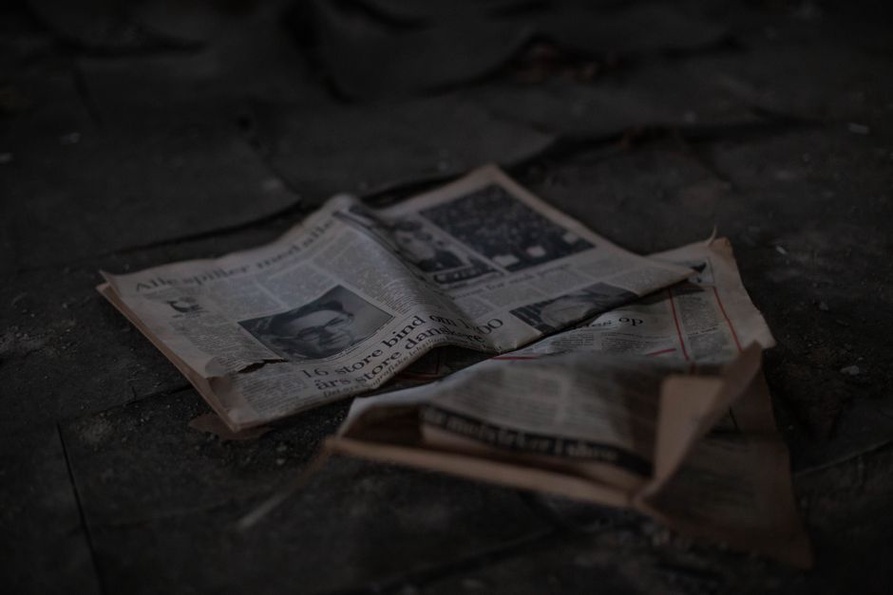
- Newspapers: columns, headlines, captions, and advertisements follow different reading paths.
- Tables: a number needs its row and column headings; a plain list of recognized values loses those links.
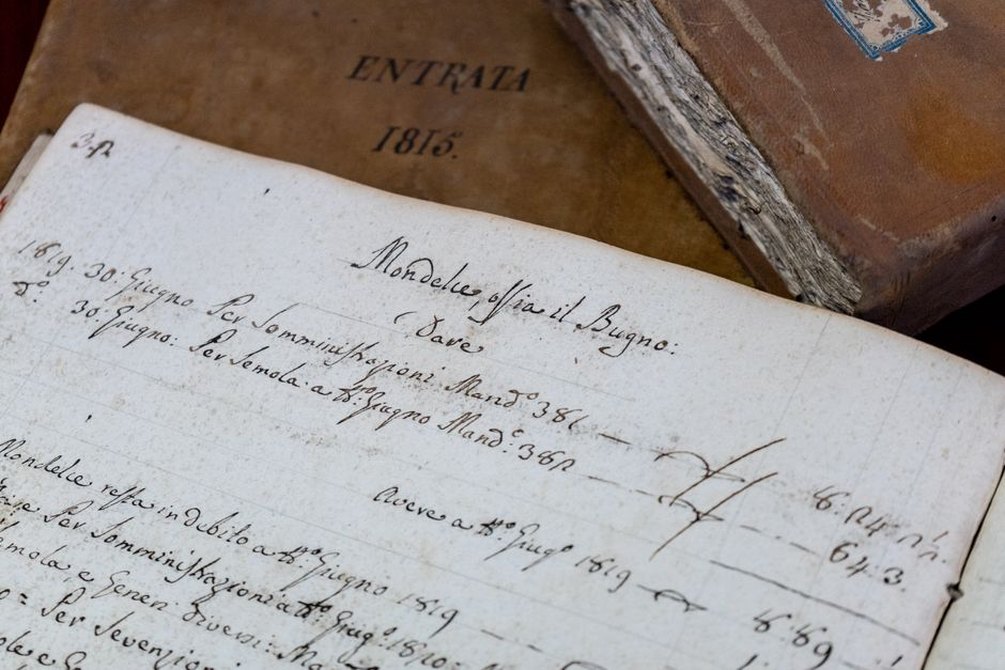
- Handwritten records: variable letter shapes introduce uncertainty before layout and meaning can be resolved.
That variety made a single pipeline hard to design. Templates could handle repetitive forms until a field moved. Rules built for clean typesetting could stumble over photocopies. Statistical methods could learn more flexible patterns, but they needed representative labeled pages, which rare document types seldom provided in quantity.
From scan files to usable collections
The shift to digital changed what counted as a finished document. One scanned page might have an original image, a cleaned image for recognition, OCR text, coordinates for words or regions, and metadata about its source. These are not interchangeable. The original lets a researcher check a doubtful reading; coordinates let a search interface highlight a match; metadata ties a page to a volume, date, or collection.
Much of the work happens outside recognition software. Pages must be ordered correctly, and missing leaves or duplicate scans recorded. Resolution and contrast need to preserve fine marks without producing unwieldy files. Heavy-handed cleanup can erase faint handwriting or punctuation, so the processed image should not simply replace the original capture.
Provenance matters just as much. A transcribed date might come from a printed heading, a handwritten annotation, or a catalog entry. Keeping those sources distinct allows later corrections and stops an OCR guess from appearing as authoritative as the document itself.
What mid-2000s research contributed
In the mid-2000s, document analysis brought together computer vision, pattern recognition, language processing, and digital-library work. Researchers studied page-region classification, handwriting recognition, field location, and information extraction from tables and technical articles. Many systems still depended on deliberately chosen visual features. Line density, character shapes, position, spacing, and texture could help distinguish a title from body text or a photograph from a paragraph.
Machine learning offered ways to combine those clues, but results depended heavily on the material used for training and testing. A classifier trained on clean journal pages might struggle with faxed forms. A handwriting recognizer tested on one writer or collection might perform differently on another. Even “correct” meant different things across tasks: a misplaced word boundary might cause little trouble, while attaching an amount to the wrong table row could make the extracted record unusable.
Researchers therefore measured performance at several levels. Character and word accuracy described transcription; region accuracy described page segmentation; field-level measures tested whether the requested facts were recovered. The scores are not interchangeable. A system might produce readable prose while identifying the wrong author, or find the right field but misread its contents.
Why comparison was difficult
Documents differ in ways that simple image labels cannot capture. Two scans of the same form may differ because one is skewed or has been photocopied repeatedly. Institutions may also use different field definitions for similar material. Ground truth—the reference transcription and layout used to judge a system—requires human decisions about ambiguous marks, reading order, and whether marginal notes belong in the main text.
Those decisions make evaluation protocols useful historical evidence. When assessing an older result, it helps to ask whether testing used unseen document sources, whether anyone corrected the output manually, and which errors the reported measure counted. A high score on isolated text lines does not show that the system could reconstruct a complete multipage record.
The digital shift did not end the role of the page
Later systems gained stronger image models and better ways to combine visual and textual context. They could learn some patterns from examples that earlier researchers would have written as explicit rules. Still, the basic problem remained: a document is an image, a sequence of words, and an arrangement of meaningful parts. Converting between those forms can lose information.
That is one reason many archives keep page images alongside searchable text. Someone checking a disputed word needs to see the printed mark. A reader studying typography or annotations needs the spatial page, not just extracted sentences. Text and sensible reading order are essential for accessibility, while the image remains valuable for verification.
Imagine a digitized census-style form with a handwritten age beside a preprinted name field. The image holds the pen stroke, OCR suggests “31,” and a structured record puts that value in an age column. If the mark might also say “37,” its page coordinates let a reviewer go straight to the entry. Without that link, the database value is much harder to check against the paper it came from.