
A proceedings volume from the 2000s was rarely a polished record of a settled discipline. It was more often a working map of technical limits. Papers placed recognition rates beside false-acceptance and false-rejection rates, described feature-extraction pipelines, and defined their datasets with care. A speech paper might discuss cepstral coefficients, hidden Markov models, and a language-specific lexicon; a vision paper might focus on edge maps, local descriptors, or calibrated cameras. Across these apparently separate subjects, conferences gave researchers a place to discuss how noisy measurements could support defensible decisions.
Pattern recognition conferences occupied a useful middle ground between disciplinary specialization and practical experimentation. Programs brought together document analysis, biometrics, medical imaging, speech, language identification, visual surveillance, and three-dimensional reconstruction. No single learning architecture dominated, nor was there yet a benchmark culture on the later scale. Instead, the proceedings show local research traditions adapting statistical classification and signal-processing methods to particular data, languages, hardware, and institutional needs.
What a 2000s Pattern Recognition Conference Actually Did
For researchers, a conference was more than a place to announce a result. It allowed methods to be tested before peers who understood the limits of available data and computing power. Proceedings preserved the method, the experiment, and often its qualifications: small samples, controlled acquisition conditions, limited vocabularies, restricted speaker groups, or uncertain ground truth.
The recurring paper structure reflected that purpose. Authors defined a practical problem, described an input representation, selected a model or classifier, and reported an evaluation. This shared form made comparison possible even when applications differed sharply. A medical-image segmentation study and a fingerprint-matching study could both address image quality, feature selection, decision thresholds, and error trade-offs.
Recurring elements in programs and proceedings
- Invited talks connected local work with broader developments in statistical learning, image analysis, speech processing, and human-computer interaction.
- Oral sessions grouped papers around recognizable problems such as character recognition, speaker recognition, tracking, or image retrieval.
- Poster sessions provided space for narrowly focused experiments, early systems, and exploratory datasets that did not suit a longer presentation slot.
- Demonstrations highlighted the difference between a reported metric and a usable system, especially in speech interfaces, document capture, and biometric devices.
- Proceedings provided a citable record, although formatting and metadata quality varied widely by institution and year.
This format supported a particular kind of interdisciplinary exchange. Researchers did not necessarily share the same application goals, but they used a common vocabulary of features, models, classifiers, training data, validation sets, and errors. Methods moved between domains: Gaussian mixture models appeared in speaker and biometric modeling; hidden Markov models linked speech recognition with sequence analysis; image-processing operations served document examination as well as medical imaging.
A Field Organized by Problems Rather Than a Single Method
The early and middle 2000s are often described simply as the period before deep learning. That description is true, but incomplete. Pattern recognition depended heavily on deliberately chosen representations. Researchers selected features because they encoded assumptions about the object under study: spectral structure in speech, texture in an image, ridge detail in a fingerprint, connected components in a scanned page, or geometric consistency in stereo correspondences.
Preprocessing was therefore central rather than incidental. Illumination normalization, noise removal, segmentation, alignment, voice-activity detection, face localization, skew correction, and feature normalization often determined whether a classifier could be used at all.
Speech, language, and multilingual research
Speech technology featured prominently at many regional and international pattern recognition meetings. Automatic speech recognition was generally treated as a sequence-modeling task: acoustic observations were converted into features, modeled statistically, and decoded against linguistic constraints. Speaker recognition, language identification, and speech synthesis raised related but distinct evaluation questions. Systems had to contend with channel variation, accents, limited recordings, and uncertainty in the input.
For languages with limited digital resources, conference publication carried added importance. It recorded corpora, transcription conventions, pronunciation dictionaries, and baseline experiments that might otherwise remain local or vanish when a project ended. A modest dataset was not necessarily a weak contribution if it made a language or use case technically visible. Scope remained important: results from small, controlled datasets could demonstrate feasibility, but not broad operational reliability.
Regional conferences were especially valuable here. They gave researchers room to discuss local accents, multilingual societies, telephone and broadcast conditions, and resource constraints without requiring every paper to follow the assumptions of high-resource English-language benchmarks. The later paper on bottleneck features for language identification in PRASA 2014 Paper #46 shows how this research line later adopted learned representations while retaining its practical focus on language classification.
Vision, documents, and physical capture
Computer vision sessions reflected similarly broad ambitions. Object-tracking papers combined motion prediction with appearance cues and often struggled with occlusion, changing illumination, and identity switches. Stereo work addressed calibration, correspondence, and the difficulty of assigning matching pixels or features across views. Document-analysis researchers dealt with real pages rather than idealized text: stains, blur, rotation, handwriting, layout variation, degraded archives, and mixed scripts.
Hardware could alter a system's entire error profile. A compact capture sensor, a scanner with uneven illumination, or a camera mounted above a document affected what the rest of the pipeline could achieve. Research on contact image sensors is particularly revealing because it connected document processing and biometric acquisition through a common concern: consistent capture at a usable cost. For a focused account, How Contact Image Sensors Reshaped Document Processing and Biometrics in the Mid-2000s traces that technical connection.
Biometrics and medical imagery
Biometric research made the discipline of evaluation particularly visible. Recognition rates alone could conceal the effects of threshold selection, unequal class distributions, or changing capture conditions. Better papers separated verification from identification and reported measures such as false-match and false-non-match behavior. Conference discussion also showed that a biometric matcher was only one part of a deployed system; sensor quality, enrollment procedures, template handling, and user interaction all shaped the outcome.
Medical-image analysis shared this concern with measurement, though the stakes differed. Segmentation, registration, detection, and classification systems were usually presented as aids to quantitative analysis rather than replacements for clinical judgment. Small datasets, uncertain annotations, and scanner-to-scanner variation complicated validation. The strongest studies stated what the images represented, how reference labels were produced, and whether the evaluation supported a narrow technical claim or a clinically meaningful one.
Why the Conference Record Needs Careful Reading
Proceedings from this period are rich historical sources, but they are not neutral scoreboards. A reported accuracy has meaning only alongside the task definition, data split, acquisition protocol, and error metric. Two systems with nearly identical percentages may have been tested under radically different conditions.
| Question to ask | Why it matters |
|---|---|
| What was the unit of evaluation? | An utterance, page, frame, patient image, or identity can produce very different interpretations of performance. |
| How large and varied was the dataset? | Small or homogeneous collections can overstate generalization. |
| Was training separated from testing? | Without a clear separation, reported results may reflect memorization or protocol leakage. |
| Which errors were measured? | Accuracy may conceal false alarms, missed detections, or unequal performance across classes. |
| What conditions were controlled? | Noise, lighting, channel, scanner, language, and user behavior often dominate real-world performance. |
The language surrounding results also needs to be read in its historical context. Terms such as “robust,” “real-time,” and “automatic” were not fixed claims. A system described as real-time might have run on a particular workstation with a constrained vocabulary or a fixed camera scene. A method called robust may have been tested against one form of noise but not another. Those qualifications do not diminish the work; they identify the specific engineering problem the researchers had solved.
The Material Culture of Mid-2000s Research
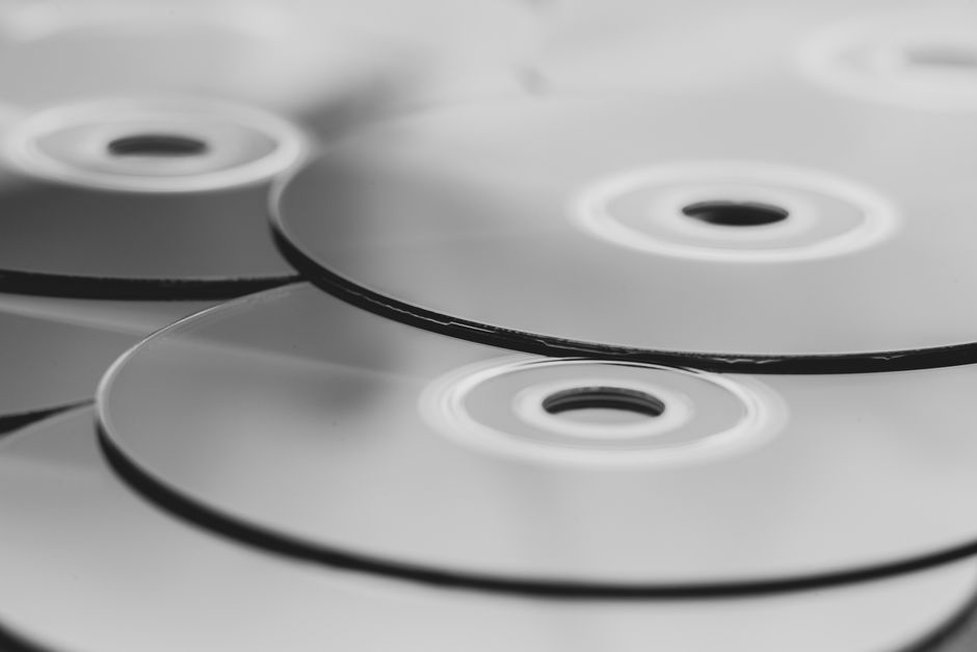
Conference history is partly a history of files, templates, compact discs, printed books, and institutional web pages. Before repository practices became more consistent, a paper might survive as a publisher PDF, an author-hosted copy, a scanned proceedings page, or an incomplete conference archive. Searchability often depended on optical character recognition, filename conventions, and metadata of uneven quality.
That uneven record shaped scholarly visibility. A technically sound contribution could be hard to find because its title was misspelled in a table of contents, its PDF lacked selectable text, or author names appeared differently across systems. Papers with stable digital identifiers and accessible files, by contrast, had a longer afterlife. These archival conditions belong to the history of the field; they are more than an inconvenience for later historians.
Regional meetings and the circulation of expertise
Large international venues mattered, but regional conferences often helped research communities endure. They linked universities, laboratories, government research groups, and industry teams facing similar practical constraints. A single program might place a paper on indigenous-language speech resources beside work on face recognition, industrial inspection, or handwritten documents. Such proximity encouraged researchers to borrow methods while remaining attentive to local data and deployment conditions.
These meetings also supported professional development. Graduate students learned to turn an experiment into a paper, defend a design choice, report limitations, and respond to criticism. Short papers and posters were important training formats because they exposed methods to public scrutiny before they reached their final form. The record is not always a neat sequence of breakthroughs. More often, it documents iterative research practice.
How to Study a 2000s Proceedings Collection Productively
A productive reading strategy starts with the program rather than an individual paper. Session titles show which problems were treated as related, while author affiliations indicate where expertise was concentrated. Compare several papers addressing similar tasks, noting their datasets, feature representations, models, and evaluation protocols. This prevents a single reported number from being treated as representative of an entire period.
- Identify the task precisely: recognition, detection, verification, retrieval, segmentation, tracking, or synthesis.
- Extract the input conditions: sensor type, language, image modality, recording channel, and preprocessing assumptions.
- List the handcrafted representation and the statistical model separately; in 2000s work, they were often designed independently.
- Record the evaluation protocol before comparing results across papers.
- Check whether the authors describe failure cases, runtime limits, or data restrictions.
- Trace recurring authors, datasets, and citations across consecutive conference years to see how a local research thread developed.
Close reading should retain a paper's experimental boundary. A claim such as “speaker-dependent recognition on a constrained vocabulary under recorded conditions” says something specific and useful. Quietly recasting it as a result about unrestricted speech recognition erases the conditions that made the experiment meaningful in the first place.